Peppol invoices: everything your business needs to know
Peppol invoices are becoming mandatory for businesses across Europe. Whether you operate in Belgium, the Netherlands or another EU country: the Peppol network is the standard for electronic invoice exchange. In this article you will find exactly what Peppol invoices are, how they work, what the benefits are, when they become mandatory for your organisation — and how to get started.
In this article:
What are Peppol invoices?
How does the Peppol network work?
Peppol invoices vs. PDF and email
Benefits of Peppol invoicing
When are Peppol invoices mandatory?
How to get started with Peppol invoices
What does it cost?
Frequently asked questions
What are Peppol invoices?
Peppol invoices are electronic invoices sent and received via the Peppol network. Unlike a PDF invoice sent by email, a Peppol invoice is a structured digital document processed directly by accounting packages and ERP systems — without manual data entry.
The Peppol network was established by OpenPeppol, an international non-profit organisation, and is managed in each country by a national Peppol Authority. In the Netherlands that is RVO (Netherlands Enterprise Agency); in Belgium it is Digitaal Vlaanderen/FOD BOSA.
At the core of a Peppol invoice is the UBL format (Universal Business Language): a standardised XML file that is machine-readable. Your software creates the invoice, sends it via your Peppol Service Provider into the network, and the invoice arrives automatically in your customer’s accounting system.
Definition: Peppol invoice
A Peppol invoice is a structured electronic invoice (e-invoice) in UBL format sent via the secure Peppol network from one certified participant to another. Both parties are connected via a Peppol Service Provider (which operates an Access Point, granting access to the Peppol network).
How does the Peppol network work?
Placement: After H2 ‘How does the Peppol network work?’, before first paragraph
File name: peppol-4-corner-model-diagram.jpg
Alt text: The Peppol 4-corner model: sender, Service Provider, Access Point and recipient shown schematically
Royalty-free search term: Peppol 4-corner model diagram e-invoicing (OpenPeppol.eu or Wikimedia Commons)
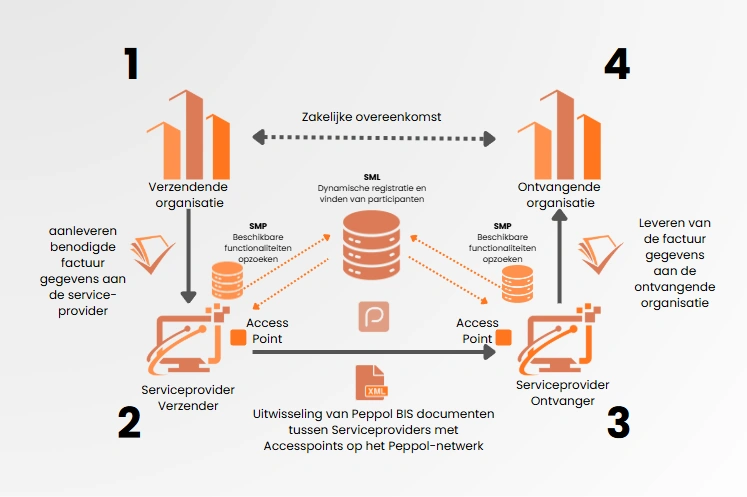
The Peppol network operates according to the 4-corner model. These are the four parties involved in every invoice exchange:
Corner 1 – The sender: your organisation, creating the invoice in your accounting package or ERP
Corner 2 – Your Peppol Service Provider: sends the invoice securely into the network
Corner 3 – Your customer’s Peppol Service Provider: receives the invoice and delivers it
Corner 4 – The recipient: your customer, where the invoice is automatically read into their system
Your Peppol ID — a unique identification number in the network — ensures invoices always reach the correct recipient. Recipients can be found via the Peppol address book, the central register of all connected participants.
If one of your customers does not yet have a Peppol Service Provider, the invoice cannot be sent via Peppol. Both parties must be connected to the network.
Peppol invoices vs. PDF and email: what is the difference?
Placement: After H2 ‘Peppol invoices vs. PDF and email’, before first paragraph
File name: pdf-vs-peppol-invoice-comparison.jpg
Alt text: Difference between a PDF invoice and a Peppol e-invoice: structured data versus unstructured document
Royalty-free search term: PDF vs structured XML invoice comparison digital (Unsplash/Pexels)
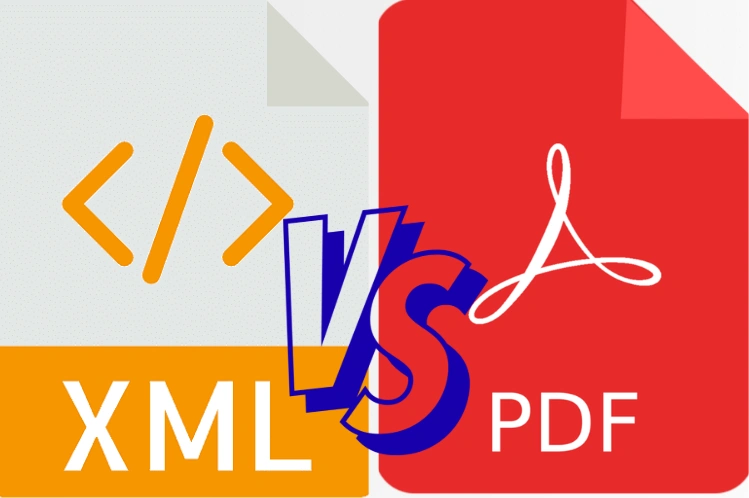
Many businesses still send invoices as PDFs by email. This appears digital, but is functionally little better than paper. The recipient must still process the invoice manually — or rely on scanning and recognition software that is prone to errors.
A Peppol invoice is fundamentally different:
PDF: unstructured document. A person or software must ‘read’ and retype the information.
Peppol invoice: structured XML document. Software reads the invoice directly and without errors.
PDF: risk of typos, loss in spam or wrong inbox.
Peppol invoice: direct, encrypted delivery via certified network.
PDF: no standard confirmation of receipt.
Peppol invoice: status confirmation possible via Message Level Response (MLR).
The difference is comparable to the difference between a letter in an envelope and a secure bank message: both communicate information, but one is traceable, encrypted and immediately processed.
Benefits of Peppol invoices
1. Get paid faster
Because your invoice is automatically read into your customer’s accounting system, the processing time is significantly reduced. Fewer manual steps means less delay — and therefore shorter lead times to payment.
2. Fewer errors
Manual data entry causes mistakes. With Peppol invoices, what you send is exactly what the recipient receives — including VAT amounts, reference numbers and account details. No room for interpretation, no correction requests afterwards.
3. Cost savings
Less manual processing means less staff time per invoice. Organisations that switch to Peppol invoices at scale see structural savings on accounts payable processes and accounts receivable management.
4. Automatic archiving
Peppol Service Providers generally offer automatic archiving in accordance with statutory retention periods. Your digital invoice administration is always complete and immediately retrievable.
5. Future-proof and EU-compliant
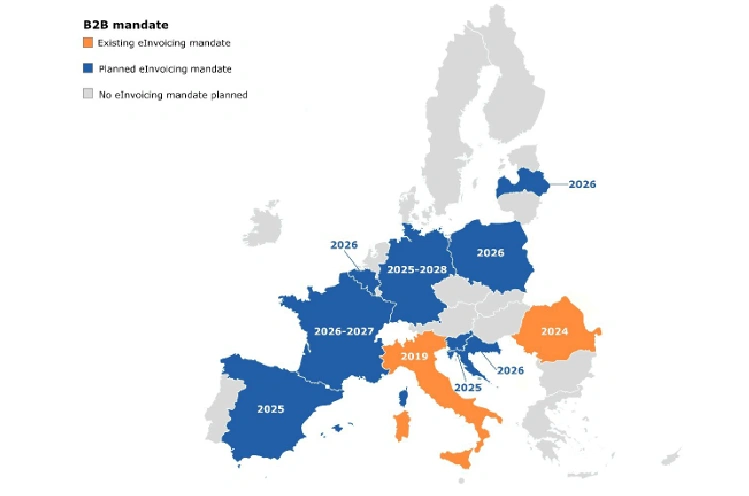
With the EU ViDA directive (VAT in the Digital Age) and growing national mandates across Europe, connecting to Peppol is an investment in long-term compliance. Countries such as Belgium, Poland, France and Croatia are already implementing mandatory e-invoicing — more will follow before 2030.
6. Cross-border invoicing
Peppol is active in more than 40 countries worldwide. With a single Peppol connection you can invoice Belgian government bodies, Dutch municipalities, French companies and Singaporean trading partners — all via the same network.
The obligation differs per country and type of relationship (B2G or B2B):
Belgium
From 1 January 2026, all Belgian VAT-registered businesses are required to send and receive Peppol invoices for B2B transactions. For government procurement (B2G) the obligation applied earlier. A transition period until 1 July 2026 applies for the receipt obligation, but the sending obligation is already in force. Read more in our article about the Belgian e-invoicing obligation.
The Netherlands
In the Netherlands, Peppol is currently mandatory for invoices to central government and a large part of the public sector. No general obligation yet applies to B2B transactions, but the expectation is that the Netherlands will also take steps under the EU ViDA directive.
Other EU countries
Germany introduces a B2B e-invoicing receipt obligation from 2025, with a phased sending obligation through to 2028. France starts mandatory B2B e-invoicing in September 2026. Poland has made KSeF mandatory from 2026 for large enterprises. Many more countries will follow towards 2030.
Keep an eye on our Blog and News section for the current overview per country.
How to get started with Peppol invoices
Connecting to the Peppol network requires three steps:
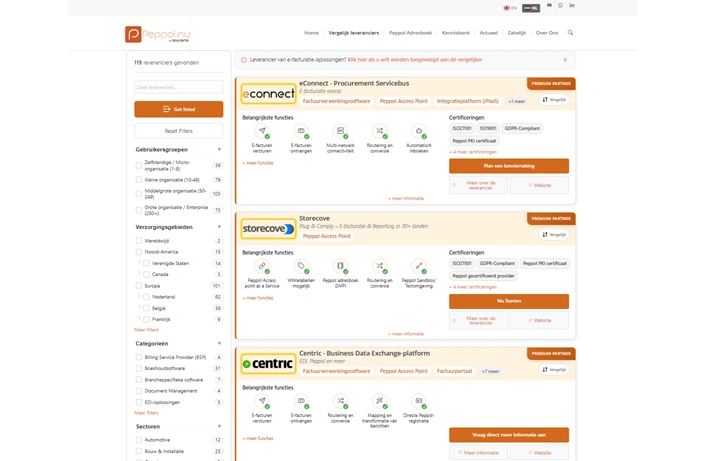
Choose a Peppol Service Provider. This is the party that arranges your technical connection. Providers differ in price, integration options, support and additional services. Compare providers on Peppol.now
Register your Peppol ID. Your Service Provider registers your unique Peppol ID in the network. This makes you findable to other Peppol users.
Connect your accounting or ERP software. Most mainstream accounting packages now support direct Peppol integration. If not, Service Providers often offer a web portal as an alternative.
When choosing your Service Provider, consider: which countries are supported, which format is used (UBL, PINT, national format), and what are the total costs based on your invoice volume. Read our guide: Choosing a Peppol Service Provider: 7 steps.
What does Peppol invoicing cost?
The costs for Peppol invoices typically consist of two components:
A monthly or annual subscription with your Peppol Service Provider
Any transaction costs per invoice sent or received
For small businesses and sole traders with a limited invoice volume, there are providers with entry-level pricing from a few euros per month. Medium and large organisations can choose fully integrated enterprise solutions.
Important: most modern accounting packages already include Peppol functionality or offer it as an add-on. Check with your software supplier before signing a separate Service Provider contract.
What is the difference between an e-invoice and a Peppol invoice?
An e-invoice is the umbrella term for an electronic invoice. A Peppol invoice is a specific form of e-invoicing sent via the Peppol network, in a standardised UBL format, via certified Service Providers. A PDF sent by email does not qualify as a proper e-invoice in most countries.
Is Peppol free?
The Peppol network itself is an open standard and free to use. The costs lie with the Peppol Service Provider that arranges the technical connection. Those costs vary: some providers offer a free basic option, others work with subscriptions or transaction fees.
Can I send Peppol invoices as a sole trader?
Yes. There are various Peppol Service Providers that specifically cater to sole traders and small businesses. Some accounting tools — such as Moneybird, e-Boekhouden or Twinfield — already offer built-in Peppol support.
How do I send an invoice via Peppol?
You create an invoice in your accounting or invoicing software as usual. If your software supports Peppol, it automatically sends the invoice via the network to the recipient. You do not need to configure anything per individual invoice.
Is Peppol mandatory in the Netherlands?
For invoices to central government bodies, Peppol is already mandatory in the Netherlands. For B2B transactions between businesses, no general obligation yet applies, but this is expected to change in the coming years as a result of the EU ViDA directive.
What is a Peppol ID?
A Peppol ID is your unique identification in the Peppol network. It is comparable to an email address, but for invoice traffic. It typically consists of a country code plus your company registration or VAT number. Other parties can find you via the Peppol address book.
Can I transfer my Peppol ID to another Service Provider?
Yes, that is technically possible, but it requires careful coordination. There is a temporary ‘transfer window’ during which your Peppol ID may be briefly unavailable. Read more in our article: Can I take my Peppol ID to another Service Provider?.
Can I be sure my Peppol invoice has arrived?
The Peppol network is highly reliable. Your Service Provider can provide a technical dispatch confirmation. Whether your customer has actually processed the invoice depends on whether their system supports Message Level Response (MLR). Read more in: How do I know my Peppol e-invoice has arrived?
Ready to get started with Peppol invoices?
Compare certified Peppol Service Providers on our independent comparison platform and find the solution that fits your organisation — whether you are a sole trader, SME or international business.
https://www.peppol.nu/wp-content/uploads/peppol-facturen-ondernemer.png498747Justin De Jagerhttps://www.peppol.nu/wp-content/uploads/peppolnu_logo_scaled_340x156.pngJustin De Jager2026-03-02 20:13:002026-03-02 20:13:16What are Peppol invoices? The complete guide for businesses
“How Do I Know If My Peppol E-Invoice Has Been Delivered?” — A Practical Guide for Businesses
Recently, we at Peppol.now received a question that many business owners will recognise. A Belgian entrepreneur had sent his first electronic invoice via the Peppol network using his online invoicing software. Full of pride — and a little nervous — he pressed ‘send’. And then… silence. No error message, but no confirmation either. His question was simple but important: “How can I tell whether my e-invoice has actually reached my customer?“
It’s an excellent question, and the answer is less straightforward than you might expect. In this article, we explain how this works, why it can sometimes be unclear, and what you as a business owner can do to get certainty..
First, the basics: How does Peppol actually work?
To understand why the answer isn’t always clear, we first need to briefly explain how the Peppol network works. Peppol uses what is called the 4-corner model:
Corner 1 – You (the sender): You send the invoice via your invoicing software.
Corner 2 – Your Peppol Access Point: This is your “gateway” to the Peppol network. It is often arranged automatically through your invoicing software, without you noticing. This Access Point validates your invoice and forwards it through the Peppol network.
Corner 3 – Your customer’s Peppol Access Point: This is your customer’s “gateway”. It receives the invoice from the network.
Corner 4 – Your customer (the recipient): The invoice arrives in your customer’s software application.
The crucial point: between Corner 2 and Corner 3 — that is, within the Peppol network itself — transmission is generally very reliable. The technical infrastructure is robust and monitored. However, whether you as the sender automatically receive confirmation that the invoice has arrived depends on several factors.
De rol van Message Level Response (MLR)
The role of Message Level Response (MLR)
Within Peppol, there is a functionality called Message Level Response (MLR). This is a standardised way of sending back messages about the status of a document. In theory, it can report:
✅ “Invoice successfully received at Corner 3”
✅ “Invoice accepted by the customer’s system”
❌ “Invoice rejected due to an error”
⚠️ “Invoice being processed”
But — and this is important — not all systems have fully implemented this functionality. Whether you receive a confirmation depends on:
1. Your invoicing software
Does your software support receiving and displaying MLR messages? Some basic invoicing applications send invoices via Peppol but have no functionality to receive status updates and display them to you as a user.
What you can do: Ask your software provider whether they support MLR functionality. Check the settings for a “invoice status” or “send confirmation” overview.
2. Your customer’s invoicing software
Does your customer’s system automatically send back an MLR message? Far from all receiving systems do this as standard. Some systems receive the invoice correctly but send no confirmation back to the sender.
What you can do: Unfortunately, you have little influence over this as a sender. You can ask your customer whether their system sends MLR messages.
3. The Peppol Access Points (Corner 2 and 3)
Both Access Points must be able to process and forward MLR messages. Most professional Peppol Service Providers support this, but the extent to which they pass status updates on to the end user — you and your customer — varies.
What you can do:If your invoicing software works with its own Peppol Access Point, check what kind of confirmations they provide. Some providers offer a dashboard where you can see the status of sent invoices.
Different levels of confirmation
In practice, you can obtain different levels of certainty:
What does this mean? Your invoicing software or Peppol Access Point confirms that the invoice has been successfully sent to the Peppol network and transferred to your customer’s Access Point (Corner 3).
What does this NOT mean? This does not yet
confirm that the invoice has actually arrived in your customer’s system,
that your customer has seen or opened it,
or that your customer has accepted it for payment.
Analogy: It is like sending a registered letter and receiving confirmation that the postal service has delivered it to the address. You know the letter has arrived, but not whether anyone has opened it.
Level 2: Receipt confirmation (less common)
What does this mean? Your customer’s system actively confirms that the invoice has been received and accepted into their administration.
How does this work? Via an MLR message sent back through the Peppol network to your system.
Advantage: You have real certainty that the invoice has arrived and been processed.
Level 3: Full invoice status tracking (surprisingly still rare)
What does this mean? You receive detailed updates about the entire lifecycle of the invoice:
Sent,
Received by customer,
Accepted for payment,
Approved,
Payment scheduled,
Paid.
How does this work? Via extensive MLR implementation or additional business documents within Peppol (such as Invoice Response messages).
Reality: This level is still relatively rare, even though full invoice status tracking should be one of the key selling points of e-invoicing.
Practical tips: What can you do now?
For senders (you as a business owner):
1. Check your own software
Log in to your invoicing software and look for:
a “invoice status” overview,
“send history”,
“Peppol send log”,
or a “document status” dashboard.
Most professional applications show at minimum whether an invoice has been successfully sent to the Peppol network.
2. Ask your software provider
Ask specific questions:
“What confirmations do I receive after sending a Peppol invoice?”,
“Do you support Message Level Response (MLR)?”,
“Can I see whether my customer has received the invoice?”,
“Is there a log where I can check send statuses?”
3. Communicate with your customer
In practice, the traditional approach often remains the most effective: send a short email or call your customer.
“I sent invoice [number] on [date] electronically via Peppol. Could you confirm that it has arrived correctly in your system?”
This gives you direct certainty and helps your customer check whether their receiving system is working properly.
4. Monitor your payments
Ultimately, the best confirmation that an invoice has arrived is the payment in your account. If you receive no payment or enquiry within the normal payment term, that is often a sign that something has gone wrong.
For recipients (when your customers invoice you):
1. Check whether your system sends MLR messages
If you receive invoices via Peppol, ask your software provider: “Does our system automatically send confirmations back to suppliers who invoice via Peppol?” and “Can we enable this if it is not yet the case?” By sending confirmation messages, you build better supplier relationships — suppliers then know for certain that their invoices have arrived.
2. Confirm receipt manually
If your system does not send automatic confirmations, consider manually confirming to key suppliers that their e-invoice has arrived. It takes 30 seconds but prevents confusion and unnecessary follow-up emails.
What if you receive no confirmation?
Don’t worry — the absence of an explicit confirmation does not mean your invoice has been lost. The Peppol network itself is highly reliable. Most “missing” invoices have not been lost, but are sitting somewhere in the systems on the receiving end or are simply not being confirmed.
Step-by-step plan when in doubt:
Check your own system (day 1): See whether your invoicing software shows a send confirmation. If your software indicates “successfully sent”, the invoice has almost certainly reached your customer’s Access Point.
Wait 2–3 business days: Give systems time to process. Automated processing can sometimes involve delays.
Contact your customer (day 3–5): Simply ask whether the invoice has arrived. This is normal business communication.
Check your details (if problems arise): Did you use the correct Peppol ID / endpoint for your customer? A typing error here is the most common cause of undelivered invoices.
Contact your software provider (if problems persist): If invoices are systematically not arriving, there may be a technical issue with the connection.
1
The future: Better tracking is on the way
The good news is that the situation is improving. With mandatory e-invoicing coming into force in Belgium, France, Slovenia, and other European countries in 2026 and 2027, software providers are investing heavily in better functionality.
What we can expect in the coming years:
More standard MLR implementation: As e-invoicing becomes mandatory, more systems will support confirmation messages as standard.
clearer user interfaces with real-time invoice tracking dashboards: Invoicing applications will offer clearer dashboards with real-time invoice tracking.
integration with payment status: Some advanced systems already link invoice status to payment status, allowing you to follow the entire process.
Uniform Standards: The European push towards standardised e-invoicing will lead to more consistent implementations of status messages.
Our advice: Stay practical
To return to our entrepreneur’s question: “How do I know whether my e-invoice has arrived?”
The honest answer is: it depends on the systems you and your customer use. In the best case, you receive automatic confirmations. In the worst case, you need to check in with your customer directly.
But here are three practical realities:
The Peppol network itself is highly reliable. If your software indicates that the invoice has been sent, it has almost certainly reached the recipient.
Traditional communication still works. A short message to your customer gives you direct certainty and demonstrates professional follow-through.
Payment is the ultimate confirmation. If your customer pays within the normal term, that is the best evidence that the invoice arrived and was processed correctly.
Finally: if you notice that your system provides little insight into the status of sent invoices, that is worth raising with your software provider. Ask about the options, and consider — if e-invoicing becomes a significant part of your business — upgrading to software with better tracking functionality.
Do you have questions about Peppol or e-invoicing? Visit Peppol.now. We are happy to help you navigate the world of digital invoicing.
Want to know more about Peppol and which software best suits your situation? Check our overview of Peppol providers to compare different options.
https://www.peppol.nu/wp-content/uploads/Peppolnu-vraag.png446668Justin De Jagerhttps://www.peppol.nu/wp-content/uploads/peppolnu_logo_scaled_340x156.pngJustin De Jager2026-03-02 20:12:002026-03-02 20:14:13“How Do I Know If My Peppol E-Invoice Has Been Delivered?” — A Practical Guide for Businesses
Peppol facturen: alles wat u als ondernemer moet weten
Peppol facturen worden steeds vaker verplicht voor Europese ondernemers. Of u nu in België, Nederland of een ander EU-land zaken doet: het Peppol-netwerk is dé standaard voor het elektronisch uitwisselen van facturen. In dit artikel leest u precies wat Peppol facturen zijn, hoe ze werken, wat de voordelen zijn, wanneer ze voor uw organisatie verplicht worden — en hoe u aan de slag gaat.
In dit artikel:
Wat zijn Peppol facturen?
Hoe werkt het Peppol-netwerk?
Peppol facturen vs. PDF en e-mail
Voordelen van Peppol facturatie
Wanneer zijn Peppol facturen verplicht?
Hoe start u met Peppol facturen?
Wat kost het?
Veelgestelde vragen
Wat zijn Peppol facturen?
Peppol facturen zijn elektronische facturen die worden verzonden en ontvangen via het Peppol-netwerk. In tegenstelling tot een PDF-factuur per e-mail is een Peppol factuur een gestructureerd digitaal document dat direct door boekhoudpakketten en ERP-systemen wordt verwerkt — zonder handmatig overtypen.
Het Peppol-netwerk is opgezet door OpenPeppol, een internationale non-profitorganisatie, en wordt in elk land beheerd door een nationale Peppol Autoriteit. In Nederland is dat RVO (Rijksdienst voor Ondernemend Nederland), in België Digitaal Vlaanderen/FOD BOSA.
De kern van een Peppol factuur is het UBL-formaat (Universal Business Language): een gestandaardiseerd XML-bestand dat machineleesbaar is. Uw software maakt de factuur aan, stuurt hem via uw Peppol Serviceprovider het netwerk in, en de factuur arriveert automatisch in de boekhouding van uw klant.
definitie: Peppol factuur Een Peppol factuur is een gestructureerde elektronische factuur (e-factuur) in UBL-formaat die via het beveiligde Peppol-netwerk wordt verstuurd van de ene- naar de andere gecertificeerde deelnemer. Beide partijen zijn aangesloten via een Peppol Serviceprovider (die een Accesspoint hebben en daarmee toegang kunnen verlenen tot het Peppol-netwerk)
Hoe werkt het Peppol-netwerk
Het Peppol-netwerk werkt volgens het zogenaamde 4-corner model. Dit zijn de vier betrokken partijen bij elke factuuruitwisseling:
Corner 1 – De verzender: uw organisatie, die de factuur aanmaakt in uw boekhoudpakket of ERP
Corner 2 – Uw Peppol Serviceprovider: stuurt de factuur veilig het netwerk in
Corner 3 – De Peppol Serviceprovider van uw klant: ontvangt de factuur en levert hem af
Corner 4 – De ontvanger: uw klant, waarbij de factuur automatisch wordt ingelezen in hun systeem
Uw Peppol ID — een uniek identificatienummer in het netwerk — zorgt ervoor dat facturen altijd bij de juiste ontvanger terechtkomen. Ontvangers zijn vindbaar via het Peppol adresboek, het centrale register van alle aangesloten partijen.
Heeft een van uw klanten nog geen Peppol Serviceprovider? Dan kan de factuur niet via Peppol worden verstuurd. Beide partijen moeten zijn aangesloten op het netwerk.
Peppol facturen vs. PDF en e-mail: wat is het verschil?
Veel ondernemers sturen nog facturen als PDF per e-mail. Dat lijkt digitaal, maar is functioneel nauwelijks beter dan papier. De ontvanger moet de factuur immers handmatig verwerken — of gebruikmaken van scan- en herkensoftware die fouten kan maken.
Een Peppol factuur is fundamenteel anders:
PDF: ongestructureerd document. Mens of software moet informatie ‘lezen’ en overtypen.
Peppol factuur: gestructureerd XML-document. Software leest de factuur direct en foutloos in.
PDF: kans op typefouten, verlies in spam of verkeerde mailbox.
Peppol factuur: directe, versleutelde aflevering via gecertificeerd netwerk.
PDF: geen standaard bevestiging van ontvangst.
Peppol factuur: statusbevestiging mogelijk via Message Level Response (MLR).
Het verschil is vergelijkbaar met het verschil tussen een brief in een envelop en een beveiligd bankbericht: beide communiceren informatie, maar het één is traceerbaar, versleuteld en onmiddellijk verwerkt.
Voordelen van Peppol facturen
1. Sneller betaald
Omdat uw factuur automatisch wordt ingelezen in de boekhouding van uw klant, versnelt het verwerkingsproces aanzienlijk. Minder handmatige stappen betekent minder vertraging — en daarmee gemiddeld kortere doorlooptijden tot betaling.
2. Minder fouten
Handmatig overtypen leidt tot fouten. Met Peppol facturen is wat u verstuurt, exact wat de ontvanger ontvangt — inclusief btw-bedragen, referentienummers en rekeninggegevens. Geen interpretatieruimte, geen correctieverzoeken achteraf.
3. Kostenbesparing
Minder handmatige verwerking betekent minder personeelstijd per factuur. Organisaties die grootschalig overstappen op Peppol facturen zien structurele besparingen op crediteurenprocessen en debiteurenbeheer.
4. Automatische archivering
Peppol Serviceproviders bieden doorgaans automatische archivering aan, conform de wettelijke bewaartermijnen. Uw digitale factuuradministratie is altijd compleet en direct opvraagbaar.
5. Toekomstbestendig en EU-compliant
Met de EU ViDA-richtlijn (VAT in the Digital Age) en de toenemende nationale verplichtingen in Europa is aansluiting op Peppol investeren in compliance voor de lange termijn. Landen als België, Polen, Frankrijk en Kroatië zijn al bezig met verplichte e-facturatie — meer landen volgen voor 2030.
6. Grensoverschrijdend factureren
Peppol is actief in meer dan 40 landen wereldwijd. Met één Peppol-aansluiting factureert u naar Belgische overheden, Nederlandse gemeenten, Franse bedrijven en Singaporese handelspartners — allemaal via hetzelfde netwerk.
De verplichting verschilt per land en type relatie (B2G of B2B):
België
Vanaf 1 januari 2026 zijn alle Belgische BTW-plichtige ondernemers verplicht om Peppol facturen te versturen en te ontvangen voor B2B-transacties. Voor overheidsopdrachten (B2G) gold de verplichting al eerder. Er geldt een overgangsperiode tot 1 juli 2026 voor de ontvangstplicht, maar de verzendplicht is al van kracht. Meer informatie leest u in ons artikel over de Belgische e-facturatie verplichting.
Nederland
In Nederland is Peppol momenteel verplicht voor facturen aan de rijksoverheid en een groot deel van de publieke sector. Voor B2B-transacties geldt nog geen algemene verplichting, maar de verwachting is dat ook Nederland stappen zet in het kader van de EU ViDA-richtlijn.
Andere EU-landen
Duitsland introduceert B2B e-facturatie ontvangstplicht per 2025, met een gefaseerde verzendverplichting tot 2028. Frankrijk start in september 2026 met verplichte B2B e-facturatie. Polen heeft KSeF per 2026 verplicht gesteld voor grote ondernemingen. Veel meer landen volgen richting 2030.
Houdt onze Blog en Nieuws sectie in de gaten voor het actuele overzicht per land.
Hoe start u met Peppol facturen?
Aansluiten op het Peppol-netwerk vraagt om drie stappen:
Kies een Peppol Serviceprovider. Dit is de partij die uw technische aansluiting verzorgt. Providers verschillen in prijs, integratiemogelijkheden, ondersteuning en aanvullende diensten. Vergelijk aanbieders op Peppol.nu
Registreer uw Peppol ID. Uw Serviceprovider registreert uw unieke Peppol ID in het netwerk. Dit maakt u vindbaar voor andere Peppol-gebruikers.
Koppel uw boekhoud- of ERP-software. De meeste gangbare boekhoudpakketten ondersteunen inmiddels directe Peppol-integratie. Is dat niet het geval, dan bieden Serviceproviders vaak een webportaal als alternatief.
Let bij de keuze van uw Serviceprovider op: welke landen worden ondersteund, welk formaat wordt gebruikt (UBL, PINT, nationaal formaat), en wat zijn de totale kosten op basis van uw factuurvolume. Lees onze gids: Een Peppol Serviceprovider kiezen: 7 stappen.
Wat kost Peppol facturatie?
De kosten voor Peppol facturen bestaan doorgaans uit twee componenten:
Een maandelijks of jaarlijks abonnement bij uw Peppol Serviceprovider
Eventuele transactiekosten per verstuurde of ontvangen factuur
Voor kleine ondernemers en ZZP’ers met een beperkt factuurvolume zijn er aanbieders met instaptarieven vanaf enkele euro’s per maand. Middelgrote en grote organisaties kunnen kiezen voor volledig geïntegreerde enterprise-oplossingen.
Belangrijk: bij de meeste moderne boekhoudpakketten is de Peppol-functionaliteit al inbegrepen of beschikbaar als add-on. Controleer dit bij uw softwareleverancier voordat u een apart Serviceprovider-contract afsluit.
Wat is het verschil tussen een e-factuur en een Peppol factuur?
Een e-factuur is de overkoepelende term voor een elektronische factuur. Een Peppol factuur is een specifieke vorm van e-facturatie die via het Peppol-netwerk wordt verstuurd, in een gestandaardiseerd UBL-formaat, via gecertificeerde Serviceproviders. Een PDF per e-mail geldt in de meeste landen niet als een volwaardige e-factuur.
Is Peppol gratis?
Het Peppol-netwerk zelf is een open standaard en gratis te gebruiken. De kosten zitten bij de Peppol Serviceprovider die de technische verbinding verzorgt. Die kosten variëren: sommige aanbieders hanteren een gratis basisoptie, andere werken met abonnementen of transactietarieven.
Kan ik als ZZP’er Peppol facturen sturen?
Ja. Er zijn diverse Peppol Serviceproviders die specifiek inspelen op ZZP’ers en kleine ondernemers. Sommige boekhoudtools voor zzp’ers — zoals Moneybird, e-Boekhouden of Twinfield — bieden al ingebouwde Peppol-ondersteuning.
Hoe stuur ik een factuur via Peppol?
U maakt een factuur aan in uw boekhoud- of facturatieprogramma, net als altijd. Als uw programma Peppol ondersteunt, verstuurt het de factuur automatisch via het netwerk naar de ontvanger. U hoeft zelf niets te configureren per factuur.
Is Peppol verplicht in Nederland?
Voor facturen aan rijksoverheidsinstanties is Peppol in Nederland al verplicht. Voor B2B-transacties tussen bedrijven onderling geldt nog geen algemene verplichting, maar deze wordt in de komende jaren verwacht als gevolg van de EU ViDA-richtlijn.
Wat is een Peppol ID?
Een Peppol ID is uw unieke identificatie in het Peppol-netwerk. Het is vergelijkbaar met een e-mailadres, maar dan voor factuurverkeer. Het bestaat doorgaans uit een landcode plus uw KvK- of BTW-nummer. Via het Peppol-adresboek kunnen andere partijen u vinden.
Kan ik mijn Peppol ID overzetten naar een andere Serviceprovider?
Ja, dat is technisch mogelijk, maar het vergt zorgvuldige coördinatie. Er bestaat een tijdelijk ‘overstapvenster’ waarbij uw Peppol ID kort onbeschikbaar kan zijn. Lees hierover meer in ons artikel: Kan ik mijn Peppol ID meenemen naar een andere Serviceprovider?.
Weet ik zeker dat mijn Peppol factuur is aangekomen?
Het Peppol-netwerk is zeer betrouwbaar. Uw Serviceprovider kan een technische verzendbevestiging geven. Of uw klant de factuur ook daadwerkelijk heeft verwerkt, hangt af van of hun systeem Message Level Response (MLR) ondersteunt. Meer hierover leest u in: Hoe weet ik of mijn Peppol e-factuur is aangekomen?.
Klaar om aan de slag te gaan met Peppol facturen?
Vergelijk gecertificeerde Peppol Serviceproviders op onze onafhankelijke vergelijkingsplatform en vind de oplossing die past bij uw organisatie — of u nu ZZP’er, mkb’er of internationaal bedrijf bent.
https://www.peppol.nu/wp-content/uploads/peppol-facturen-ondernemer.png498747Justin De Jagerhttps://www.peppol.nu/wp-content/uploads/peppolnu_logo_scaled_340x156.pngJustin De Jager2026-03-02 16:59:522026-03-02 17:05:06Wat zijn Peppol facturen? De complete gids voor ondernemers
Peppol.now: your trusted partner for comparing, filtering and choosing Access Points.
Choosing a suitable Peppol access point is a strategic decision that impacts your invoice processing for years to come. With Belgium having introduced mandatory e-invoicing in January 2026 and France following in September 2026, the urgency to make the right choice is greater than ever. With dozens of providers on the European market and significant differences in functionality, pricing and service, making an informed choice is essential. In this guide, we help you step-by-step in selecting the best Peppol access point provider for your organization.
What is Peppol and what is a Peppol Access Point?
Peppol is an international network that enables secure electronic exchange of documents between businesses and government organizations. The network is active in more than 60 countries and connects thousands of organizations worldwide through standardized protocols. Read more about what Peppol exactly is.
A Peppol Access Point functions as your gateway to this network. It is a certified service provider that handles all technical aspects: from validating invoices according to Peppol standards to securing the connection and ensuring reliable delivery. Without an Access Point, you cannot participate in the Peppol network. For a complete explanation, see our knowledge base about Peppol Access Points.
Choosing the right Access Point is therefore crucial: it not only determines how you are technically connected, but also what functionalities are available to you, which integrations are possible, and how well prepared you are for future obligations. More information about international standards can be found at OpenPeppol.org.
Why careful selection is so important now
E-invoicing obligations are no longer future music. Belgium has had mandatory Peppol invoicing for all B2B transactions since January 2026. Companies working with Belgian partners must already be fully operational. France follows in September 2026, and the EU-wide obligation for intra-community transactions comes in 2030.
This timing makes choosing a Peppol access point urgent. It’s not a purchase you make quickly on the side. It determines how efficiently your invoice processes run, which systems you can connect, and how well prepared you are for the wave of obligations coming in the years ahead. A wrong choice can lead to unnecessary costs, integration problems, or still having to switch to another provider.
That’s why thorough preliminary research is the key to success. By filtering different providers on your specific requirements, comparing interesting options side by side, and diving deep into what each provider truly offers, you save yourself later headaches and unnecessary costs.
What makes a Peppol access point suitable for your business?
A suitable Peppol access point fits your specific situation in 2026. This means it connects with your current software landscape, supports your invoice volume, fits within your budget, and grows with your ambitions and upcoming obligations.
Important factors are:
Compatibility with your accounting software or ERP system
Transparent and predictable pricing structure
Support for the countries where you do business (with focus on Belgium, France and future EU requirements)
Quality of implementation and support
Track record and reliability of the provider
Experience with recent implementations of Belgian obligation
There is not one “best” Peppol access point for everyone. What works excellently for a wholesaler with thousands of invoices per month may be overkill for a consultancy with thirty invoices. That’s why it’s important to filter on what’s relevant for your organization.
The comparison process: From longlist to shortlist
An effective comparison process consists of three phases: filtering, comparing and deepening. By systematically going through these steps, you arrive at an informed decision that helps your organization for years to come.
Phase 1: Filtering on essential criteria
Start by filtering providers on your must-haves. These are the conditions that a provider must meet in any case. Think of:
Integrations: Does the provider work with your accounting package? If you use Centric, D-Soft, Billit, 4CEE, or another specific system, direct support is a hard requirement. Some Peppol access points offer ready-made connections, while others only work via APIs.
Invoice volume: Some providers focus on SME companies with limited volume, others specialize in enterprise with high throughput. Check whether the pricing structure and capacity fits your current and expected future volume.
Geographic coverage: This is crucial in 2026. If you do business with Belgium, your provider must already be fully operational for the Belgian obligation that has been active since January. For France (mandatory from September 2026), you need to check whether implementation can be ready in time. Check whether the provider offers multi-country support and whether they have expertise with these specific obligations.
Budget: Determine what you’re willing to invest in both implementation and ongoing costs. Some providers work with fixed monthly amounts, others with pay-per-use models. Filter on what fits within your financial framework.
Implementation speed: With Belgium already mandatory and France in September, implementation speed may be a crucial factor. Ask providers explicitly about realistic lead times.
By applying these filters, you reduce a list of fifty providers to a handful of serious candidates that are actually suitable for your situation.
Phase 2: Comparing on differentiating factors
Now that you have a shortlist of suitable providers, it’s time to compare them on factors that make the difference:
User-friendliness: How intuitive is the platform? A modern, clear interface saves your team time daily and prevents frustration. Ask for a demo or trial period where possible.
Implementation time: Some solutions are operational within days, others require weeks of configuration. With the French obligation coming in September 2026, speed can be crucial if you’re not yet compliant.
Support and service: What happens when things go wrong? Is there English-speaking support? How quickly is there a response to questions? Check reviews and experiences of other customers, especially companies that recently went through the Belgian implementation.
Future-proofing: How actively does the provider develop new functionality? Were the Belgian requirements implemented on time? How prepared are they for the French obligation? A forward-thinking partner helps you stay prepared for changing regulations.
Additional capabilities: Some providers offer more than just invoice exchange. Think of approval workflows, automatic postings, reporting, or connection with archiving systems. Determine what adds value for you.
By systematically comparing these factors, a clear picture emerges of which provider suits you best.
Phase 3: Deepening into the selected provider
Before making your final choice, it’s wise to thoroughly investigate the provider at the top of your list. Check:
How long has the company existed and what is their track record?
What other customers do they serve and in which sectors?
How smoothly did their implementation of the Belgian obligation in January 2026 go?
Do they have certifications and quality marks (ISO, SOC 2, etc.)?
What are the contract terms and notice periods?
How transparent are they about downtime and performance?
What guarantees do they offer on availability?
How prepared are they for the French obligation in September 2026?
Through this deep dive, you get to know the company culture and reliability of your future partner. This prevents surprises after signing the contract.
Common pitfalls when choosing a Peppol Access Point
Despite the best intentions, companies regularly make the same mistakes when selecting a Peppol provider. Do you recognize these pitfalls:
Pitfall 1: Selecting purely on price
The cheapest provider seems attractive, but sometimes hides costs in the fine print. Extra costs for support, implementation, international invoices or volume overruns can significantly increase the total cost price. Always calculate the Total Cost of Ownership over at least two years.
Pitfall 2: Underestimating integration complexity
“It connects with our ERP system” doesn’t automatically mean it works smoothly. Ask for reference projects with your specific software combination and don’t let yourself be put off with vague promises about APIs.
Pitfall 3: Not accounting for growth and obligations
You may currently process fifty invoices per month to Belgium, but what happens in September 2026 when France becomes mandatory? Or if your company doubles? Or if in 2030 the EU-wide obligation comes into effect and all your international customers suddenly have to go digital? Choose a solution that grows with you.
Pitfall 4: Starting too late with French preparation
Belgium is now mandatory, France follows in September 2026. If you work with French partners, you now have about 8 months to implement. That sounds like a lot of time, but with implementation times of 4-12 weeks, you need to take action now. Don’t wait until June 2026.
Pitfall 5: Only finding support important afterwards
When everything works, support isn’t needed. But as soon as there’s a malfunction or you have an urgent question, you want to be helped. Check in advance how support is arranged and whether this fits your expectations.
The role of an independent comparison platform
Many companies start their search by visiting individual provider websites. This is time-consuming and provides a fragmented picture. Each provider emphasizes different strengths and uses different terminology, making objective comparison difficult.
An independent comparison platform like Peppol.nu solves this by:
Bringing all relevant providers together in one place
Using uniform comparison criteria
Presenting objective information without preference
Offering filter tools that accelerate your selection process
Publishing background articles that help you understand the subject matter
Providing current information about Belgian implementation and French preparation
By first becoming well-informed about what you need and what options exist, you enter conversations with potential providers better prepared. This saves time for both parties and leads to better decisions.
Which criteria are truly important when choosing a Peppol access point in 2026?
Let’s take a closer look at the most important comparison criteria, so you know exactly what to look for in the current situation.
Technical compatibility and integrations
The technical connection to your existing systems is fundamental. Check whether the provider:
Has native integrations with your accounting software
Offers APIs for custom connections
Supports what your ERP system outputs in formats
Is compatible with other tools you use (CRM, project management, etc.)
A provider that integrates perfectly with your current systems prevents manual work and data loss.
Multi-country experience and compliance (CRUCIAL IN 2026)
This is perhaps the most important criterion in 2026:
Belgium: Is the provider already operational for the Belgian obligation that has been active since January? Ask for references from companies that were recently connected.
France: How prepared is the provider for September 2026? Do they already have an implementation plan? What specific knowledge do they have of the French system?
EU-wide (2030): How are they positioning themselves for the upcoming EU-wide ViDA requirements?
Other countries: Does the provider also support Germany, UK, Italy or other relevant markets?
A provider with proven multi-country experience saves you a lot of headaches.
Variable costs: Per invoice, per document, volume-dependent
Extra costs: International transactions, support, updates
Multi-country costs: Extra costs for Belgium, France, other countries
Ask for a sample calculation based on your specific situation including the countries where you’re active. This prevents surprises on the invoice.
User experience and adoption
The nicest functionality doesn’t help if your team doesn’t want to use the system. Pay attention to:
Clear dashboard with clear status information
Logical navigation and intuitive workflows
Mobile accessibility (if relevant)
Good documentation and training material
Service and support
Support is your lifeline when problems arise. Important questions:
What are the support hours? (office hours, 24/7, weekends?)
Through which channels can you make contact? (phone, email, chat, ticket system)
Is there English-speaking support available?
What are the response and resolution times for different urgency levels?
Is there a community or knowledge base available?
How was the support during the Belgian go-live in January 2026?
Compliance and security
You’re entrusting sensitive financial data to this provider. Verify:
ISO 27001 or SOC 2 certification for information security
GDPR compliance and data processing within EU
Accreditation as official Peppol Access Point
Uptime guarantees and disaster recovery procedures
Regular security audits and penetration tests
How Peppol.nu helps you make the right choice
Peppol.nu was founded as an independent information platform to help European businesses navigate the complex landscape of e-invoicing and Peppol Access Points. Unlike vendor websites, we have no commercial interest in a specific provider.
Our comparison tools
The provider comparison tool enables you to:
Filter on relevant criteria such as integrations, price range, company size and country support
Specifically filter on providers with proven Belgium experience or France preparation
Compare selected providers side by side on all relevant factors
View detailed company profiles with services, specializations and contact details
Directly contact interesting providers
This tool saves you hours of searching and provides an objective overview of what the market has to offer, specifically focused on the situation in 2026.
Our knowledge base
In addition to the comparison tool, we offer extensive background information about:
What Peppol exactly is and how it works
The differences between various e-invoicing solutions
European legislation and current obligations (Belgium 2026, France 2026, EU 2030)
Practical implementation guides and best practices
Lessons learned from the Belgian go-live in January 2026
Preparation tips for the French deadline in September 2026
Frequently asked questions and answers
By gaining this knowledge, you better understand what you need and can ask more targeted questions to potential providers.
Why independent preliminary research pays off
Companies that do thorough preliminary research via platforms like Peppol.nu have multiple advantages:
For you as a buyer:
You make an informed choice based on facts
You prevent expensive mistakes and hassle with switching
You sit stronger in negotiations with providers
You can better advise internally about the right direction
You’re prepared for the French deadline in September 2026
For the vendors:
They get warmer leads who already have basic knowledge
Conversations are about content instead of basic explanation
The sales cycle becomes shorter and more efficient
There’s less chance of disappointment afterwards due to wrong expectations
It’s a win-win: you make a better choice, and vendors spend their time on serious prospects who actually fit their offering.
Frequently asked questions about choosing a Peppol Access Point in 2026
How do I know which Peppol access point fits my business best?
Start by inventorying your specific situation: which accounting system do you use, how many invoices do you send/receive, to which countries do you invoice (particularly: Belgium and/or France?), and what is your budget? Use these criteria to filter in a comparison tool and make a shortlist of 3-5 candidates. Request a demo from these providers and talk to reference customers in comparable situations, preferably companies that recently went through the Belgian implementation.
Is it too late to start now if I work with France?
No, but you do need to take action now. The French obligation comes into effect in September 2026, so you have about 8 months left. With an average implementation time of 4-12 weeks, you still have sufficient time, but don’t start later than March 2026 with your selection process. Some providers offer accelerated implementation tracks for the French deadline.
Should I immediately choose the largest provider?
Not necessarily. Larger providers often have more resources and more stable platforms, but smaller specialized parties sometimes offer more personal service and more customization. It depends on your priorities. A startup with 20 invoices per month has different needs than a multinational with thousands of transactions. However, it is wise to check whether smaller parties already have proven experience with the Belgian implementation from January 2026.
How long does it take on average to switch to a new provider?
This varies greatly. A simple implementation at a small company can be operational within a week. More complex situations with ERP integrations, migration of historical data and training of multiple users can take 6-12 weeks. Plan for this generously and ask suppliers for a realistic time indication based on your specific situation. For the French deadline in September 2026: start implementation no later than June 2026.
Can I work with multiple Peppol Access Points simultaneously?
Technically yes, but this is not recommended. Each Access Point gives you a unique Peppol address (participant ID). You can have multiple addresses, but this makes your administration unnecessarily complex. Choose one primary provider and ensure it covers all your needs, including all countries where you’re active.
What happens to my existing invoices if I switch providers?
Invoices that have already been sent and received remain available according to retention periods. When switching, you must ensure good data migration of outstanding items and ongoing processes. Ask your new provider for a migration plan and ensure an overlapping test period to guarantee continuity.
Are there providers specialized in specific industries?
Yes, some Peppol access point providers specialize in certain sectors such as construction, healthcare, retail or wholesale. This specialization can offer advantages through industry-specific functionality, knowledge of sectoral regulations and relevant references. Filter in the comparison tool on your industry to find these specialized providers.
What about support for future e-invoicing obligations?
With Belgium already mandatory since January 2026, France following in September 2026 and EU-wide from 2030, future-proofing is crucial. Ask potential providers about their track record with the Belgian implementation, their preparation for France, and their roadmap for the EU-wide ViDA requirements. Check whether multi-country support is included in your package or costs extra.
Start your comparison today
Choosing the right Peppol access point doesn’t have to be complicated if you work systematically. By using objective comparison tools, informing yourself well about the subject matter and taking sufficient time for your decision, you make a choice that benefits you for years.
With Belgium already mandatory and France 8 months away, the urgency to choose is greater than ever. Don’t wait until it’s too late. Companies that now invest in the right Peppol access point are not only compliant, but also lead in the digital transformation of their invoice processes.
Peppol.nu helps you with every step: from filtering providers on your specific criteria, to comparing suitable options side by side, to diving deep into individual providers through their company profiles. Our knowledge base provides you with the background information you need to ask the right questions and make informed decisions.
Start your comparison today and discover which Peppol access point fits your organization best.
https://www.peppol.nu/wp-content/uploads/outdoor-laptop.webp444667Justin De Jagerhttps://www.peppol.nu/wp-content/uploads/peppolnu_logo_scaled_340x156.pngJustin De Jager2026-02-02 16:26:372026-02-27 14:52:31Peppol Access Point: Choose the Right One in 2026
Peppol.nu: jouw trusted partner voor het vergelijken, filteren en kiezen van Access Points.
Het kiezen van een geschikt Peppol accesspoint is een strategische beslissing die impact heeft op je factuurverwerking voor de komende jaren. Met België dat sinds januari 2026 verplichte e-facturatie heeft ingevoerd en Frankrijk dat in september 2026 volgt, is de urgentie om de juiste keuze te maken groter dan ooit. Met tientallen aanbieders op de Nederlandse markt en grote verschillen in functionaliteit, prijzen en service is een weloverwogen keuze essentieel. In deze gids helpen we je stap voor stap bij het selecteren van de beste Peppol accesspoint-provider voor jouw organisatie.
Wat is Peppol en wat is een Peppol Accesspoint?
Peppol is een internationaal netwerk dat veilige elektronische uitwisseling van documenten mogelijk maakt tussen bedrijven en overheidsorganisaties. Het netwerk is actief in meer dan 60 landen en verbindt duizenden organisaties wereldwijd via gestandaardiseerde protocollen. Lees meer over wat Peppol precies is.
Een Peppol Accesspoint functioneert als jouw toegangspoort tot dit netwerk. Het is een gecertificeerde dienstverlener die alle technische aspecten afhandelt: van het valideren van facturen volgens Peppol-standaarden tot het beveiligen van de verbinding en het zorgen voor betrouwbare aflevering. Zonder Accesspoint kun je niet deelnemen aan het Peppol-netwerk. Voor een complete uitleg, zie onze kennisbank over Peppol Accesspoints.
Het kiezen van het juiste Accesspoint is daarom cruciaal: het bepaalt niet alleen hoe je technisch verbonden bent, maar ook welke functionaliteiten je ter beschikking hebt, welke integraties mogelijk zijn en hoe goed je voorbereid bent op toekomstige verplichtingen. Meer informatie over de internationale standaarden vind je op OpenPeppol.org.
Waarom een zorgvuldige selectie nu zo belangrijk is
De e-facturatieverplichtingen zijn geen toekomstmuziek meer. België heeft sinds januari 2026 verplichte Peppolfacturatie voor alle B2B-transacties. Bedrijven die met Belgische partners werken, moeten nu al volledig operationeel zijn. Frankrijk volgt in september 2026, en de EU-brede verplichting voor intra-communitytransacties komt in 2030.
Deze timing maakt de keuze voor een Peppol accesspoint urgent. Het is geen aankoop die je even snel tussendoor doet. Het bepaalt hoe efficiënt je factuurprocessen draaien, welke systemen je kunt koppelen en hoe goed je voorbereid bent op de golf aan verplichtingen die komende jaren op ons afkomt. Een verkeerde keuze kan leiden tot onnodige kosten, integratieproblematiek of het alsnog moeten overstappen naar een andere provider.
Daarom is grondig vooronderzoek de sleutel tot succes. Door verschillende aanbieders te filteren op jouw specifieke eisen, de interessante opties naast elkaar te leggen en je te verdiepen in wat elke provider werkelijk biedt, bespaar je jezelf latere hoofdpijn én onnodige kosten.
Wat maakt een Peppol accesspoint geschikt voor jouw bedrijf?
Een geschikt Peppol accesspoint past bij jouw specifieke situatie in 2026. Dit betekent dat het aansluit bij je huidige softwarelandschap, je factuurvolume ondersteunt, binnen je budget past en meegroeit met je ambities en de verplichtingen die er aankomen.
Belangrijke factoren zijn:
Compatibiliteit met je boekhoudsoftware of ERP-systeem
Transparante en voorspelbare prijsstructuur
Ondersteuning voor de landen waar jij zakendoet (met focus op België, Frankrijk en toekomstige EU-vereisten)
Kwaliteit van implementatie en support
Trackrecord en betrouwbaarheid van de aanbieder
Ervaring met recente implementaties van Belgische verplichting
Er bestaat niet één “beste” Peppol accesspoint voor iedereen. Wat voor een groothandel met duizenden facturen per maand uitstekend werkt, is mogelijk overkill voor een adviesbureau met dertig facturen. Daarom is het belangrijk om te filteren op wat voor jóúw organisatie relevant is.
Het vergelijkingsproces: Van longlist naar shortlist
Een effectief vergelijkingsproces bestaat uit drie fases: filteren, vergelijken en verdiepen. Door deze stappen systematisch te doorlopen, kom je tot een weloverwogen beslissing die je organisatie jarenlang vooruit helpt.
Fase 1: Filteren op essentiële criteria
Begin met het filteren van aanbieders op jouw must-haves. Dit zijn de randvoorwaarden waaraan een provider hoe dan ook moet voldoen. Denk aan:
Integraties: Werkt de provider samen met jouw boekhoudpakket? Als je Centric, D-Soft, Billit, 4CEE of een ander specifiek systeem gebruikt, is directe ondersteuning een harde eis. Sommige Peppol accesspoints bieden kant-en-klare koppelingen, terwijl andere alleen via API’s werken.
Factuurvolume: Sommige providers richten zich op MKB-bedrijven met beperkt volume, andere specialiseren zich in enterprise met hoge throughput. Controleer of de prijsstructuur en capaciteit past bij jouw huidige én verwachte toekomstige volume.
Geografisch bereik: Dit is cruciaal in 2026. Als je zaken doet met België, moet je provider al volledig operationeel zijn voor de Belgische verplichting die sinds januari actief is. Voor Frankrijk (verplicht vanaf september 2026) moet je checken of implementatie tijdig klaar kan zijn. Controleer of de provider multi-country-ondersteuning biedt en of ze expertise hebben met deze specifieke verplichtingen.
Budget: Bepaal wat je bereid bent te investeren in zowel implementatie als doorlopende kosten. Sommige providers werken met vaste maandbedragen, andere met pay-per-use-modellen. Filter op wat binnen je financiële kaders past.
Implementatiesnelheid: Met België al verplicht en Frankrijk in september, is snelheid van implementatie mogelijk een cruciale factor. Vraag aanbieders expliciet naar realistische doorlooptijden.
Door deze filters toe te passen, reduceer je een lijst van vijftig providers tot een handjevol serieuze kandidaten die daadwerkelijk geschikt zijn voor jouw situatie.
Fase 2: Vergelijken op differentiërende factoren
Nu je een shortlist hebt van geschikte providers, is het tijd om ze naast elkaar te leggen op factoren die het verschil maken:
Gebruiksvriendelijkheid: Hoe intuïtief is het platform? Een moderne, overzichtelijke interface bespaart je team dagelijks tijd en voorkomt frustratie. Vraag waar mogelijk om een demo of proefperiode.
Implementatietijd: Sommige oplossingen zijn binnen enkele dagen operationeel, andere vereisten weken van configuratie. Met de Franse verplichting die in september 2026 ingaat, kan snelheid cruciaal zijn als je nog niet compliant bent.
Support en service: Wat gebeurt er als het mis gaat? Is er Nederlandstalige support? Hoe snel wordt er gereageerd op vragen? Controleer reviews en ervaringen van andere klanten, met name van bedrijven die recent de Belgische implementatie hebben doorlopen.
Toekomstbestendigheid: Hoe actief ontwikkelt de provider nieuwe functionaliteit? Werden de Belgische vereisten tijdig geïmplementeerd? Hoe voorbereid zijn ze op de Franse verplichting? Een vooruitstrevende partner helpt je voorbereid te blijven op veranderende regelgeving.
Extra mogelijkheden: Sommige providers bieden meer dan alleen factuuraustausch. Denk aan goedkeuringsworkflows, automatische boekingen, rapportages of koppeling met archiveringsystemen. Bepaal wat voor jou meerwaarde heeft.
Door deze factoren systematisch te vergelijken, ontstaat er een helder beeld van welke provider het beste bij je past.
Fase 3: Verdiepen in de geselecteerde aanbieder
Voordat je definitief kiest, is het verstandig om je grondig te verdiepen in de aanbieder die bovenaan je lijst staat. Controleer:
Hoe lang bestaat het bedrijf en wat is hun trackrecord?
Welke andere klanten bedienen ze en in welke sectoren?
Hoe soepel verliep hun implementatie van de Belgische verplichting januari 2026?
Hebben ze certificeringen en keurmerken (ISO, SOC 2, etc.)?
Wat zijn de contractvoorwaarden en opzegtermijnen?
Hoe transparant zijn ze over downtime en prestaties?
Welke garanties bieden ze op beschikbaarheid?
Hoe voorbereid zijn ze op de Franse verplichting van september 2026?
Door deze verdiepingsslag maak je kennis met de bedrijfscultuur en betrouwbaarheid van je toekomstige partner. Dit voorkomt verrassingen na ondertekening van het contract.
Veelvoorkomende valkuilen bij het kiezen van een Peppol accesspoint
Ondanks de beste intenties maken bedrijven regelmatig dezelfde fouten bij het selecteren van een Peppol-provider. Herken je deze valkuilen:
Valkuil 1: Alleen op prijs selecteren
De goedkoopste aanbieder lijkt aantrekkelijk, maar verbergt soms kosten in de kleine lettertjes. Extra kosten voor support, implementatie, internationale facturen of volumeoverschrijding kunnen de totale kostprijs flink opdrijven. Bereken altijd de Total Cost of Ownership over minimaal twee jaar.
Valkuil 2: Onderschatten van integratiecomplexiteit
“Het koppelt met ons ERP-systeem” betekent niet automatisch dat het soepel werkt. Vraag naar referentieprojecten met jouw specifieke softwarecombinatie en laat je niet afschepen met vage beloftes over API’s.
Valkuil 3: Geen rekening houden met groei en verplichtingen
Je verwerkt nu misschien vijftig facturen per maand naar België, maar wat gebeurt er in september 2026 als Frankrijk verplicht wordt? Of als je bedrijf verdubbelt? Of als in 2030 de EU-brede verplichting ingaat en al je internationale klanten opeens digitaal moeten? Kies een oplossing die meegroeit.
Valkuil 4: Te laat beginnen met de Franse voorbereiding
België is nu verplicht, Frankrijk volgt in september 2026. Als je met Franse partners werkt, heb je nu nog 8 maanden om te implementeren. Dat klinkt als veel tijd, maar met implementatietijden van 4-12 weken moet je nu al in actie komen. Wacht niet tot juni 2026.
Valkuil 5: Support pas achteraf belangrijk vinden
Als alles werkt, is support niet nodig. Maar zodra er een storing is of je een dringende vraag hebt, wil je geholpen worden. Check vooraf hoe support geregeld is en of dit past bij jouw verwachtingen.
De rol van een onafhankelijk vergelijkingsplatform
Veel bedrijven beginnen hun zoektocht door individuele providerwebsites te bezoeken. Dit is tijdrovend en levert een gefragmenteerd beeld op. Elke aanbieder benadrukt andere sterke punten en gebruikt verschillende terminologie, waardoor objectief vergelijken lastig is.
Een onafhankelijk vergelijkingsplatform zoals Peppol.nu lost dit op door:
Alle relevante aanbieders op één plek samen te brengen
Uniforme vergelijkingscriteria te hanteren
Objectieve informatie te presenteren zonder voorkeur
Filtertools te bieden die jouw selectieproces versnellen
Achtergrondartikelen te publiceren die je helpen de materie te begrijpen
Actuele informatie over de Belgische implementatie en Franse voorbereiding
Door eerst goed geïnformeerd te raken over wat je nodig hebt en welke opties er zijn, ga je beter voorbereid het gesprek aan met potentiële providers. Dit bespaart tijd voor beide partijen en leidt tot betere beslissingen.
Welke criteria zijn echt belangrijk bij het kiezen van een Peppol accesspoint in 2026?
Laten we de belangrijkste vergelijkingscriteria eens nader bekijken, zodat je weet waar je precies op moet letten in de huidige situatie.
Technische compatibiliteit en integraties
De technische aansluiting op je bestaande systemen is fundamenteel. Controleer of de provider:
Native integraties heeft met jouw boekhoudsoftware
API’s aanbiedt voor maatwerkkoppelingen
Ondersteunt wat je ERP-systeem aan formaten uitspuugt
Compatibel is met andere tools die je gebruikt (CRM, projectmanagement, etc.)
Een provider die perfect integreert met je huidige systemen voorkomt handmatig werk en gegevensverlies.
Multi-country-ervaring en compliance (CRUCIAAL IN 2026)
Dit is misschien wel het belangrijkste criterium in 2026:
België: Is de provider al operationeel voor de Belgische verplichting die sinds januari actief is? Vraag naar referenties van bedrijven die recent zijn aangesloten.
Frankrijk: Hoe voorbereid is de provider op september 2026? Hebben ze al een implementatieplan? Welke specifieke kennis hebben ze van het Franse systeem?
EU-breed (2030): Hoe positioneren ze zich voor de komende EU-brede ViDA-vereisten?
Andere landen: Ondersteunt de provider ook Duitsland, UK, Italië of andere relevante markten?
Een provider met bewezen multi-country-ervaring bespaart je veel hoofdpijn.
Variabele kosten: Per factuur, per document, volumeafhankelijk
Extra kosten: Internationale transacties, support, updates
Multi-country-kosten: Extra kosten voor België, Frankrijk, andere landen
Vraag om een voorbeeldberekening op basis van jouw specifieke situatie inclusief de landen waar je actief bent. Dit voorkomt verrassingen op de factuur.
Gebruikservaring en adoptie
De mooiste functionaliteit helpt niet als je team het systeem niet wil gebruiken. Let op:
Overzichtelijk dashboard met duidelijke statusinformatie
Logische navigatie en intuïtieve werkflows
Mobiele toegankelijkheid (indien relevant)
Goede documentatie en trainingsmateriaal
Service en ondersteuning
Support is je redding bij problemen. Belangrijke vragen:
Wat zijn de supporttijden? (kantooruren, 24/7, weekends?)
Via welke kanalen kun je contact opnemen? (telefoon, email, chat, ticketsysteem)
Is er Nederlandstalige support beschikbaar?
Wat zijn de response- en oplostijden bij verschillende urgentieniveaus?
Is er een community of kennisbank beschikbaar?
Hoe was de support tijdens de Belgische go-live januari 2026?
Compliance en beveiliging
Je vertrouwt gevoelige financiële data toe aan deze provider. Verificeer:
ISO 27001 of SOC 2-certificering voor informatiebeveiliging
AVG/GDPR-compliance en dataverwerking binnen EU
Accreditatie als officieel Peppol accesspoint
Uptime-garanties en disaster recovery-procedures
Regelmatige security audits en penetratietesten
Hoe Peppol.nu je helpt de juiste keuze te maken
Peppol.nu is opgericht als onafhankelijk informatieplatform om Nederlandse bedrijven te helpen navigeren door het complexe landschap van e-facturatie en Peppol accesspoints. In tegenstelling tot vendorwebsites hebben wij geen commercieel belang bij een specifieke aanbieder.
Onze vergelijkingstools
De leveranciersvergelijker stelt je in staat om:
Te filteren op relevante criteria zoals integraties, prijsklasse, bedrijfsgrootte en landenondersteuning
Specifiek te filteren op providers met bewezen België-ervaring of Frankrijk-voorbereiding
Geselecteerde providers naast elkaar te vergelijken op alle relevante factoren
Gedetailleerde bedrijfsprofielen te bekijken met daarin diensten, specialisaties en contactgegevens
Direct contact op te nemen met interessante aanbieders
Deze tool bespaart je uren zoekwerk en geeft een objectief overzicht van wat de markt te bieden heeft, specifiek gericht op de situatie van 2026.
Onze kennisbank
Naast de vergelijkingstool bieden we uitgebreide achtergrondinformatie over:
Wat Peppol precies is en hoe het werkt
De verschillen tussen diverse e-facturatieoplossingen
Europese wetgeving en actuele verplichtingen (België 2026, Frankrijk 2026, EU 2030)
Praktische implementatiegidsen en best practices
Lessons learned van de Belgische go-live januari 2026
Voorbereidingstips voor de Franse deadline september 2026
Veelgestelde vragen en antwoorden
Door deze kennis op te doen, begrijp je beter wat je nodig hebt en kun je gerichter vragen stellen aan potentiële providers.
Waarom onafhankelijk vooronderzoek loont
Bedrijven die grondig vooronderzoek doen via platforms zoals Peppol.nu hebben meerdere voordelen:
Voor jou als koper:
Je maakt een weloverwogen keuze gebaseerd op feiten
Je voorkomt dure vergissingen en gedoe met overstappen
Je zit sterker in onderhandelingen met aanbieders
Je kunt intern beter adviseren over de juiste richting
Je bent voorbereid op de Franse deadline van september 2026
Voor de vendors:
Ze krijgen warmere leads die al basiskennis hebben
Gesprekken gaan over inhoud in plaats van basale uitleg
De verkoopcyclus wordt korter en efficiënter
Er is minder kans op teleurstelling achteraf door verkeerde verwachtingen
Het is een win-win: jij maakt een betere keuze, en vendors besteden hun tijd aan serieuze prospects die daadwerkelijk passen bij hun aanbod.
Veelgestelde vragen over het kiezen van een Peppol accesspoint in 2026
Hoe weet ik welk Peppol accesspoint het beste bij mijn bedrijf past?
Begin met het inventariseren van je specifieke situatie: welk boekhoudsysteem gebruik je, hoeveel facturen verstuur/ontvang je, naar welke landen factureer je (met name: België en/of Frankrijk?), en wat is je budget? Gebruik deze criteria om te filteren in een vergelijkingstool en maak een shortlist van 3-5 kandidaten. Vraag bij deze aanbieders een demo aan en praat met referentieklanten in vergelijkbare situaties, bij voorkeur bedrijven die recent de Belgische implementatie hebben doorlopen.
Is het te laat om nu nog te beginnen als ik met Frankrijk werk?
Nee, maar je moet wel nu in actie komen. De Franse verplichting gaat in september 2026, dus je hebt nog ongeveer 8 maanden. Met een gemiddelde implementatietijd van 4-12 weken heb je nog voldoende tijd, maar begin niet later dan maart 2026 met je selectieproces. Sommige providers bieden versnelde implementatietrajecten aan voor de Franse deadline.
Moet ik direct kiezen voor de grootste aanbieder?
Niet persé. Grotere aanbieders hebben vaak meer resources en stabielere platformen, maar kleinere gespecialiseerde partijen bieden soms persoonlijker service en meer maatwerk. Het hangt af van jouw prioriteiten. Een startup met 20 facturen per maand heeft andere behoeften dan een multinational met duizenden transacties. Wel is het verstandig om te checken of kleinere partijen al bewezen ervaring hebben met de Belgische implementatie van januari 2026.
Hoe lang duurt het gemiddeld om over te stappen naar een nieuwe provider?
Dit varieert sterk. Een eenvoudige implementatie bij een klein bedrijf kan binnen een week operationeel zijn. Complexere situaties met ERP-integraties, migratie van historische data en training van meerdere gebruikers kunnen 6-12 weken duren. Plan hier ruim voor en vraag leveranciers om een realistische tijdsindicatie op basis van jouw specifieke situatie. Voor de Franse deadline van september 2026: start uiterlijk in juni 2026 met implementatie.
Kan ik tegelijkertijd met meerdere Peppol Accesspoints werken?
Technisch gezien wel, maar dit is niet aan te raden. Elk Accesspoint geeft je een uniek Peppol-adres (participant ID). Je kunt meerdere adressen hebben, maar dit maakt je administratie onnodig complex. Kies één primaire provider en zorg dat deze al je behoeften afdekt, inclusief alle landen waar je actief bent.
Wat gebeurt er met mijn bestaande facturen als ik van provider wissel?
Facturen die al verzonden en ontvangen zijn, blijven beschikbaar volgens de bewaartermijnen. Bij een overstap moet je zorgen voor goede datamigratie van openstaande posten en lopende processen. Vraag je nieuwe provider om een migratieplan en zorg voor een overlappende testperiode om continuïteit te waarborgen.
Zijn er aanbieders die gespecialiseerd zijn in specifieke branches?
Ja, sommige Peppol accesspoint-providers specialiseren zich in bepaalde sectoren zoals bouw, zorg, retail of groothandel. Deze specialisatie kan voordelen bieden door branchespecifieke functionaliteit, kennis van sectorale regelgeving en relevante referenties. Filter in de vergelijkingstool op jouw branche om deze gespecialiseerde aanbieders te vinden.
Hoe zit het met ondersteuning voor toekomstige e-facturatieverplichtingen?
Met België al verplicht sinds januari 2026, Frankrijk volgend in september 2026 en EU-breed vanaf 2030 is toekomstbestendigheid cruciaal. Vraag potentiële providers naar hun trackrecord met de Belgische implementatie, hun voorbereiding op Frankrijk, en hun roadmap voor de EU-brede ViDA-vereisten. Check of multi-country-ondersteuning in je pakket zit of extra kost.
Start vandaag met je vergelijking
Het kiezen van het juiste Peppol accesspoint hoeft niet ingewikkeld te zijn als je systematisch te werk gaat. Door gebruik te maken van objectieve vergelijkingstools, je goed te informeren over de materie en voldoende tijd te nemen voor je beslissing, maak je een keuze waar je jarenlang profijt van hebt.
Met België al verplicht en Frankrijk over 8 maanden is de urgentie om te kiezen groter dan ooit. Wacht niet tot het te laat is. Bedrijven die nu investeren in het juiste Peppol accesspoint zijn niet alleen compliant, maar lopen ook voorop in de digitale transformatie van hun factuurprocessen.
Peppol.nu helpt je bij elke stap: van het filteren van aanbieders op jouw specifieke criteria, via het naast elkaar leggen van geschikte opties, tot het verdiepen in individuele providers via hun bedrijfsprofielen. Onze kennisbank geeft je de achtergrondinformatie die je nodig hebt om de juiste vragen te stellen en weloverwogen beslissingen te nemen.
Begin vandaag nog met je vergelijking en ontdek welk Peppol accesspoint het beste bij jouw organisatie past.
https://www.peppol.nu/wp-content/uploads/outdoor-laptop.webp444667Justin De Jagerhttps://www.peppol.nu/wp-content/uploads/peppolnu_logo_scaled_340x156.pngJustin De Jager2026-02-02 16:25:172026-02-27 14:52:08Een Peppol Accesspoint kiezen: maak de juiste keuze in 2026
Choosing an E-Invoicing Solution: 7 Essential Steps to Make the Best Choice in 2025
Selecting an e-invoicing solution in 2025 is a strategic decision. With mandatory e-invoicing approaching in Belgium (from January 2026), France (from September 2026) and other European countries, it’s essential to set the right direction now. At Peppol.nu we see many companies feeling overwhelmed by the number of options. This guide takes you through the decision step by step—tailored to your situation, company size and future plans.
Why choosing the right e-invoicing solution matters
A poor fit has far-reaching consequences. It can cause unnecessary costs, operational frustration and compliance risks. Inefficient tools create duplicate work and missed automation opportunities that can cost thousands per year. Some choose the cheapest option and end up paying more through manual work. A system without up-to-date compliance can also trigger penalties in countries where e-invoicing is already mandatory. Vendor lock-in is common too: switching later can be difficult or expensive. Finally, your solution must scale with your organisation—what works today might become a bottleneck in two years.
Step 1: Map your current invoicing process
Good decisions start with insight. Analyse how many invoices you send and receive each month, which invoice types you use, and in which countries you operate. Many companies skip this, but it’s the basis for a future-proof choice.
A small firm sending a few dozen invoices per month has different needs than a manufacturer working with hundreds of suppliers. Look at the full picture: outgoing and incoming invoices, frequency, types, and international scope.
A simple cloud solution with Peppol connectivity can be enough for a small web studio, while a mid-size IT business benefits from stronger API integrations and multi-country support.
Step 2: Identify the essential integrations
E-invoicing delivers value when it connects smoothly to your existing stack—accounting, ERP, CRM, and project tools.
The most critical link is with accounting. Check that invoices post automatically without manual entry. Ask how deep the integration goes: are invoices and statuses synchronised automatically or do you have to match data yourself?
If you use ERP (e.g., SAP, Microsoft Dynamics, Odoo), your e-invoicing solution should communicate reliably with it. Service businesses often need CRM and project integrations so invoicing flows directly from ongoing work.
Payment processors such as Mollie or Stripe can further automate settlement. Distinguish between must-have and nice-to-have integrations to avoid paying for functionality you won’t use.
Step 3: Understand the standards and networks behind e-invoicing
E-invoicing isn’t just software—it relies on standards and networks that enable secure, interoperable exchange. For Dutch and Belgian businesses, Peppol is the key network.
Peppol enables secure electronic document exchange between companies and governments in 65+ countries. It has been mandatory for B2G invoicing across the EU since 2020 and forms the basis of the Belgian and French B2B mandates. A solution without Peppol support is, by definition, not future-proof.
The European semantic model EN 16931 defines the invoice content; the technical formats UBL and CII carry the data. If you operate in multiple countries, account for national specifics: France (PDPs/PPF), Italy (SDI), Greece (myDATA). Ask providers explicitly which standards and countries they support, whether they operate as a Peppol Access Point, and how they ship compliance updates.
Step 4: Compare the types of e-invoicing solutions
Not all solutions are alike. You’ll typically choose among four categories, each with pros and cons.
1) Standalone invoicing software Tools like Moneybird, InformerOnline or Factuursturen.nl suit small businesses with low volumes. They’re easy and affordable, but integrations and Peppol depth can be limited.
2) Accounting suites with built-in e-invoicing If you already use Exact Online, AFAS or Twinfield, embedding e-invoicing within that suite is logical. You get tight linkage to bookkeeping, though flexibility varies and Peppol features aren’t always standard.
3) Dedicated Peppol Service Providers Vendors such as Storecove, Basware or Pagero specialise in connectivity and international compliance. Expect strong APIs and multi-country support, with integration work into your existing stack.
4) Enterprise platforms Large organisations sometimes choose SAP or Tradeshift for full procure-to-pay and global compliance. Powerful, but heavier in cost and implementation effort.
Rule of thumb: Up to ~50 invoices/month → simple or accounting-native solutions. 50–200 invoices/month → prioritise integrations and Peppol. 200+ or international complexity → consider a dedicated provider or enterprise platform.
Step 5: Look beyond price—calculate total cost and value
Many focus on the monthly fee, but Total Cost of Ownership (TCO) tells the real story. Include setup, integration/API work, per-invoice fees, support tiers and internal time. Some providers charge per sent/received invoice, which adds up at scale.
Also calculate savings: reduced manual processing, fewer errors, faster payments. If your team spends 20 hours/month on manual processing and automation saves 15 hours, at €35/hour that’s ~€6,000 per year.
E-invoicing can feel expensive due to a psychological effect: improvements quickly become the new normal while the monthly charge stays visible. Document your current baseline and compare again after six months to keep the gains tangible.
Step 6: Test usability and support
Tech and price matter, but day-to-day experience determines success. Always request a demo. Use your scenarios, test how intuitive the UI is, ask how errors are corrected, how quickly you can go live, and whether a sandbox is available.
Evaluate support quality: channels (phone/chat), response times, language coverage, and understanding of local rules. Proactive regulatory updates and a solid knowledge base or webinars are good signs.
A simple test is the “first invoice challenge”: how long does it take to send your first e-invoice? If it’s smooth, you’re likely in good hands.
Step 7: Verify compliance and future-readiness
E-invoicing evolves quickly. The VAT in the Digital Age (ViDA) package introduces EU-wide e-invoicing for intra-EU transactions from 2030. Verify that your provider meets Dutch and EU requirements (EN 16931, Peppol BIS Billing 3.0, GDPR).
Ask how they handle future changes: are updates automatic and included? How flexibly can the system adapt? Also check vendor stability: years in business, compliance update track record, and certifications (e.g., ISO 27001 or SOC 2). Reliable providers invest continuously in security, regulation and customer success.
Common mistakes (and how to avoid them)
Rushing decisions leads to trouble: choosing on price alone, overlooking integrations, ignoring Peppol, skipping demos, or underestimating support. The remedy is straightforward: compare at least three options, verify integrations, always run a demo, and assess support as rigorously as features and price.
How Peppol.nu helps you choose an e-invoicing solution
Peppol.nu helps Dutch and Belgian companies make sense of the market. Use our comparison tool to filter suppliers by price range, company size, required integrations, compliance needs and solution type—instantly creating a shortlist that fits your situation.
Prefer personal advice? We offer a free orientation call to analyse your current setup, discuss requirements and provide concrete recommendations. If you wish, we’ll also help request quotes from multiple providers. You can schedule a call via our contact form.
In short: how to choose the best e-invoicing solution
Choosing the right e-invoicing solution doesn’t have to be overwhelming. By mapping volumes, integrations and compliance needs, comparing categories, and testing both price and usability, you’ll make a well-founded choice that lasts.
Start today with step 1: analyse your current process and determine what you really need. With mandates approaching in 2026 and 2027, now is the time to act—before deadlines force your hand.
Visit Peppol.nu for more information, the supplier comparison tool, and practical resources to get started.
Frequently asked questions about choosing an e-invoicing solution
How long does implementation take?
It depends on size and complexity. Simple cloud tools can be operational within a day; enterprise systems may take months. On average, companies supported by Solventis.nl or Peppol.now go live within two to six weeks.
Should I choose Peppol now?
Yes. Peppol is the European backbone for e-invoicing. Choosing a Peppol-enabled solution prepares you for future obligations and cross-border trade. On Peppol.now you can compare Peppol providers and see which fit your company.
What if my current accounting system has limited e-invoicing features?
Either switch to a suite with stronger e-invoicing or connect a dedicated Peppol provider to your current system. Consultants from Solventis.nl design hybrid setups where existing accounting software connects to the Peppol network via APIs.
Are there free solutions?
Some free or very low-cost tools exist, but they typically lack Peppol connectivity or multi-country compliance. Peppol.nu’s comparison page shows which suppliers offer reliable entry-level plans that still meet EU standards.
Why does e-invoicing feel expensive if it saves money?
Time savings quickly become the “new normal,” while the monthly fee stays visible. Document your pre-implementation effort and recheck after six months. Solventis.nl can help quantify savings and ROI within a structured Peppol adoption plan.
How do I know if a provider is reliable?
Check whether they are a certified Peppol Access Point and hold ISO 27001 or SOC 2. Reviews and case studies on Peppol.now highlight vendors with proven compliance and continuity.
Can I switch to another provider later?
Yes—but the process is currently more complex than many expect. Your Peppol ID (the unique address for receiving invoices via the Peppol network) is registered within your current provider’s system, so you depend on their cooperation for the technical handover. There is no standardised or legally mandated transfer procedure yet, so migration can take several days to weeks, and invoices may temporarily fail while the ID sits “between” providers. Peppol.nu explains in detail why this happens, how vendor lock-in arises, and why a central, independent Peppol registry would fix it. If you want to switch now, Solventis.nl offers independent transition support between Peppol providers—coordinating the technical transfer and minimising downtime.
What happens if I’m late implementing e-invoicing?
You risk penalties, backlog and compliance issues. The teams behind Peppol.now and Solventis.nl help companies become compliant well before deadlines, including testing, integrations and staff training.
About Peppol.nu Peppol.nu is the independent information platform on electronic invoicing and the Peppol network in the Netherlands. We help companies choose the right e-invoicing solution and provide objective comparisons of service providers. Our goal: make e-invoicing understandable and accessible for every business.
https://www.peppol.nu/wp-content/uploads/Choosing-an-E-invoicing-Solution.png450673Justin De Jagerhttps://www.peppol.nu/wp-content/uploads/peppolnu_logo_scaled_340x156.pngJustin De Jager2025-11-04 15:26:182026-02-27 15:07:48Choosing an E-Invoicing Solution: 7 Essential Steps to Make the Best Choice in 2025
E-facturatie Oplossing Kiezen: 7 Cruciale Stappen voor de Beste Keuze in 2025
De keuze voor een e-facturatie oplossing is in 2025 een strategische beslissing geworden. Met de komst van verplichte e-facturatie in België (vanaf januari 2026), Frankrijk (september 2026) en andere Europese landen, is het voor ondernemers essentieel om nu de juiste richting te kiezen. Bij Peppol.nu merken we dagelijks dat veel bedrijven zich overweldigd voelen door de hoeveelheid opties. Deze gids helpt je stap voor stap bij het maken van de juiste keuze – toegespitst op jouw situatie, bedrijfsomvang en toekomstplannen.
Waarom is het kiezen van de juiste e-facturatie oplossing zo belangrijk?
Een verkeerde keuze heeft vaak verstrekkende gevolgen. Een slecht passende oplossing kan leiden tot onnodige kosten, operationele frustratie en risico’s op non-compliance. Een inefficiënte tool kan duizenden euro’s per jaar kosten door dubbel werk en gemiste automatiseringskansen. Sommige ondernemers kiezen de goedkoopste optie, maar verliezen geld aan handmatige processen. Daarnaast kan een systeem zonder actuele compliance leiden tot boetes, vooral in landen waar e-facturatie al verplicht is. Ook komt vendor lock-in regelmatig voor: overstappen blijkt dan later lastig of duur. Tot slot moet je oplossing schaalbaar zijn, zodat ze met je organisatie meegroeit. Wat vandaag goed werkt, kan over twee jaar een bottleneck worden.
Stap 1: Breng je huidige facturatieproces in kaart
Een succesvolle keuze begint met inzicht. Analyseer hoeveel facturen je maandelijks verzendt én ontvangt, welke typen facturen je gebruikt en in welke landen je actief bent. Veel bedrijven slaan deze stap over, maar hij vormt de basis van een toekomstbestendige keuze.
Een kleine onderneming met enkele tientallen facturen per maand heeft andere behoeften dan een productiebedrijf met honderden leveranciers. Kijk dus naar het volledige plaatje: verzonden én ontvangen facturen, frequentie, factuursoorten en internationale dimensie.
Een eenvoudige cloudoplossing met Peppol-koppeling kan volstaan voor een kleine webstudio, terwijl een middelgroot IT-bedrijf beter af is met een geavanceerde oplossing die sterke API-integraties en multi-country-ondersteuning biedt.
Stap 2: Bepaal welke integraties essentieel zijn
Een e-facturatie oplossing werkt pas echt goed als ze naadloos aansluit op je bestaande software. Denk hierbij aan je boekhoudpakket, ERP-systeem, CRM of projectmanagementtools.
De belangrijkste koppeling is met de boekhouding. Controleer of facturen automatisch worden verwerkt zonder handmatige invoer. Vraag je leverancier hoe diep de integratie gaat: worden facturen automatisch gesynchroniseerd, of moet je zelf gegevens matchen?
Gebruik je een ERP-systeem zoals SAP, Microsoft Dynamics of Odoo? Dan moet de e-facturatie oplossing hier probleemloos mee communiceren. Voor dienstverleners is een koppeling met CRM-systemen en projecttools vaak essentieel, zodat facturatie direct voortvloeit uit lopende opdrachten.
Ook betaalverwerkers zoals Mollie of Stripe kunnen waardevol zijn om betalingen te automatiseren. Maak voor jezelf een onderscheid tussen integraties die noodzakelijk zijn en die slechts wenselijk zijn. Zo voorkom je dat je betaalt voor functionaliteit die je niet gebruikt.
Stap 3: Begrijp de standaarden en netwerken achter e-facturatie
E-facturatie draait niet alleen om software, maar ook om standaarden en netwerken die zorgen voor veilige, interoperabele communicatie. Het belangrijkste netwerk voor Nederlandse bedrijven is Peppol.
Peppol maakt het mogelijk om elektronische documenten veilig uit te wisselen tussen bedrijven en overheden in meer dan 65 landen. Het is sinds 2020 verplicht voor B2G-facturen binnen de EU en vormt ook de basis voor de Belgische en Franse B2B-mandaten. Een e-facturatie oplossing zonder Peppol-ondersteuning is dus per definitie niet toekomstbestendig.
Daarnaast is de Europese standaard EN 16931 van belang: deze legt de semantische structuur van e-facturen vast. De technische formaten UBL en CII zorgen voor de daadwerkelijke verzending.
Wie zaken doet in meerdere landen moet ook rekening houden met nationale varianten. Frankrijk werkt bijvoorbeeld met PDP’s en het Portail Public de Facturation, Italië met het SDI-netwerk en Griekenland met het myDATA-platform. Vraag je leverancier daarom expliciet welke standaarden en landen worden ondersteund, of zij Peppol Access Point zijn, en hoe zij compliance-updates bijhouden.
Stap 4: Vergelijk de soorten e-facturatie oplossingen
Niet alle oplossingen zijn gelijk. Grofweg kun je kiezen uit vier categorieën, elk met eigen voor- en nadelen.
1. Standalone facturatiesoftware Eenvoudige tools zoals Moneybird, InformerOnline of Factuursturen.nl zijn ideaal voor kleine bedrijven met beperkt factuurvolume. Ze zijn gebruiksvriendelijk en goedkoop, maar hebben beperkte integratiemogelijkheden en vaak slechts basis-Peppol-ondersteuning.
2. Boekhoudpakketten met ingebouwde e-facturatie Voor wie al werkt met pakketten als Exact Online, AFAS of Twinfield is integratie binnen het bestaande systeem logisch. De facturatie is direct gekoppeld aan de boekhouding, maar flexibiliteit kan beperkt zijn en Peppol-functionaliteit is niet altijd standaard.
3. Dedicated Peppol Service Providers Bedrijven als Storecove, Basware of Pagero zijn gespecialiseerd in e-facturatie en internationale compliance. Ze bieden krachtige API’s en multi-country-ondersteuning, maar vereisen vaak integratie met je bestaande software.
4. Enterprise-platforms Grote ondernemingen kiezen soms voor platforms als SAP of Tradeshift. Deze ondersteunen volledige procure-to-pay-processen en internationale compliance, maar vergen aanzienlijke investeringen en implementatietijd.
Een praktische vuistregel:
Tot 50 facturen per maand: kies een eenvoudige of boekhoudgebonden oplossing.
Tussen 50 en 200 facturen per maand: kijk naar integraties en Peppol-ondersteuning.
Boven 200 facturen per maand of internationale activiteit: overweeg een dedicated provider of enterprise-platform.
Stap 5: Kijk verder dan de prijs – bereken de totale kosten
Veel ondernemers focussen op de maandelijkse abonnementsprijs, maar de Total Cost of Ownership (TCO) vertelt het echte verhaal. Naast licentiekosten zijn er setup-kosten, integratie- en API-kosten, support en implementatie-tijd. Sommige providers rekenen per verzonden of ontvangen factuur, wat bij grote volumes flink kan oplopen.
Reken daarom niet alleen uit wat het systeem kost, maar ook wat het bespaart. Een goed gekozen oplossing vermindert handmatige verwerkingstijd, voorkomt fouten en versnelt betalingen. Als je administratie twintig uur per maand kwijt is aan handmatige verwerking en automatisering bespaart vijftien uur, dan levert dat – bij een uurtarief van €35 – ruim €6.000 per jaar op.
Toch ervaren veel ondernemers e-facturatie als “duur”. Dat komt door een psychologisch fenomeen: verbeteringen voelen al snel normaal, terwijl de maandelijkse kosten zichtbaar blijven. Documenteer daarom vooraf hoeveel tijd je administratie nu kost en vergelijk dat na zes maanden. Zo maak je de winst tastbaar en blijf je de waarde zien.
Stap 6: Test gebruiksvriendelijkheid en support
Techniek en prijs zijn belangrijk, maar de praktijk bepaalt het succes. Vraag altijd een demo aan voordat je beslist. Laat tijdens de demo je eigen scenario’s zien en test hoe intuïtief het systeem is. Vraag hoe fouten worden gecorrigeerd, hoe snel je live kunt en of je tijdelijk een testomgeving krijgt.
Let daarnaast op de kwaliteit van support. Zijn de medewerkers bereikbaar per telefoon of chat? Spreken ze Nederlands? Begrijpen ze lokale wetgeving? Een goed teken is als een provider proactieve updates aanbiedt bij wijzigingen in regelgeving en duidelijke kennisbronnen heeft, zoals een helpcentrum of webinars.
Een simpele test is de “first invoice challenge”: hoe lang duurt het om je eerste e-factuur te versturen? Als dat soepel gaat, zit je meestal goed.
Stap 7: Controleer compliance en toekomstbestendigheid
E-facturatie staat niet stil. Nieuwe mandaten volgen elkaar snel op en de VAT in the Digital Age (ViDA)-richtlijn maakt e-facturatie vanaf 2030 verplicht voor intra-EU-transacties. Controleer daarom of je provider voldoet aan Nederlandse en Europese regels, waaronder de EN 16931-norm, de Peppol BIS Billing 3.0-specificatie en de AVG.
Vraag hoe het bedrijf omgaat met toekomstige wijzigingen: worden updates automatisch doorgevoerd, zijn ze inbegrepen in het abonnement en hoe flexibel is het systeem bij nieuwe eisen?
Kijk ook naar de stabiliteit van de leverancier. Hoe lang bestaan ze? Hebben ze ervaring met compliance-updates en beschikken ze over certificeringen zoals ISO 27001 of SOC 2? Een betrouwbare provider investeert continu in veiligheid, wetgeving en klantrelaties – zodat jij dat niet zelf hoeft te doen.
Veelgemaakte fouten (en hoe je ze voorkomt)
De meeste misstappen ontstaan door te snel beslissen. Ondernemers kijken alleen naar de prijs, vergeten integraties of negeren Peppol-ondersteuning. Soms wordt geen demo aangevraagd, waardoor men pas na aankoop ontdekt dat het systeem niet past. Een andere fout is support onderschatten: zonder goede begeleiding kan implementatie stroef verlopen.
De remedie is eenvoudig: vergelijk minimaal drie oplossingen, controleer integraties, vraag altijd een demo en beoordeel support net zo kritisch als functionaliteit.
Hoe Peppol.nu kan helpen bij het kiezen van een e-facturatie oplossing
Peppol.nu helpt Nederlandse en Belgische bedrijven om overzicht te krijgen in het aanbod van e-facturatie oplossingen.
Op onze website vind je een vergelijkingstool waarmee je leveranciers kunt filteren op prijs, bedrijfsomvang, gewenste integraties, compliance-vereisten en type oplossing. Zo krijg je direct een shortlist van aanbieders die passen bij jouw situatie.
Wil je liever persoonlijk advies? Wij bieden kosteloos een oriënterend gesprek waarin we je huidige situatie analyseren, specifieke wensen bespreken en concrete aanbevelingen doen. Desgewenst helpen we ook bij het aanvragen van offertes bij meerdere providers. Via het contactformulier kun je eenvoudig een adviesgesprek inplannen.
In het kort: zo kies je de beste e-facturatie oplossing
Het kiezen van de juiste e-facturatie oplossing hoeft niet overweldigend te zijn. Door je factuurvolume, integraties en compliance-behoeften in kaart te brengen, verschillende categorieën te vergelijken en zowel prijs als gebruiksvriendelijkheid te toetsen, maak je een weloverwogen keuze die jaren meegaat.
Begin vandaag nog met stap 1: analyseer je huidige proces en bepaal wat je écht nodig hebt. Met de komende wettelijke verplichtingen in 2026 en 2027 is dit het moment om te handelen – niet pas wanneer de deadlines naderen.
Bezoek Peppol.nu voor meer informatie, de leveranciersvergelijker en praktische tools om direct te starten.
Veelgestelde vragen over e-facturatie oplossing kiezen
Hoe lang duurt het om een e-facturatie oplossing te implementeren?
Dat hangt af van de omvang en complexiteit van je organisatie. Eenvoudige cloudoplossingen kunnen binnen één dag operationeel zijn, terwijl uitgebreide enterprise-systemen enkele maanden vergen. Gemiddeld gaan bedrijven die via Solventis.nl of Peppol.nu begeleiding krijgen binnen twee tot zes weken live.
Moet ik nu al voor Peppol kiezen?
Ja. Peppol vormt de Europese ruggengraat voor e-facturatie. Door nu te kiezen voor een Peppol-ondersteunde oplossing, ben je voorbereid op toekomstige verplichtingen en internationale samenwerking. Op Peppol.nu kun je eenvoudig Peppol-providers vergelijken en zien welke het beste past bij jouw bedrijf.
Wat als mijn huidige boekhoudpakket beperkte e-facturatie-mogelijkheden heeft?
Je kunt overstappen naar een pakket met betere e-facturatiefunctionaliteit of een aparte Peppol-dienstverlener koppelen aan je huidige systeem. Consultants van Solventis.nl helpen organisaties bij het ontwerpen van hybride oplossingen waarbij bestaande boekhoudsoftware via API-koppelingen toegang krijgt tot het Peppol-netwerk.
Zijn er gratis oplossingen?
Er bestaan enkele gratis of zeer goedkope tools, maar deze bieden meestal geen Peppol-connectiviteit of internationale compliance. De vergelijkingspagina op Peppol.nu laat zien welke leveranciers betrouwbare instapabonnementen aanbieden die wél voldoen aan Europese standaarden.
Waarom voelt e-facturatie duur terwijl het geld bespaart?
Omdat tijdsbesparing snel het “nieuwe normaal” wordt. De maandelijkse kosten blijven zichtbaar, maar de gewonnen uren verdwijnen uit het bewustzijn. Documenteer daarom vooraf hoeveel tijd je administratie nu kost en vergelijk dat na zes maanden opnieuw. Solventis.nl kan helpen de besparingen en ROI inzichtelijk te maken binnen een concreet Peppol-adoptieplan.
Hoe weet ik of een provider betrouwbaar is?
Controleer of de leverancier een gecertificeerde Peppol Access Point is en over ISO 27001- of SOC 2-certificering beschikt. Reviews en klantcases op Peppol.nu tonen welke partijen een bewezen staat van dienst hebben op het gebied van compliance en continuïteit.
Kan ik op een ander moment nog overstappen naar een andere provider?
Ja, dat kan — maar het proces is vandaag de dag complexer dan veel ondernemers denken. Je Peppol ID (het unieke adres waarmee je facturen ontvangt via het Peppol-netwerk) staat geregistreerd binnen het systeem van je huidige serviceprovider. Daardoor ben je bij een overstap afhankelijk van hun medewerking voor de technische overdracht.
Er bestaat nog geen gestandaardiseerde of wettelijk vastgelegde procedure om Peppol ID’s eenvoudig te verhuizen, wat betekent dat het proces soms meerdere dagen tot weken kan duren. Tijdens die periode kunnen facturen tijdelijk niet aankomen, omdat je Peppol ID even “tussen” providers hangt.
Op Peppol.nu lees je uitgebreid waarom dit proces momenteel zo ingewikkeld is, hoe vendor lock-in ontstaat en waarom een centrale, onafhankelijke Peppol-registratie dit in de toekomst zou moeten oplossen.
Wil je nu al overstappen? Dan helpt Solventis.nl bedrijven met een onafhankelijke overstapbegeleiding tussen Peppol-serviceproviders — inclusief het coördineren van de technische overdracht en het beperken van downtime.
Wat gebeurt er als ik te laat ben met het invoeren van e-facturatie?
Dan loop je risico op boetes, administratieve achterstanden en compliance-problemen. De teams achter Peppol.nu en Solventis.nl helpen bedrijven om ruim vóór de wettelijke deadlines compliant te zijn, inclusief testfasen, koppelingen en training van medewerkers.
Over Peppol.nu: Peppol.nu is het onafhankelijke informatieplatform over elektronische facturatie en het Peppol-netwerk in Nederland. We helpen bedrijven bij het kiezen van de juiste e-facturatie oplossing en bieden objectieve vergelijkingen van serviceproviders. Ons doel: e-facturatie begrijpelijk en toegankelijk maken voor elk Nederlands bedrijf.
https://www.peppol.nu/wp-content/uploads/Choosing-an-E-invoicing-Solution.png450673Justin De Jagerhttps://www.peppol.nu/wp-content/uploads/peppolnu_logo_scaled_340x156.pngJustin De Jager2025-11-04 13:26:232026-02-27 15:08:46E-facturatie Oplossing Kiezen: 7 Cruciale Stappen voor de Beste Keuze in 2025
“Can I take my Peppol ID to another service provider?” – Why this should be simpler
Last week, I received a phone call at Peppol.nu from a Belgian entrepreneur. He had once tried an invoicing portal solution from a Peppol service provider, but now wanted to purchase a Peppol connection through a different Peppol Service Provider. “Simple, right?” he thought. “Just take my Peppol ID with me and done.”
To his surprise, the process turned out to be anything but simple. In fact, he discovered that his Peppol ID wasn’t “his” in the same way his domain name or phone number was. It turned out to be registered in his current provider’s system, and switching would become an entire administrative process in which he was dependent on the cooperation of both parties.
“How is this possible?” he asked bewildered. “When I want to switch web hosts, I simply request a transfer code, enter it at my new host, and done. Why is this so much more complicated with Peppol?”
It’s an excellent question. And honestly: he’s right. In this article, I’ll explain how it works now, why this is problematic, and – more importantly – how it could be much better. Because the current situation creates unnecessary vendor lock-in and hampers the free competition that is so important for a healthy market.
First the basics: What is a Peppol ID anyway?
Before we delve deeper into the problem, let’s go back to basics. A Peppol ID (also called Peppol Participant Identifier) is your unique address within the Peppol network. It essentially works like a postal address for electronic documents.
Format of a Peppol ID:
A Peppol ID consists of two parts:
Schema ID: The type of identification (for example 0106 for Chamber of Commerce number in the Netherlands, or 9944 for VAT number)
Participant ID: The actual number (for example your Chamber of Commerce number 12345678)
Together they form something like: 0106:12345678
This Peppol ID is used by other companies that want to invoice you via the Peppol network. They send their invoice to this address, and the Peppol network ensures it reaches you – just like the postal system delivers a letter to your physical address.
How does it work now? The role of the SMP
This is where it gets technical, but it’s important to understand why switching is so difficult. Within the Peppol network, there’s something called the SMP – the Service Metadata Publisher. Think of the SMP as a kind of phone book or address book for the Peppol network.
The function of an SMP: When a supplier wants to send an invoice to you, the following happens:
They know your Peppol ID (for example 0106:12345678)
Their system queries the SMP network: “Where should I send this invoice?”
The SMP system responds: “This Peppol ID is registered with Access Point X of service provider Y”
The invoice is then sent via the network to that specific Access Point
Your service provider receives the invoice and delivers it to you
And here lies the problem:
Each Peppol service provider manages its own SMP. When you become their customer, they register your Peppol ID in their own SMP system. They own that SMP, they manage it, and all Peppol IDs of their customers are registered in it.
This means in practice that your Peppol ID is “locked” to the infrastructure of your current service provider.
This means in practice that your Peppol ID is “stuck” to your current service provider’s infrastructure.
The switching process: How complex is it now?
Let’s look at what needs to happen if you want to switch to another Peppol service provider. I’ll take you through the necessary steps.
Step 1: Contact your current provider
You need to let your current service provider know that you want to switch. This seems logical, but here’s where it starts:
Possible complication: Some providers have notice periods in their contracts. You might be locked in for months.
What you encounter:
“Why do you want to leave?” questions you’d rather not answer
Retention attempts: offers to stay, discounts, improvements
Slow responses – especially if the provider isn’t happy you’re leaving
Step 2: Contact your new provider
You’ve chosen a new service provider and want to join them.
What needs to happen:
Go through onboarding process with new provider
Sign contracts
Possibly set up new invoicing software or connections
Explain that you have an existing Peppol ID you want to take with you
Step 3: The technical transfer
Now comes the difficult part. Two things need to happen:
A. De-registration with old provider: Your old service provider must remove your Peppol ID from their SMP. This is called “de-registering” or “unpublishing”.
Complications:
This is a manual action by your old provider
There’s no standardized deadline within which this must happen
If your old provider is unwilling or slow, this can take days to weeks
Some providers even charge a fee for this
B. Registration with new provider: Your new service provider must register your Peppol ID in their own SMP.
Complications:
Technically, this can only happen after the old registration is removed
Otherwise you get an error message: “This Peppol ID is already registered with another service provider”
So the timing must be perfect
Step 4: The dangerous time window
This is where it gets really problematic. A critical time window emerges between de-registration with your old provider and registration with your new provider.
What happens during this window:
Your Peppol ID technically no longer exists in the network
Suppliers who try to send an invoice to your Peppol ID during this period receive an error message
Their systems report: “Unknown Peppol ID” or “Participant not found”
These invoices do not arrive
Your suppliers must send the invoice another way (email, paper)
The practical impact: Imagine you’re a medium-sized company with 50 suppliers invoicing via Peppol. If the transfer takes 3 days, and 10 of those suppliers happen to invoice during that period, then:
10 invoices miss their automatic route
10 suppliers must fall back on manual sending
Your accounts payable department must manually process 10 invoices instead of automatically
Confusion arises among both suppliers and your own administration
Step 5: Communication to suppliers
After the transfer, you should really inform all your suppliers that your Peppol ID is now with a new provider.
Why is this necessary? Technically it’s not necessary – the SMP network automatically handles routing to your new provider. BUT: some systems cache SMP information, meaning they hold onto the old Access Point address for a while.
What you need to do:
Email to all suppliers: “Our Peppol ID is unchanged, but we’re now with a new service provider”
Ask them to refresh any caches
Watch the first invoices after the switch extra carefully
Step 6: Monitoring and follow-up
The first weeks after the switch, you need to be extra alert:
Checkpoints:
Are all invoices still arriving?
Are suppliers reporting problems?
Are all system integrations still working?
Is the routing via the SMP correctly updated?
The real problems with the current situation
Now that you know the process, let’s look at why this is so problematic – not just practically, but also in principle.
Problem 1: Vendor lock-in
This is the biggest problem. The current architecture unintentionally creates a form of vendor lock-in:
Why it’s difficult to leave:
You depend on your old provider’s cooperation for de-registration
The switching process is complex and risky (that time window where invoices can be lost)
You must coordinate multiple parties
There’s downtime when you’re not reachable
The consequence:
Entrepreneurs stay with a service provider longer than they actually want to, simply because switching is too much hassle. This is bad for competition and artificially maintains prices and service quality at a certain level.
Comparison with other services:
Mobile telephony: Number portability takes one day, provider must legally cooperate
Domain names: Request transfer code, enter at new host, done in a few hours
Bank account: IBAN stays the same, you can even use the switching service
Energy: Switch is arranged by new supplier, you do almost nothing
With Peppol, switching is more difficult than all these services, even though technically it doesn’t have to be.
Problem 2: No standard transfer procedure
There’s no standardized, mandatory procedure for transferring a Peppol ID. This means:
Variation per provider:
Provider A de-registers within 24 hours
Provider B has a “processing time of 5 working days”
Provider C charges a €50 fee for de-registration
Provider D tries to keep you with special offers and drags things out
No legal protection:
There’s no deadline within which the old provider must cooperate
There’s no guarantee it will be quick
There’s no oversight of abuse of the power position
Problem 3: Risk of downtime
That critical time window between de-registration and re-registration is unavoidable with the current architecture. This isn’t just annoying, but can also have financial consequences:
Possible damage:
Missed invoices that must later be manually processed (extra costs)
Delayed payments because invoices don’t arrive
Loss of automation benefits (temporarily back to manual work)
Reputational damage with suppliers experiencing problems
For a large company receiving dozens of invoices daily via Peppol, a week-long switching period can cause significant operational problems.
Problem 4: Barrier to market functioning
The complexity of switching slows healthy competition:
Impact on the market:
New, innovative service providers struggle to attract customers
Existing providers have little incentive to improve or lower prices
Customers remain “stuck” with mediocre service
The market becomes less dynamic than it could be
This is bad for entrepreneurs because it means they can’t optimally benefit from technological progress and market competition.
How it can be better: Lessons from the domain name industry
Now we get to the heart of this article: it doesn’t have to be this complex. There’s a working model we can use as inspiration: the domain name industry.
Let’s look at how that works in the Netherlands, and how we can apply this model to Peppol.
The domain model: How does it work?
In the Netherlands, the .nl domain space is managed by SIDN (Foundation for Internet Domain Registration in the Netherlands). The system works as follows:
The roles:
1. SIDN (the registrar) – the central authority
Manages the central registration of all .nl domain names
Publishes the .nl zone file in the DNS (Domain Name System)
Determines rules and standards
Ensures a level playing field
2. Web hosting companies / domain registrars – the service providers
Offer services to end customers (hosting, email, etc.)
Can register domain names with SIDN on behalf of their customers
Compete on price, service, functionality
Have no “ownership” of their customers’ domains
3. Companies and individuals – the end users
Register domain names via a web host of choice
Own their domain name
Can freely switch between providers
How does a domain transfer work?
The process is elegant and efficient:
Step 1: Request transfer code You log into your current web host and request a transfer code (also called “auth-code” or “EPP-code”) for your domain name. This code is generated within minutes.
Step 2: Enter transfer code at new host You give the transfer code to your new web host. They enter it with SIDN.
Step 3: Automatic transfer SIDN processes the transfer. The domain name is transferred in the central registration to the new provider. This happens automatically without human intervention.
Step 4: Done Your domain name simply continues working throughout the process. There’s no downtime. Visitors notice nothing.
Duration: Usually within 24 hours, sometimes even within a few hours.
Important characteristics:
No permission from old host needed – only the transfer code
No downtime – the domain name keeps working
Automated – no human actions at old or new host
Fast – typically within one day
Affordable – often no extra costs
The crucial differences with Peppol
Let’s put the two systems side by side:
Aspect
Domain names (.nl)
Peppol (now)
Peppol (how it should be)
Central registration
SIDN manages all .nl domains
Each provider manages own SMP
Peppol Authority manages central SMP
Ownership
Customer owns domain
Peppol ID is in provider’s SMP
Customer owns Peppol ID
Transfer method
Transfer code, automated
Manual de-registration + re-registration
Transfer code, automated
Downtime
None
Yes, critical time window
None
Old provider cooperation
Not needed (except transfer code)
Required for de-registration
Not needed (except transfer code)
Duration
1-24 hours
Days to weeks
1-24 hours
Vendor lock-in
Minimal
Significant
Minimal
The proposal: A central, independent SMP system
Here comes my plea for change. I propose that we restructure the Peppol system to a model more like the domain name industry. This would involve the following:
A new architecture for Peppol
1. Central SMP registration Instead of each service provider managing their own SMP, there should be one central, independent SMP system, managed by the Peppol Authority of each country.
For the Netherlands this would mean:
The Dutch Peppol Authority (appointed by the government or the industry) manages one central SMP
All Dutch Peppol IDs are registered in this central system
The central SMP contains for each Peppol ID a reference to the current service provider
Analogous to: SIDN centrally registering all .nl domains and publishing the DNS zone file.
Analogous to: SIDN centrally registering all .nl domains and publishing the DNS zone file.
2. Service providers as “web hosting companies” Peppol service providers would function like web hosting companies:
They offer services (invoicing software, support, integrations)
They have a Peppol Access Point (comparable to a web host’s mail server)
They can register Peppol IDs in the central SMP on behalf of their customers
They have no ownership of their customers’ Peppol IDs
The transfer process in the new model
Let’s walk through how a switch would work with this new architecture:
Step 1: Request transfer code You log into your current Peppol service provider’s portal and request a transfer code for your Peppol ID. It’s automatically generated.
Why simple:
Automated process, no human intervention needed
Immediately available, no waiting time
Legally required to be provided within 24 hours (like domain names)
Step 2: Onboarding with new provider You sign up with your new Peppol service provider and indicate during the onboarding process that you have an existing Peppol ID. You enter the transfer code.
Step 3: Automatic transfer via central SMP The new provider sends the transfer code to the central SMP system. The system:
Validates the transfer code
Verifies it belongs to the correct Peppol ID
Verifies the code is still valid (not expired, not already used)
Updates the central registration: the Peppol ID is now linked to the new provider’s Access Point
Automatically informs both old and new provider
Step 4: Done – no downtime The entire process is complete. Your Peppol ID remains reachable during the transfer:
The central SMP is atomically updated (in one transaction)
There’s no time window when the Peppol ID isn’t reachable
Invoices sent during the transfer simply arrive
Duration: 1-24 hours, fully automated.
The advantages of this new model
Let’s look at what this new architecture solves:
1. Elimination of vendor lock-in
Switching is as easy as with a domain name
Old provider cannot block or delay the transfer
Customers have real freedom of choice
2. No downtime during transfer
The central SMP is updated at once
There’s no dangerous time window
Invoices keep arriving
3. Speed
Transfer within 24 hours instead of days or weeks
Automated process without manual steps
Predictable procedure for everyone
4. Fair competition
Service providers must compete on price, quality and service
With mandatory e-invoicing in more and more countries, millions of companies will get a Peppol ID
A central, automated system scales much better than decentralized SMPs per provider
Administrative burden of switching remains manageable
What needs to happen for this change?
This isn’t a small adjustment – it’s a fundamental revision of how Peppol infrastructure works. But it’s not impossible. Here’s what’s needed:
1. Support from Peppol Authorities National Peppol Authorities (in the Netherlands not yet formally designated, but in the works) must embrace this vision. They have the power to change standards and rules.
2. Technical implementation A central SMP system must be built and managed. This isn’t technically particularly complex – the domain registration system is more complicated. The challenge lies more in governance and financing.
3. Migration of existing registrations All existing Peppol IDs currently spread across hundreds of provider SMPs must be migrated to the central system. This requires:
Coordinated migration planning
Cooperation from all existing service providers
Communication to all end users
A transition period where both systems coexist
4. Legal anchoring Ideally, the right to transferability is legally established, just like with phone numbers and domain names. This could be done in the national implementation of the EU ViDA directive.
5. Financing The central SMP system must be financed. Possible models:
Small registration fee per Peppol ID (like domain names)
Government subsidy (as part of business digitalization)
Contribution from connected service providers
A realistic roadmap
What would such a transition look like in practice? Here’s a possible timeline:
2025: Exploration and support
National Peppol Authorities start working group
Consultation with service providers, end users, industry organizations
Map technical feasibility
Develop business case and financing model
2026: Pilot phase
Development of central SMP platform
Pilot project with small group of voluntary service providers
Testing of transfer process
Refining procedures
2027: Phased rollout
Start migration of existing Peppol IDs to central system
New registrations go through new system
Old and new systems work in parallel (hybrid period)
Communication campaign to end users
2028: Full implementation
All existing Peppol IDs migrated
Old decentralized SMPs phased out
Standard transfer procedure for everyone
Legal anchoring of rights and obligations
This is ambitious, but achievable. The domain name industry went through a similar transition when the ICANN system was introduced. It can be done, if there is sufficient will.
What can you do now?
As an entrepreneur, integration specialist, or other stakeholder in the Peppol ecosystem, you can contribute to this change:
1. Make it discussable
Share this article with your network
Discuss the problem with your current service provider
Ask your industry association to put the topic on the agenda
2. Give feedback to Peppol Authorities If a formal Peppol Authority is designated in the Netherlands, make your voice heard. Indicate that transferability of Peppol IDs is important to you.
3. Encourage best practices Until there’s a structural solution, you can demand that service providers:
Use transparent switching procedures
Execute de-registration within 5 working days
Charge no costs for de-registration
Provide clear information about the process
4. Consciously choose your service provider When choosing a Peppol service provider, explicitly ask:
“What’s your procedure if I want to switch?”
“How long does de-registration take?”
“Do you charge costs for de-registration?”
“Do you cooperate in a smooth transfer?”
Service providers giving good answers to these questions deserve preference.
Conclusion: The time is ripe for change
The entrepreneur from Utrecht I mentioned at the beginning of this article was right to be frustrated. Switching Peppol service providers shouldn’t be this complex.
We have a wonderful, international network for electronic document exchange with Peppol. The technical infrastructure works well. But the way Peppol IDs are managed – decentralized, with ownership at service providers instead of end users – creates unnecessary barriers.
The current situation:
Vendor lock-in
Complex switching process
Downtime risk
Limited market competition
The desired future:
Freedom of choice
Simple, automated switching process
No downtime
Healthy competition
The domain name industry showed us 25 years ago how it can be done. It’s time for Peppol to embrace these lessons. With the coming wave of mandatory e-invoicing across Europe – Belgium in 2026, France in 2026, Slovenia in 2027, and EU-wide via ViDA in 2030 – millions of companies will get a Peppol ID. Let’s now lay the foundation for a system that truly works for end users.
Because ultimately, that’s what it’s about: Peppol exists for the entrepreneurs who work with it daily. It should serve them, not limit them.
Have questions about Peppol, or want to contribute to the conversation about this architectural change? Contact us via Peppol.nu. To compare different Peppol service providers, check our overview of Peppol suppliers.
Frequently Asked Questions
Can I take my Peppol ID with me when switching now? Technically yes. If a Peppol ID is linked to your company name, there’s even no other choice. However, it’s a complex process where you depend on the cooperation of your old and new service provider. There’s no standardized procedure and often a period when your Peppol ID isn’t reachable.
How long does switching take on average now? This varies greatly per service provider, but typically between 3-10 working days. In the worst case, it can take weeks if your old provider doesn’t cooperate.
Can my current provider refuse to transfer my Peppol ID? Formally, your provider should cooperate, but there’s no legal obligation or clear deadline. This gives providers considerable power.
What does it cost to transfer my Peppol ID? Some providers charge an administrative fee (€25-€100), others do it for free. There’s no standard.
Why did Peppol choose this architecture? The current model grew historically when Peppol was still small. Each service provider managed their own infrastructure, including SMP. It wasn’t foreseen that this would create vendor lock-in.
Are there countries where it works differently? Most countries use the decentralized SMP model. There are initiatives for centralized alternatives, but these aren’t yet mainstream.
What happens if my old service provider goes bankrupt? This is one of the biggest risks of the current system. If your provider ceases to exist, your Peppol ID can become unreachable. There are emergency procedures, but these aren’t foolproof.
What about my Chamber of Commerce extract as identification? Your Peppol ID is often based on your Chamber of Commerce number (schema 0106), but the Peppol ID itself and its registration in an SMP are separate matters. You’re always the owner of your Chamber of Commerce number, but not necessarily of the Peppol registration thereof.
Where can I find more information about SMP technology? The technical specifications are available via OpenPeppol. Search for “Service Metadata Publisher (SMP) specification” on the Peppol website.
Where can I check if I already have a Peppol ID registered? On our website there’s a user-friendly version of the Peppol Directory, the Peppol Address Book.
Are there any initiatives that facilitate the migration of a Peppol ID?
The Netherlands Peppol Authority, in cooperation with the OpenPeppol Operating Office, has drafted a procedure describing how the migration process can, in their view, be made easier. However, this procedure does not have a formal status, and its application therefore depends on the willingness of service providers in the Netherlands and beyond to adopt and apply it.
For the Dutch and English documentation, please refer to the page below:
https://www.peppol.nu/wp-content/uploads/Peppol-ID-photo.png449673Justin De Jagerhttps://www.peppol.nu/wp-content/uploads/peppolnu_logo_scaled_340x156.pngJustin De Jager2025-10-30 11:48:072026-02-27 15:12:35Can I take my Peppol ID to another service provider?
“Kan ik mijn Peppol ID meenemen naar een andere serviceprovider?” – Waarom dit simpeler zou moeten zijn
Vorige week ontving ik bij Peppol.nu een telefoontje van een Belgische ondernemer. Hij had een keer een factuurportaal oplossing geprobeerd van een Peppol serviceprovider, maar wou nu een aansluiting op Peppol aanschaffen via een andere Peppol Serviceprovider. “Simpel toch?” dacht hij. “Gewoon mijn Peppol ID meenemen en klaar.”
Tot zijn verbazing bleek het proces allesbehalve simpel. Sterker nog, hij ontdekte dat zijn Peppol ID niet “van hem” was in de zin zoals zijn domeinnaam of telefoonnummer dat wel zijn. Het bleek geregistreerd te staan in het systeem van zijn huidige provider, en het overstappen zou een heel administratief proces worden waarbij hij afhankelijk was van de medewerking van beide partijen.
“Hoe kan dit nou?” vroeg hij verbijsterd. “Als ik wil wisselen van webhoster, vraag ik gewoon een transfercode aan, zet die in bij mijn nieuwe hoster, en klaar. Waarom is dit bij Peppol zoveel ingewikkelder?”
Het is een uitstekende vraag. En eerlijk gezegd: hij heeft gelijk. In dit artikel leg ik uit hoe het nu werkt, waarom dit problematisch is, en – belangrijker nog – hoe het véél beter zou kunnen. Want de huidige situatie creëert onnodige vendor lock-in en belemmert de vrije concurrentie die juist zo belangrijk is voor een gezonde markt.
Eerst even de basis: Wat is een Peppol ID eigenlijk?
Voordat we dieper ingaan op het probleem, eerst even terug naar de basis. Een Peppol ID (ook wel Peppol Participant Identifier genoemd) is jouw unieke adres binnen het Peppol-netwerk. Het werkt eigenlijk als een soort postadres voor elektronische documenten.
Formaat van een Peppol ID:
Een Peppol ID bestaat uit twee delen:
Schema ID: Het type identificatie (bijvoorbeeld 0106 voor KvK-nummer in Nederland, of 9944 voor BTW-nummer)
Participant ID: Het daadwerkelijke nummer (bijvoorbeeld je KvK-nummer 12345678)
Samen vormen ze iets als: 0106:12345678
Dit Peppol ID wordt gebruikt door andere bedrijven die jou willen factureren via het Peppol-netwerk. Zij sturen hun factuur naar dit adres, en het Peppol-netwerk zorgt ervoor dat deze bij jou aankomt – net zoals het postsysteem een brief naar je fysieke adres brengt.
Hoe werkt het nu? De rol van de SMP
Hier wordt het technisch, maar het is belangrijk om te begrijpen waarom overstappen zo lastig is. Binnen het Peppol-netwerk bestaat er iets dat het SMP heet – de Service Metadata Publisher. Denk aan het SMP als een soort telefoongids of adresboek voor het Peppol-netwerk.
De functie van een SMP: Wanneer een leverancier een factuur naar jou wil sturen, gebeurt het volgende:
Hij weet jouw Peppol ID (bijvoorbeeld 0106:12345678)
Zijn systeem raadpleegt het SMP-netwerk: “Waar moet ik deze factuur naartoe sturen?”
Het SMP-systeem antwoordt: “Deze Peppol ID is geregistreerd bij Access Point X van serviceprovider Y”
De factuur wordt vervolgens via het netwerk naar dat specifieke Access Point gestuurd
Jouw serviceprovider ontvangt de factuur en levert deze bij jou af
En hier zit het probleem:
Elke Peppol-serviceprovider beheert zijn eigen SMP. Als jij als klant bij hen komt, registreren zij jouw Peppol ID in hun eigen SMP-systeem. Zij zijn eigenaar van dat SMP, zij beheren het, en alle Peppol ID’s van hun klanten staan erin geregistreerd.
Dit betekent in de praktijk dat jouw Peppol ID “vasthangt” aan de infrastructuur van je huidige serviceprovider.
Het proces van overstappen: Hoe complex is het nu?
Laten we eens kijken wat er nu allemaal moet gebeuren als je wilt overstappen naar een andere Peppol-serviceprovider. Ik neem je mee door de stappen die nodig zijn.
Stap 1: Contact opnemen met je huidige provider
Je moet je huidige serviceprovider laten weten dat je wilt overstappen. Dit lijkt logisch, maar hier begint het al:
Mogelijke complicatie: Sommige providers hebben opzegtermijnen in hun contracten. Je bent misschien nog maanden vastgelegd.
Wat je tegenkomt:
“Waarom wil je weg?” vragen die je eigenlijk niet wilt beantwoorden
Retentie-pogingen: aanbiedingen om te blijven, kortingen, verbeteringen
Trage reacties – vooral als de provider niet blij is dat je weggaat
Stap 2: Contact opnemen met je nieuwe provider
Je hebt een nieuwe serviceprovider gekozen en wilt bij hen aan boord komen.
Wat er moet gebeuren:
Onboarding-proces doorlopen bij nieuwe provider
Contracten tekenen
Eventueel nieuwe facturatiesoftware of koppelingen instellen
Uitleggen dat je een bestaand Peppol ID hebt dat je wilt meenemen
Stap 3: De technische overdracht
Nu komt het lastige deel. Er moeten twee dingen gebeuren:
A. De-registratie bij oude provider: Je oude serviceprovider moet jouw Peppol ID uit hun SMP verwijderen. Dit heet “de-registreren” of “unpublishen”.
Complicaties:
Dit is een handmatige actie van je oude provider
Er is geen gestandaardiseerde deadline waarbinnen dit moet gebeuren
Als je oude provider onwillig of traag is, kan dit dagen tot weken duren
Sommige providers vragen hier zelfs een fee voor
B. Registratie bij nieuwe provider: Je nieuwe serviceprovider moet jouw Peppol ID registreren in hun eigen SMP.
Complicaties:
Dit kan technisch pas nadat de oude registratie is verwijderd
Anders krijg je een foutmelding: “Dit Peppol ID is al geregistreerd bij een andere serviceprovider”
De timing moet dus perfect zijn
Stap 4: Het gevaarlijke tijdvenster
Hier wordt het echt problematisch. Er ontstaat een kritiek tijdvenster tussen de de-registratie bij je oude provider en de registratie bij je nieuwe provider.
Wat er tijdens dit venster gebeurt:
Je Peppol ID bestaat technisch niet meer in het netwerk
Leveranciers die in deze periode een factuur naar je Peppol ID proberen te sturen, krijgen een foutmelding
Hun systemen melden: “Onbekend Peppol ID” of “Participant niet gevonden”
Deze facturen komen niet aan
Je leveranciers moeten de factuur op een andere manier versturen (e-mail, papier)
De praktische impact: Stel, je bent een middelgroot bedrijf met 50 leveranciers die via Peppol factureren. Als de overdracht 3 dagen duurt, en 10 van die leveranciers factureren toevallig in die periode, dan:
Missen 10 facturen hun automatische route
Moeten 10 leveranciers terugvallen op handmatige verzending
Moet jouw crediteurenadministratie 10 facturen handmatig verwerken in plaats van automatisch
Ontstaat er verwarring bij zowel leveranciers als je eigen administratie
Stap 5: Communicatie naar leveranciers
Na de overdracht moet je eigenlijk al je leveranciers informeren dat je Peppol ID nu bij een nieuwe provider zit.
Waarom is dit nodig? Technisch gezien is het niet nodig – het SMP-netwerk zorgt automatisch voor de routing naar je nieuwe provider. MAAR: sommige systemen cachen SMP-informatie, wat betekent dat ze een tijdje het oude Access Point adres vasthouden.
Wat je moet doen:
E-mail naar alle leveranciers: “Ons Peppol ID is onveranderd, maar we zitten nu bij een nieuwe serviceprovider”
Vragen om eventuele caches te vernieuwen
Eerste facturen na de switch extra in de gaten houden
Stap 6: Monitoring en nazorg
De eerste weken na de overstap moet je extra alert zijn:
Controlepunten:
Komen alle facturen nog steeds aan?
Melden leveranciers problemen?
Werken alle systeem-integraties nog?
Is de routering via het SMP correct bijgewerkt?
De echte problemen met de huidige situatie
Nu je het proces kent, laten we eens kijken waarom dit zo problematisch is – niet alleen praktisch, maar ook principieel.
Probleem 1: Vendor lock-in
Dit is het grootste probleem. Door de huidige architectuur creëer je onbedoeld een vorm van vendor lock-in:
Waarom het lastig is om weg te gaan:
Je bent afhankelijk van de medewerking van je oude provider voor de-registratie
Het overstapproces is complex en risicovol (dat tijdvenster waarin facturen kunnen mislopen)
Je moet meerdere partijen coördineren
Er is downtime waarin je niet bereikbaar bent
Het gevolg:
Ondernemers blijven langer bij een serviceprovider dan ze eigenlijk willen, simpelweg omdat overstappen te veel gedoe is. Dit is slecht voor de concurrentie en houdt prijzen en service-kwaliteit kunstmatig op een bepaald niveau.
Vergelijking met andere diensten:
Mobiele telefonie: Nummer meenemen kost één dag, provider moet wettelijk meewerken
Domeinnamen: Transfercode aanvragen, invoeren bij nieuwe hoster, klaar in een paar uur
Bankrekening: IBAN blijft hetzelfde, je kunt zelfs de overstapservice gebruiken
Energie: Overstap wordt geregeld door nieuwe leverancier, jij doet bijna niets
Bij Peppol is het overstappen lastiger dan bij al deze diensten, terwijl het technisch gezien niet hoeft.
Probleem 2: Geen standaard transferprocedure
Er bestaat geen gestandaardiseerde, verplichte procedure voor het overdragen van een Peppol ID. Dit betekent:
Variatie per provider:
Provider A de-registreert binnen 24 uur
Provider B heeft een “verwerkingstijd van 5 werkdagen”
Provider C vraagt een fee van €50 voor de-registratie
Provider D probeert je met speciale aanbiedingen te behouden en traint de boel
Geen wettelijke bescherming:
Er is geen deadline waarbinnen de oude provider moet meewerken
Er is geen garantie dat het snel gaat
Er is geen toezicht op misbruik van de machtspositie
Probleem 3: Risico op downtime
Dat kritieke tijdvenster tussen de-registratie en her-registratie is onvermijdelijk met de huidige architectuur. Dit is niet alleen vervelend, maar kan ook financiële gevolgen hebben:
Mogelijke schade:
Gemiste facturen die later handmatig moeten worden verwerkt (extra kosten)
Vertraagde betalingen doordat facturen niet aankomen
Verlies van automatiseringsvoordelen (tijdelijk terug naar handmatig werk)
Reputatieschade bij leveranciers die problemen ervaren
Voor een groot bedrijf dat dagelijks tientallen facturen via Peppol ontvangt, kan een overstapperiode van een week aanzienlijke operationele problemen veroorzaken.
Probleem 4: Drempel voor marktwerking
De complexiteit van overstappen remt de gezonde concurrentie:
Impact op de markt:
Nieuwe, innovatieve serviceproviders hebben het moeilijk om klanten binnen te halen
Bestaande providers hebben weinig prikkel om te verbeteren of prijzen te verlagen
Klanten blijven “vastzitten” bij middelmatige dienstverlening
De markt wordt minder dynamisch dan mogelijk zou zijn
Dit is slecht voor ondernemers, want het betekent dat ze niet optimaal kunnen profiteren van technologische vooruitgang en concurrentie in de markt.
Hoe het beter kan: Lessen uit de domeinnamenindustrie
Nu komen we bij de kern van dit artikel: het hoeft niet zo complex te zijn. Er bestaat een werkend model dat we kunnen gebruiken als inspiratie: de domeinnamenindustrie.
Laten we eens kijken hoe dat werkt in Nederland, en hoe we dit model kunnen toepassen op Peppol.
Het domeinmodel: Hoe werkt het?
In Nederland wordt de .nl domeinruimte beheerd door SIDN (Stichting Internet Domeinregistratie Nederland). Het systeem werkt als volgt:
De rollen:
1. SIDN (de registrar) – de centrale autoriteit
Beheert de centrale registratie van alle .nl domeinnamen
Publiceert de .nl-zonefile in het DNS (Domain Name System)
Bepaalt de regels en standaarden
Zorgt voor een eerlijk speelveld
2. Webhostingbedrijven / domeinnaamregistrars – de serviceproviders
Bieden diensten aan eindklanten (hosting, e-mail, etc.)
Kunnen namens hun klanten domeinnamen registreren bij SIDN
Concurreren op prijs, service, functionaliteit
Hebben geen “eigendom” over de domeinen van hun klanten
3. Bedrijven en particulieren – de eindgebruikers
Registreren domeinnamen via een webhoster naar keuze
Zijn eigenaar van hun domeinnaam
Kunnen vrijelijk overstappen tussen providers
Hoe gaat een domeintransfer?
Het proces is elegant en efficiënt:
Stap 1: Transfercode aanvragen Je logt in bij je huidige webhoster en vraagt een transfercode (ook wel “auth-code” of “EPP-code”) aan voor je domeinnaam. Deze code wordt binnen enkele minuten gegenereerd.
Stap 2: Transfercode invoeren bij nieuwe hoster Je geeft de transfercode door aan je nieuwe webhoster. Die voert deze in bij SIDN.
Stap 3: Automatische transfer SIDN verwerkt de transfer. De domeinnaam wordt in de centrale registratie overgeschreven naar de nieuwe provider. Dit gebeurt automatisch zonder menselijke tussenkomst.
Stap 4: Klaar Je domeinnaam werkt gewoon door tijdens het hele proces. Er is geen downtime. Bezoekers merken er niets van.
Tijdsduur: Meestal binnen 24 uur, soms zelfs binnen enkele uren.
Belangrijke kenmerken:
Geen toestemming van oude hoster nodig – alleen de transfercode
Geen downtime – de domeinnaam blijft gewoon werken
Geautomatiseerd – geen menselijke handelingen bij oude of nieuwe hoster
Snel – typisch binnen een dag
Goedkoop – vaak geen extra kosten
De cruciale verschillen met Peppol
Laten we de twee systemen naast elkaar leggen:
Aspect
Domeinnamen (.nl)
Peppol (nu)
Peppol (hoe het zou moeten)
Centrale registratie
SIDN beheert alle .nl domeinen
Elke provider beheert eigen SMP
Peppol Autoriteit beheert centraal SMP
Eigenaarschap
Klant is eigenaar van domein
Peppol ID staat in SMP van provider
Klant is eigenaar van Peppol ID
Transfermethode
Transfercode, geautomatiseerd
Handmatige de-registratie + her-registratie
Transfercode, geautomatiseerd
Downtime
Geen
Ja, kritiek tijdvenster
Geen
Medewerking oude provider
Niet nodig (behalve transfercode)
Vereist voor de-registratie
Niet nodig (behalve transfercode)
Tijdsduur
1-24 uur
Dagen tot weken
1-24 uur
Vendor lock-in
Minimaal
Significant
Minimaal
Het voorstel: Een centraal, onafhankelijk SMP-systeem
Hier komt mijn pleidooi voor verandering. Ik stel voor dat we het Peppol-systeem herinrichten naar een model dat meer lijkt op de domeinnamenindustrie. Dit zou het volgende inhouden:
Een nieuwe architectuur voor Peppol
1. Centrale SMP-registratie In plaats van dat elke serviceprovider zijn eigen SMP beheert, zou er één centraal, onafhankelijk SMP-systeem moeten zijn, beheerd door de Peppol Autoriteit van elk land.
Voor Nederland zou dit betekenen:
De Nederlandse Peppol Autoriteit (aangewezen door de overheid of de branche) beheert één centrale SMP
Alle Nederlandse Peppol ID’s staan geregistreerd in dit centrale systeem
Het centrale SMP bevat voor elk Peppol ID een verwijzing naar de huidige serviceprovider
Analoog aan: SIDN die alle .nl domeinen centraal registreert en de DNS-zonefile publiceert.
Analoog aan: SIDN die alle .nl domeinen centraal registreert en de DNS-zonefile publiceert.
2. Serviceproviders als “webhostingbedrijven” Peppol-serviceproviders zouden functioneren zoals webhostingbedrijven:
Ze bieden diensten aan (facturatiesoftware, ondersteuning, integraties)
Ze hebben een Peppol Access Point (vergelijkbaar met een mailserver van een webhoster)
Ze kunnen namens hun klanten Peppol ID’s registreren in het centrale SMP
Ze hebben geen eigendom over de Peppol ID’s van hun klanten
Het transferproces in het nieuwe model
Laten we eens doorlopen hoe een overstap zou werken met deze nieuwe architectuur:
Stap 1: Transfercode aanvragen Je logt in bij het portal van je huidige Peppol-serviceprovider en vraagt een transfercode aan voor je Peppol ID. Deze wordt automatisch gegenereerd.
Waarom simpel:
Geautomatiseerd proces, geen menselijke tussenkomst nodig
Direct beschikbaar, geen wachttijd
Wettelijk verplicht binnen 24 uur te verstrekken (zoals bij domeinnamen)
Stap 2: Onboarding bij nieuwe provider Je meldt je aan bij je nieuwe Peppol-serviceprovider en geeft tijdens het onboarding-proces aan dat je een bestaand Peppol ID hebt. Je voert de transfercode in.
Stap 3: Automatische transfer via centraal SMP De nieuwe provider stuurt de transfercode door naar het centrale SMP-systeem. Het systeem:
Valideert de transfercode
Verifieert dat deze bij het juiste Peppol ID hoort
Verifieert dat de code nog geldig is (niet verlopen, niet al gebruikt)
Werkt de centrale registratie bij: het Peppol ID wordt nu gekoppeld aan de Access Point van de nieuwe provider
Informeert automatisch zowel oude als nieuwe provider
Stap 4: Klaar – geen downtime Het hele proces is afgerond. Je Peppol ID blijft tijdens de transfer gewoon bereikbaar:
Het centrale SMP wordt atomair bijgewerkt (in één transactie)
Er is geen tijdvenster waarin het Peppol ID niet bereikbaar is
Facturen die tijdens de transfer worden verstuurd, komen gewoon aan
Tijdsduur: 1-24 uur, volledig geautomatiseerd.
De voordelen van dit nieuwe model
Laten we eens kijken wat deze nieuwe architectuur allemaal oploost:
1. Eliminatie van vendor lock-in
Overstappen is net zo makkelijk als bij een domeinnaam
Oude provider kan de transfer niet blokkeren of vertragen
Klanten hebben échte keuzevrijheid
2. Geen downtime tijdens transfer
Het centrale SMP wordt in één keer bijgewerkt
Er is geen gevaarlijk tijdvenster
Facturen blijven gewoon aankomen
3. Snelheid
Transfer binnen 24 uur in plaats van dagen of weken
Geautomatiseerd proces zonder handmatige stappen
Voorspelbare procedure voor iedereen
4. Eerlijke concurrentie
Serviceproviders moeten concurreren op prijs, kwaliteit en service
Innovatieve nieuwkomers krijgen een eerlijke kans
Bestaande spelers kunnen klanten niet kunstmatig vasthouden
De markt wordt dynamischer en efficiënter
5. Transparantie
Duidelijke, uniforme procedures voor iedereen
Geen onduidelijkheid over rechten en verantwoordelijkheden
Bescherming van de eindgebruiker
6. Schaalbaarheid voor de toekomst
Met verplichte e-facturatie in steeds meer landen zullen miljoenen bedrijven een Peppol ID krijgen
Een centraal, geautomatiseerd systeem schaalt veel beter dan gedecentraliseerde SMP’s per provider
Administratieve last bij overstappen blijft beheersbaar
Wat moet er gebeuren voor deze verandering?
Dit is geen kleine aanpassing – het is een fundamentele herziening van hoe Peppol-infrastructuur werkt. Maar het is niet onmogelijk. Hier is wat ervoor nodig is:
1. Draagvlak bij Peppol Autoriteiten De nationale Peppol Autoriteiten (in Nederland momenteel nog niet formeel aangewezen, maar in de maak) moeten deze visie omarmen. Zij hebben de macht om standaarden en regels te wijzigen.
2. Technische implementatie Er moet een centraal SMP-systeem worden gebouwd en beheerd. Dit is technisch niet bijzonder complex – het domeinregistratiesysteem is ingewikkelder. De uitdaging zit meer in governance en financiering.
3. Migratie van bestaande registraties Alle bestaande Peppol ID’s die nu verspreid staan over honderden provider-SMP’s, moeten gemigreerd worden naar het centrale systeem. Dit vraagt:
Een gecoördineerde migratieplanning
Medewerking van alle bestaande serviceproviders
Communicatie naar alle eindgebruikers
Een overgangperiode waarin beide systemen naast elkaar bestaan
4. Wettelijke verankering Idealiter wordt het recht op transfereerbaarheid wettelijk vastgelegd, net zoals bij telefoonnummers en domeinnamen. Dit zou kunnen in de nationale implementatie van de EU ViDA-richtlijn.
5. Financiering Het centrale SMP-systeem moet worden gefinancierd. Mogelijke modellen:
Kleine registratiefee per Peppol ID (zoals bij domeinnamen)
Overheidssubsidie (als onderdeel van digitalisering van het bedrijfsleven)
Contributie van aangesloten serviceproviders
Een realistische roadmap
Hoe zou zo’n transitie er in de praktijk uit kunnen zien? Hier is een mogelijke tijdlijn:
2025: Verkenning en draagvlak
Nationale Peppol Autoriteiten starten werkgroep
Overleg met serviceproviders, eindgebruikers, brancheorganisaties
Technische haalbaarheid in kaart brengen
Business case en financieringsmodel ontwikkelen
2026: Pilotfase
Ontwikkeling van het centrale SMP-platform
Pilotproject met een kleine groep vrijwillige serviceproviders
Testen van het transferproces
Verfijnen van procedures
2027: Gefaseerde uitrol
Start migratie van bestaande Peppol ID’s naar centraal systeem
Nieuwe registraties verlopen via het nieuwe systeem
Oude en nieuwe systeem werken parallel (hybride periode)
Communicatiecampagne naar eindgebruikers
2028: Volledige implementatie
Alle bestaande Peppol ID’s gemigreerd
Oude gedecentraliseerde SMP’s uitgefaseerd
Standaard transferprocedure voor iedereen
Wettelijke verankering van rechten en plichten
Dit is ambitieus, maar haalbaar. De domeinnamenindustrie heeft een vergelijkbare transitie doorgemaakt toen het ICANN-systeem werd geïntroduceerd. Het kan, als er voldoende wil is.
Wat kun jij nu doen?
Als ondernemer, integratie specialist, of andere belanghebbende in het Peppol-ecosysteem, kun je bijdragen aan deze verandering:
1. Maak het bespreekbaar
Deel dit artikel met je netwerk
Bespreek het probleem met je huidige serviceprovider
Vraag je branchevereniging om het thema op de agenda te zetten
2. Geef feedback aan Peppol Autoriteiten Als er in Nederland een formele Peppol Autoriteit wordt aangewezen, laat dan je stem horen. Geef aan dat transfereerbaarheid van Peppol ID’s belangrijk voor je is.
3. Stimuleer best practices Tot er een structurele oplossing is, kun je wel eisen dat serviceproviders:
Transparante overstapprocedures hanteren
Binnen 5 werkdagen de-registratie uitvoeren
Geen kosten rekenen voor de-registratie
Duidelijke informatie geven over het proces
4. Kies bewust je serviceprovider Vraag bij het kiezen van een Peppol-serviceprovider expliciet:
“Wat is jullie procedure als ik wil overstappen?”
“Hoelang duurt de-registratie?”
“Rekenen jullie kosten voor de-registratie?”
“Werken jullie mee aan een soepele overdracht?”
Serviceproviders die goede antwoorden geven op deze vragen, verdienen de voorkeur.
Conclusie: De tijd is rijp voor verandering
De ondernemer uit Utrecht die ik aan het begin van dit artikel noemde, had gelijk met zijn frustratie. Het overstappen van Peppol-serviceprovider zou niet zo complex moeten zijn.
We hebben met Peppol een prachtig, internationaal netwerk voor elektronische documentuitwisseling. De technische infrastructuur werkt goed. Maar de manier waarop Peppol ID’s worden beheerd – gedecentraliseerd, met eigenaarschap bij serviceproviders in plaats van bij eindgebruikers – creëert onnodige barrières.
De huidige situatie:
Vendor lock-in
Complex overstapproces
Downtime-risico
Beperkte marktwerking
De gewenste toekomst:
Vrije keuzevrijheid
Simpel, geautomatiseerd overstapproces
Geen downtime
Gezonde concurrentie
De domeinnamenindustrie heeft ons 25 jaar geleden al laten zien hoe het wel kan. Het is tijd dat Peppol deze lessen omarmt. Met de komende golf van verplichte e-facturatie in heel Europa – België in 2026, Frankrijk in 2026, Slovenië in 2027, en EU-breed via ViDA in 2030 – zullen miljoenen bedrijven een Peppol ID krijgen. Laten we nu het fundament leggen voor een systeem dat écht werkt voor eindgebruikers.
Want uiteindelijk gaat het daarom: Peppol is er voor de ondernemers die er dagelijks mee werken. Het moet hen dienen, niet beperken.
Heb je vragen over Peppol, of wil je bijdragen aan het gesprek over deze architectuurverandering? Neem contact op via Peppol.nu. Voor het vergelijken van verschillende Peppol-dienstverleners, bekijk ons overzicht van Peppol-leveranciers.
Veelgestelde vragen
Kan ik nu al mijn Peppol ID meenemen als ik overstap? Technisch zeker. Als je een Peppol ID is gekoppeld aan jouw bedrijfsnaam is er zelfs geen andere keuze. Echter, het is een complex proces waarbij je afhankelijk bent van de medewerking van je oude en nieuwe serviceprovider. Er is geen gestandaardiseerde procedure en vaak een periode waarin je Peppol ID niet bereikbaar is.
Hoelang duurt het overstappen nu gemiddeld? Dit varieert sterk per serviceprovider, maar typisch tussen de 3-10 werkdagen. In het slechtste geval kan het weken duren als je oude provider niet meewerkt.
Kan mijn huidige provider weigeren om mijn Peppol ID over te dragen? Formeel zou je provider moeten meewerken, maar er is geen wettelijke verplichting of duidelijke deadline. Dit geeft providers veel macht.
Wat kost het om mijn Peppol ID over te zetten? Sommige providers rekenen een administratieve fee (€25-€100), andere doen het gratis. Er is geen standaard.
Waarom heeft Peppol deze architectuur gekozen? Het huidige model is historisch gegroeid toen Peppol nog klein was. Elke serviceprovider beheerde zijn eigen infrastructuur, inclusief SMP. Toen werd niet voorzien dat dit vendor lock-in zou creëren.
Zijn er landen waar het anders werkt? De meeste landen hanteren het gedecentraliseerde SMP-model. Er zijn wel initiatieven voor gecentraliseerde alternatieven, maar deze zijn nog niet mainstream.
Wat gebeurt er als mijn oude serviceprovider failliet gaat? Dit is een van de grootste risico’s van het huidige systeem. Als je provider ophoudt te bestaan, kan je Peppol ID onbereikbaar worden. Er zijn noodprocedures, maar deze zijn niet waterdicht.
Hoe zit het met mijn KvK-uittreksel als identificatie? Je Peppol ID wordt vaak gebaseerd op je KvK-nummer (schema 0106), maar het Peppol ID zelf en de registratie daarvan in een SMP zijn aparte zaken. Je bent altijd eigenaar van je KvK-nummer, maar niet noodzakelijk van de Peppol-registratie daarvan.
Waar kan ik meer informatie vinden over SMP-technologie? De technische specificaties zijn beschikbaar via OpenPeppol. Zoek naar “Service Metadata Publisher (SMP) specification” op de Peppol website.
Waar kan ik zoeken of ik al een Peppopl ID heb geregistreerd staan?
Op onze website staat een gebruiksvriendelijke versie van de Peppol Directory, het Peppol Adresboek.
Bestaan er initiatievendie het verhuizen van een Peppol ID vergemakkelijken?
De Nederlandse Peppolautoriteit heeft in samenwerking met OpenPeppol Operating Office een procedure geschreven hoe op het migratieproces volgens hen gemakkelijker kan worden gemaakt. Deze procudure heeft echter geen formele status en het ligt dus aan de bereidwilligheid van de Serviceproviders in Nederland en daarbuiten hoe hiermee wordt omgegaan. Zie voor de Nederlands- en Engelstalige documentatie onderstaande pagina:
https://www.peppol.nu/wp-content/uploads/Peppol-ID-photo.png449673Justin De Jagerhttps://www.peppol.nu/wp-content/uploads/peppolnu_logo_scaled_340x156.pngJustin De Jager2025-10-30 11:36:372026-02-27 15:13:09Kan ik mijn Peppol ID meenemen naar een andere serviceprovider
“Hoe weet ik of mijn Peppol e-factuur is aangekomen?” – Een praktische gids voor ondernemers
Recentelijk kregen wij bij Peppol.nu een vraag die waarschijnlijk veel ondernemers herkennen. Een Belgische ondernemer had via zijn online facturatieprogramma zijn eerste elektronische factuur via het Peppol-netwerk verstuurd naar een klant. Vol trots en ook een beetje gespannen drukte hij op ‘verzenden’. En toen… stilte. Geen foutmelding, maar ook geen bevestiging. Zijn vraag was simpel maar belangrijk: “Hoe kan ik zien of mijn e-factuur daadwerkelijk is aangekomen bij mijn klant?”
Het is een uitstekende vraag, en het antwoord is minder eenduidig dan je zou verwachten. In deze blog leggen we uit hoe dit werkt, waarom het soms onduidelijk is, en wat je als ondernemer kunt doen om zekerheid te krijgen.
Eerst even de basis: Hoe werkt Peppol eigenlijk?
Om te begrijgen waarom het antwoord niet altijd duidelijk is, moeten we eerst kort uitleggen hoe het Peppol-netwerk werkt. Peppol gebruikt wat het 4-corner model heet:
Corner 1 – Jij (de verzender): Je stuurt de factuur via jouw facturatieprogramma
Corner 2 – Jouw Peppol Access Point: Dit is jouw “toegangspoort” tot het Peppol-netwerk. Vaak is dit automatisch geregeld via je facturatieprogramma, zonder dat je het zelf merkt. Deze Access Point valideert je factuur en stuurt hem door via het Peppol-netwerk.
Corner 3 – De Peppol Access Point van jouw klant: Dit is de “toegangspoort” van je klant. Deze ontvangt de factuur vanuit het netwerk.
Corner 4 – Jouw klant (de ontvanger): De factuur komt aan in de software applicatie van je klant.
Het cruciale punt: tussen Corner 2 en Corner 3 (dus binnen het Peppol-netwerk zelf) verloopt de verzending doorgaans betrouwbaar. De technische infrastructuur is robuust en gemonitord. Maar of jij als verzender automatisch een bevestiging krijgt dat de factuur is aangekomen, hangt af van verschillende factoren.
De rol van Message Level Response (MLR)
Binnen Peppol bestaat er een functionaliteit die Message Level Response (MLR) heet. Dit is een gestandaardiseerde manier om berichten terug te sturen over de status van een document. In theorie kan hiermee worden gemeld:
✅ “Factuur succesvol ontvangen bij Corner 3”
✅ “Factuur geaccepteerd door het systeem van de klant”
❌ “Factuur afgewezen vanwege een fout”
⚠️ “Factuur in behandeling”
Maar – en dit is belangrijk – niet alle systemen hebben deze functionaliteit volledig geïmplementeerd. Of je een bevestiging krijgt, hangt af van:
1. Jouw facturatieprogramma
Ondersteunt jouw software het ontvangen en tonen van MLR-berichten? Sommige eenvoudige facturatieprogramma’s versturen facturen via Peppol, maar hebben geen functionaliteit om statusupdates te ontvangen en te tonen aan jou als gebruiker.
Wat je kunt doen: Vraag aan je softwareleverancier of ze MLR-functionaliteit ondersteunen. Kijk in de settings of er een “factuurstatus” of “verzendbevestiging” overzicht is.
2. Het facturatieprogramma van je klant
Stuurt het systeem van jouw klant automatisch een MLR-bericht terug? Lang niet alle ontvangsystemen doen dit standaard. Sommige systemen ontvangen de factuur netjes, maar sturen geen bevestiging terug naar de verzender.
Wat je kunt doen: Helaas heb je hier als verzender weinig invloed op. Je kunt je klant wel vragen of hun systeem MLR-berichten verstuurt.
3. De Peppol Access Points (Corner 2 en 3)
Beide Access Points moeten MLR-berichten kunnen verwerken en doorsturen. De meeste professionele Peppol Service Providers ondersteunen dit, maar de mate waarin ze statusupdates doorgeven aan de eindgebruiker (jij en je klant) verschilt.
Wat je kunt doen:Als je factuurprogramma werkt met een eigen Peppol Access Point, check dan wat voor soort bevestigingen ze bieden. Sommige providers bieden een dashboard waar je de status van verzonden facturen kunt zien.
Verschillende niveaus van bevestiging
In de praktijk kun je verschillende niveaus van zekerheid krijgen:
Niveau 1: Technische verzendbevestiging (meest voorkomend)
Wat betekent dit? Je factuurprogramma of Peppol Access Point bevestigt dat de factuur succesvol is verstuurd naar het Peppol-netwerk en is overgedragen aan de Access Point van je klant (Corner 3).
Wat betekent dit NIET? Dit betekent nog niet dat:
De factuur daadwerkelijk in het systeem van je klant is beland
Je klant de factuur heeft gezien of geopend
Je klant de factuur heeft geaccepteerd voor betaling
Analogie: Het is alsof je een aangetekende brief verstuurt en bevestiging krijgt dat PostNL hem heeft afgeleverd bij het adres. Je weet dat de brief er is, maar niet of iemand hem heeft geopend.
Niveau 2: Ontvangsbevestiging (minder vaak)
Wat betekent dit? Het systeem van je klant bevestigt actief dat de factuur is ontvangen en geaccepteerd in hun administratie.
Hoe werkt dit? Via een MLR-bericht dat teruggaat via het Peppol-netwerk naar jouw systeem.
Voordeel: Je hebt echte zekerheid dat de factuur is aangekomen én is verwerkt.
Niveau 3: Volledige factuurstatus tracking (gek genoeg nog een zeldzaamheid)
Wat betekent dit? Je krijgt gedetailleerde updates over de hele levenscyclus van de factuur:
Verzonden
Ontvangen bij klant
Geaccepteerd voor betaling
Goedgekeurd
Betaling gepland
Betaald
Hoe werkt dit? Via uitgebreide MLR-implementatie of aanvullende business documenten in Peppol (zoals Invoice Response berichten).
Realiteit: Dit niveau is nog relatief zeldzaam, terwijl volledige factuurstatus tracking dé Unique Selling Point van e-facturatie zou moeten zijn.
Praktische tips: Wat kun je nu doen?
Voor verzenders (jij als ondernemer):
1. Check je eigen software
Log in bij je facturatieprogramma en zoek naar:
“Factuurstatus” overzicht
“Verzendgeschiedenis”
“Peppol verzendlog”
“Documentstatus” dashboard
Veel professionele programma’s tonen minimaal of een factuur succesvol is verzonden naar het Peppol-netwerk.
2. Vraag je softwareleverancier
Stel specifieke vragen:
“Welke bevestigingen krijg ik na het versturen van een Peppol-factuur?”
“Kan ik zien of mijn klant de factuur heeft ontvangen?”
“Is er een logboek waar ik verzendstatussen kan controleren?”
3. Communiceer met je klant
In de praktijk blijft de ouderwetse methode vaak het meest effectief: stuur een kort mailtje of bel je klant:
“Ik heb factuur [nummer] op [datum] elektronisch via Peppol verstuurd. Kun je bevestigen dat deze correct is aangekomen in jullie systeem?”
Dit geeft je directe zekerheid én helpt je klant om te checken of hun ontvangstsysteem goed werkt.
4. Monitor je betalingen
Uiteindelijk is de beste bevestiging dat een factuur is aangekomen: de betaling op je rekening. Als je binnen de normale betalingstermijn géén betaling of vragen ontvangt, is dat vaak een teken dat er iets mis is gegaan.
Voor ontvangers (als jouw klanten aan jou factureren):
1. Check of je systeem MLR-berichten stuurt
Als jij facturen ontvangt via Peppol, vraag dan aan je softwareleverancier:
“Stuurt ons systeem automatisch bevestigingen terug naar leveranciers die via Peppol factureren?”
“Kunnen we dit activeren als dit nog niet het geval is?”
Door bevestigingsberichten te sturen, bouw je aan betere leveranciersrelaties. Leveranciers weten dan zeker dat hun facturen zijn aangekomen.
2. Bevestig ontvangst handmatig
Als je systeem geen automatische bevestigingen stuurt, overweeg dan om belangrijke leveranciers handmatig te bevestigen dat hun e-factuur is aangekomen. Dit kost je 30 seconden, maar voorkomt verwarring en onnodige opvolgmails.
Wat als je geen bevestiging krijgt?
Maak je geen zorgen – het ontbreken van een explicite bevestiging betekent niet dat je factuur verloren is. Het Peppol-netwerk zelf is zeer betrouwbaar. De meeste “ontbrekende” facturen zijn niet verloren, maar zitten ergens vast in de systemen aan de ontvangstkant of worden gewoon niet bevestigd.
Stappenplan bij twijfel:
1. Check je eigen systeem (dag 1): Kijk of je factuurprogramma een verzendbevestiging toont. Als je software aangeeft “succesvol verzonden”, is de factuur vrijwel zeker aangekomen bij de Access Point van je klant.
2. Wacht 2-3 werkdagen: Geef systemen even de tijd om te verwerken. Soms zitten er vertragingen in automatische verwerkingsprocessen.
3. Neem contact op met je klant (dag 3-5): Vraag gewoon vriendelijk of de factuur is aangekomen. Dit is normaal zakelijk contact.
4. Controleer je gegevens (bij problemen): Heb je het juiste Peppol ID / Endpoint van je klant gebruikt? Een typfout hierin is de meest voorkomende oorzaak van niet-aangekomen facturen.
5. Schakel je softwareleverancier in (bij aanhoudende problemen): Als facturen systematisch niet aankomen, kan er een technisch probleem zijn met de koppeling.
De toekomst: Betere tracking komt eraan
Het goede nieuws is dat de situatie aan het verbeteren is. Met de verplichte e-facturatie mandaten die in 2026 en 2027 in België, Frankrijk, Slovenië en andere Europese landen worden ingevoerd, investeren softwareleveranciers zwaar in betere functionaliteit.
Wat we de komende jaren kunnen verwachten:
Meer standaard MLR-implementatie: Naarmate e-facturatie verplicht wordt, zullen meer systemen standaard bevestigingsberichten ondersteunen.
Betere gebruikersinterfaces: Facturatieprogramma’s zullen duidelijker dashboards bieden met realtime tracking van factureren.
Integratie met betalingen: Sommige geavanceerde systemen koppelen facturatiestatus al aan betalingsstatus, zodat je het hele proces kunt volgen.
Uniforme standaarden: De Europese beweging richting gestandaardiseerde e-facturatie zal leiden tot meer consistente implementaties van statusberichten.
Ons advies: Praktisch blijven
Om terug te komen op de vraag van onze ondernemer: “Hoe weet ik of mijn e-factuur is aangekomen?”
Het eerlijke antwoord is: dit hangt af van de systemen die jij en je klant gebruiken. In het beste geval krijg je automatische bevestigingen. In het slechtste geval moet je zelf even navraag doen bij je klant.
Maar hier zijn drie praktische waardheden:
Het Peppol-netwerk zelf is zeer betrouwbaar. Als je software aangeeft dat de factuur is verzonden, is hij vrijwel zeker aangekomen bij de ontvanger.
Traditionele communicatie werkt nog steeds. Een kort berichtje naar je klant geeft je directe zekerheid en toont professionele opvolging.
Betaling is de ultieme bevestiging. Als je klant binnen de normale termijn betaalt, is dat het beste bewijs dat de factuur goed is aangekomen en verwerkt.
Tot slot: Als je merkt dat je systeem weinig inzicht geeft in de status van verzonden facturen, is dat een goed gesprek om te hebben met je softwareleverancier. Vraag naar de mogelijkheden, en overweeg om – als e-facturatie een belangrijk deel van je business wordt – te upgraden naar software met betere tracking-functionaliteit.
Heb je zelf ook vragen over Peppol of e-facturatie? Neem gerust contact met ons op via Peppol.nu. We helpen je graag verder in de wereld van digitale facturatie!
Wil je meer weten over Peppol en welke software het beste bij jouw situatie past? Bekijk ons overzicht van Peppol-leveranciers om verschillende opties te vergelijken.
https://www.peppol.nu/wp-content/uploads/Peppolnu-vraag.png446668Justin De Jagerhttps://www.peppol.nu/wp-content/uploads/peppolnu_logo_scaled_340x156.pngJustin De Jager2025-10-07 16:04:002026-02-27 16:05:03“Hoe weet ik of mijn Peppol e-factuur is aangekomen?” – Een praktische gids voor ondernemers
Deze website maakt gebruik van analytische cookies om je een optimale gebruikerservaring te bieden. Verder gebruiken we functionele cookies om jouw voorkeuren op te slaan. Bovendien plaatsen wij cookies van derde partijen om gepersonaliseerde advertenties te tonen en de inhoud van de advertenties op jouw voorkeuren af te stemmen.
We kunnen verzoeken om cookies op uw apparaat te plaatsen. We gebruiken cookies om ons te laten weten wanneer u onze websites bezoekt, hoe u met ons omgaat, om uw gebruikerservaring te verrijken en om uw relatie met onze website aan te passen.
Klik op de verschillende categoriekoppen voor meer informatie. U kunt ook enkele van uw voorkeuren wijzigen. Houd er rekening mee dat het blokkeren van sommige soorten cookies van invloed kan zijn op uw ervaring op onze websites en de services die we kunnen aanbieden.
Essentiële Website Cookies
Deze cookies zijn strikt noodzakelijk om u diensten aan te bieden die beschikbaar zijn via onze website en om sommige functies ervan te gebruiken.
Omdat deze cookies strikt noodzakelijk zijn om de website te leveren, heeft het weigeren ervan invloed op de werking van onze site. U kunt cookies altijd blokkeren of verwijderen door uw browserinstellingen te wijzigen en alle cookies op deze website geforceerd te blokkeren. Maar dit zal u altijd vragen om cookies te accepteren/weigeren wanneer u onze site opnieuw bezoekt.
We respecteren volledig als u cookies wilt weigeren, maar om te voorkomen dat we u telkens opnieuw vragen, staan we u vriendelijk toe om een cookie daarvoor op te slaan. U bent te allen tijde vrij om u af te melden of andere cookies te gebruiken om een betere ervaring te krijgen. Als u cookies weigert, zullen we alle ingestelde cookies in ons domein verwijderen.
We bieden u een lijst met opgeslagen cookies op uw computer in ons domein, zodat u kunt controleren wat we hebben opgeslagen. Om veiligheidsredenen kunnen we geen cookies van andere domeinen tonen of wijzigen. U kunt deze controleren in de beveiligingsinstellingen van uw browser.
Google Analytics Cookies
Deze cookies verzamelen informatie die in geaggregeerde vorm wordt gebruikt om ons te helpen begrijpen hoe onze website wordt gebruikt of hoe effectief onze marketingcampagnes zijn, of om ons te helpen onze website en applicatie voor u aan te passen om uw ervaring te verbeteren.
Als u niet wilt dat wij uw bezoek aan onze site volgen, kunt u het volgen in uw browser hier uitschakelen:
Andere externe diensten
We gebruiken ook verschillende externe services zoals Google Webfonts, Google Maps en externe videoproviders. Omdat deze providers persoonlijke gegevens kunnen verzamelen, zoals uw IP-adres, kunt u ze hier blokkeren. Houd er rekening mee dat dit de functionaliteit en het uiterlijk van onze site aanzienlijk kan beperken. Wijzigingen worden van kracht zodra u de pagina opnieuw laadt.
Google Webfont-instellingen:
Google Map-instellingen:
Google reCaptcha-instellingen:
Vimeo- en YouTube-video-embeds:
Privacyverklaring
U kunt meer lezen over onze cookies en privacy-instellingen op de pagina Privacyverklaring.