
How does a food company automate its purchase invoices without losing grip on cost prices and control? In our news item of 3 September 2026 we reported that 4CEE and ReflexSystems are building an integration between 4CEE Invoice and Reflex Blue, following the announcement of their partnership on 29 July 2026. What does invoice processing automation food industry companies can rely on look like in practice? Dirk Rijnders, Partner Manager at 4CEE, explains.
Introduction
Highlighted: 4CEE offers solutions for the Office of the CFO that help customers take the next step in automation, for example retrieving invoices from a portal used by the supplier and processing documents such as purchase order confirmations and sales orders. 4CEE focuses on private organisations with revenues between 10 and 500 million euros, complex processes, multiple ERP applications and a head office in the Netherlands or Belgium.
For readers who do not know 4CEE yet: can you briefly explain what 4CEE does, and for which organisations your solutions for purchase-to-pay, order-to-cash and e-transactions are most valuable?
4CEE helps organisations make their financial processes smarter, faster and easier to control. We support the entire Office of the CFO with solutions for purchase-to-pay, order-to-cash, e-transactions and financial planning & analysis. Think of digitally receiving, recognising, processing and booking incoming invoices, but also of sending invoices and other business documents electronically.
Our solutions are especially valuable for mid-sized and large organisations that work with multiple administrations or business units, or deal with complex processes and international laws and regulations. Where needed, we complement our own solutions with technology from specialised partners, for example to support complex business processes or to bring invoices from external portals automatically into existing flows. The goal is not only to remove manual work, but above all to give finance more control, insight and predictability.
Can you briefly explain what your role as Partner Manager at 4CEE involves, and how the partnership with ReflexSystems came about?
As Partner Manager, I am responsible for building and further developing strategic partnerships with organisations that see added value in our Office of the CFO proposition. My main focus is the joint value we can offer customers.
The relationship with ReflexSystems goes back a long way, because we share a number of customers. The renewed partnership grew out of a shared vision on digitalisation and e-invoicing. ReflexSystems has in-depth knowledge of the food industry and its business processes. 4CEE brings specialist knowledge of financial process automation and e-invoicing, including via Peppol. We had been working together on outgoing e-invoicing via Peppol for a year. With new software platforms being developed on both sides, Reflex Blue and 4CEE Invoice, we saw a partnership emerge in purchase-to-pay.

The partnership with ReflexSystems
Highlighted: The joint solution from ReflexSystems and 4CEE is particularly interesting for mid-sized and larger food companies that deal every day with large numbers of purchase invoices, complex goods flows and a strong need for cost price control. Think of organisations in fresh produce, meat, fish, dairy and bakery that work with purchase orders, goods receipts and weighing lists.
Practical example: One example is a fresh food wholesaler that processes hundreds of supplier invoices every week. Invoices used to be checked manually against orders and weighing lists. With the integration between Reflex and 4CEE, invoices are matched automatically with order and receipt data. Only deviations outside the set tolerances are still presented to an employee. The result: fewer administrative actions, faster processing, better cost price information and real-time insight into financial obligations.
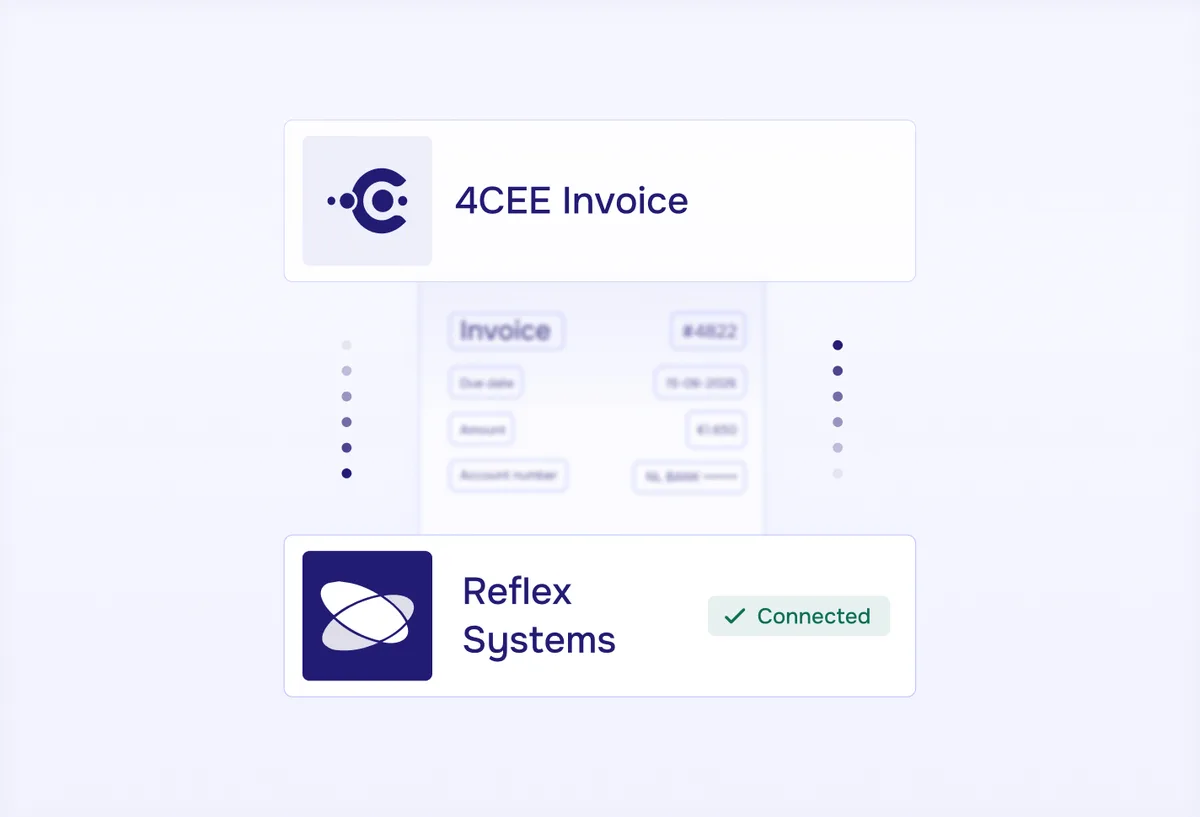
You were already working together on outgoing e-invoicing via Peppol. What made this the right moment to extend that to incoming invoice processing?
The pressure on finance teams is increasing. Organisations have to report faster, control costs and meet more and more requirements around e-invoicing and compliance. At the same time, many companies still process incoming invoices partly by hand. That takes time, increases the risk of errors and limits up-to-date insight into obligations and cash flow.
The existing partnership was a good foundation. The technical and organisational connection between ReflexSystems and 4CEE was already in place. Extending it to incoming invoice processing is therefore a logical next step.
With this integration, we want to create a more coherent digital process: from receiving and recognising the invoice to validation, approval and processing in Reflex. That way we support Reflex users not only with compliance, but also with structurally improving their financial processes.
The fact that we have both developed a new SaaS platform and want to migrate customers to it was certainly also a trigger to talk further.
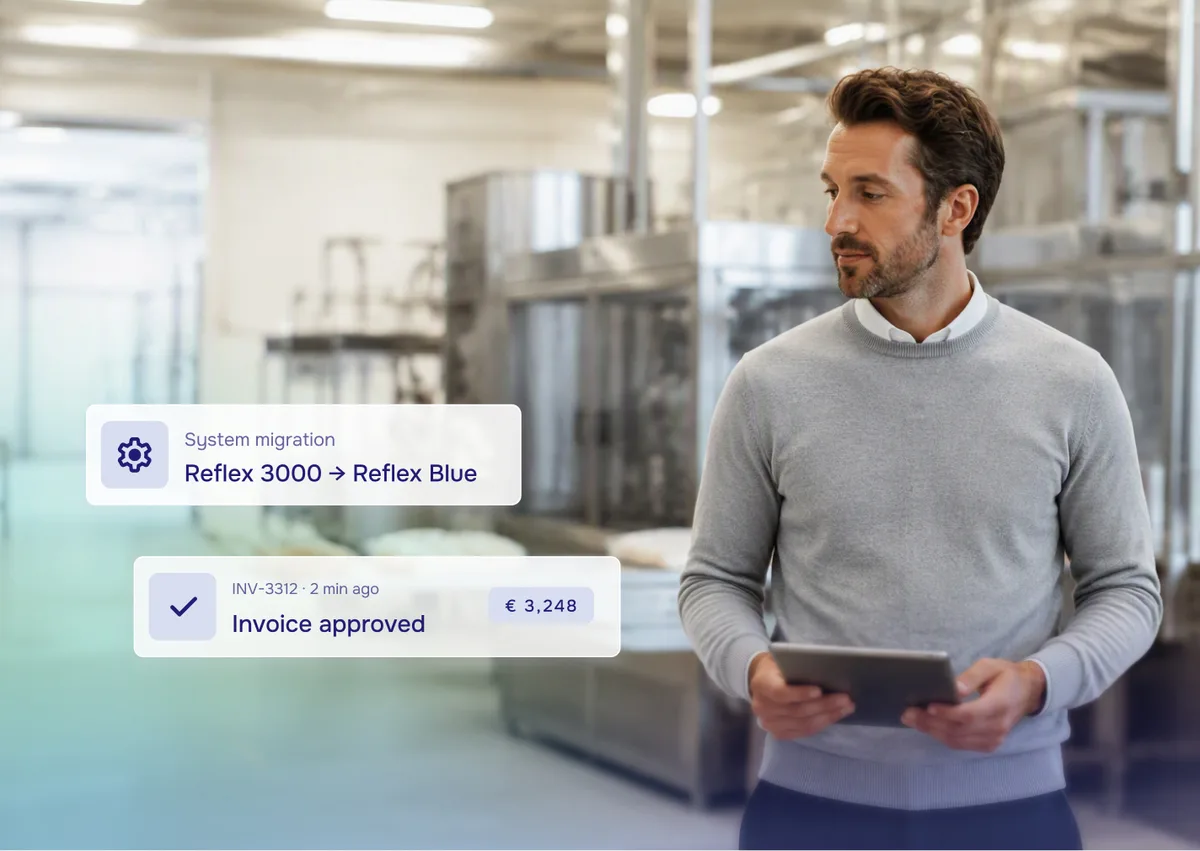
What makes 4CEE Invoice specifically suited to the food industry, in which ReflexSystems has specialised since 1983?
The food industry has large numbers of transactions, many suppliers and often complex goods and invoice flows. Prices, quantities, packaging, surcharges and other conditions can differ per delivery or supplier. That is why it is important that invoices are not only processed quickly, but also checked carefully and linked to the right data in the ERP system.
4CEE Invoice is designed to process large volumes of invoices automatically, using as much information as possible from the invoice and the available administrative data. The solution supports both structured e-invoices and invoices that arrive through other channels.
Combined with the industry-specific ERP knowledge of ReflexSystems, this results in a solution that fits the day-to-day practice of food companies. Reflex provides the in-depth knowledge of the operational processes and the ERP environment. 4CEE adds intelligent invoice recognition, validation, workflow and financial process automation.
You mention AI-driven recognition, coding and validation as core components. Can you give an example of what that looks like in practice for a Reflex user?
Suppose a supplier sends an invoice to a food company. 4CEE Invoice receives the invoice, recognises relevant data such as the supplier, invoice number, invoice date, purchase order number, amounts and VAT information, and combines this data with the information available from Reflex.
Based on information already known in Reflex, in other words the order and the weighing list, our software will or will not be able to process the invoice automatically. Only invoices that deviate beyond tolerances, and that need a substantive review, are presented to an employee. Costs that do not belong to an order are also processed into Reflex, so that an integral cost price calculation becomes possible in Reflex.
For the Reflex user, this means he or she no longer has to retype or manually check every invoice in full, and that invoices are checked for duplicates. The employee focuses mainly on exceptions. That is exactly where AI adds a lot of value: not by replacing the finance professional, but by taking over routine work and drawing attention to transactions that really need a review.
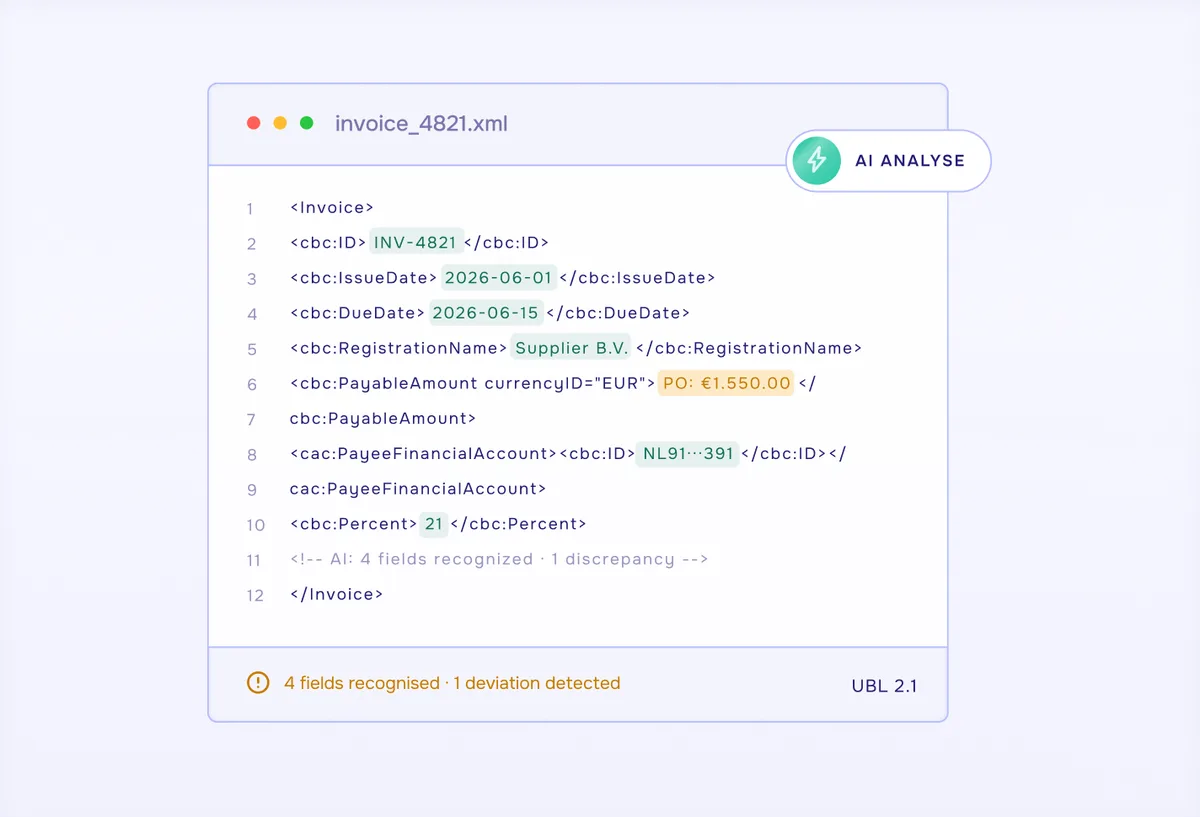
Fraud detection and anomaly detection are mentioned as benefits. How unique is that in the invoice automation market, and what is the added value of 4CEE’s technology?
Anomaly detection in itself is not entirely new in the market. The difference lies mainly in how the technology is applied and integrated into the daily invoice process.
4CEE Invoice combines recognition, historical data and predefined checks to make notable patterns or deviations visible. Think of a possible duplicate invoice, a changed bank account number, an unusual amount, or data that does not match what is expected based on previous transactions or what has already been recorded in the ERP system.
That does not mean every deviation is automatically fraud. Above all, the technology helps finance teams check in a more targeted way and spot risks earlier. The added value lies in the combination of automation and control: regular invoices move through the process faster, while deviating transactions get extra attention. That way we contribute to both efficiency and better control of the financial process.
Peppol and the broader strategy
This partnership builds on the existing Peppol integration. How does it fit into 4CEE’s broader ‘Office of the CFO’ vision on purchase-to-pay, order-to-cash and financial planning?
Our vision is that purchase-to-pay, order-to-cash, e-invoicing and financial planning should not be separate islands. They are all part of the same financial information chain.
Peppol and other forms of e-invoicing make data available faster, in a more structured way and more reliably. That not only makes the invoice process more efficient, it also improves the quality and timeliness of financial information. That information can then be used for reporting, cash flow management, forecasting and decision-making.
That is why the partnership with ReflexSystems fits our Office of the CFO vision so well. We do not just digitise financial processes; we connect transactions, process automation and financial insight. That creates a foundation on which finance can keep building.
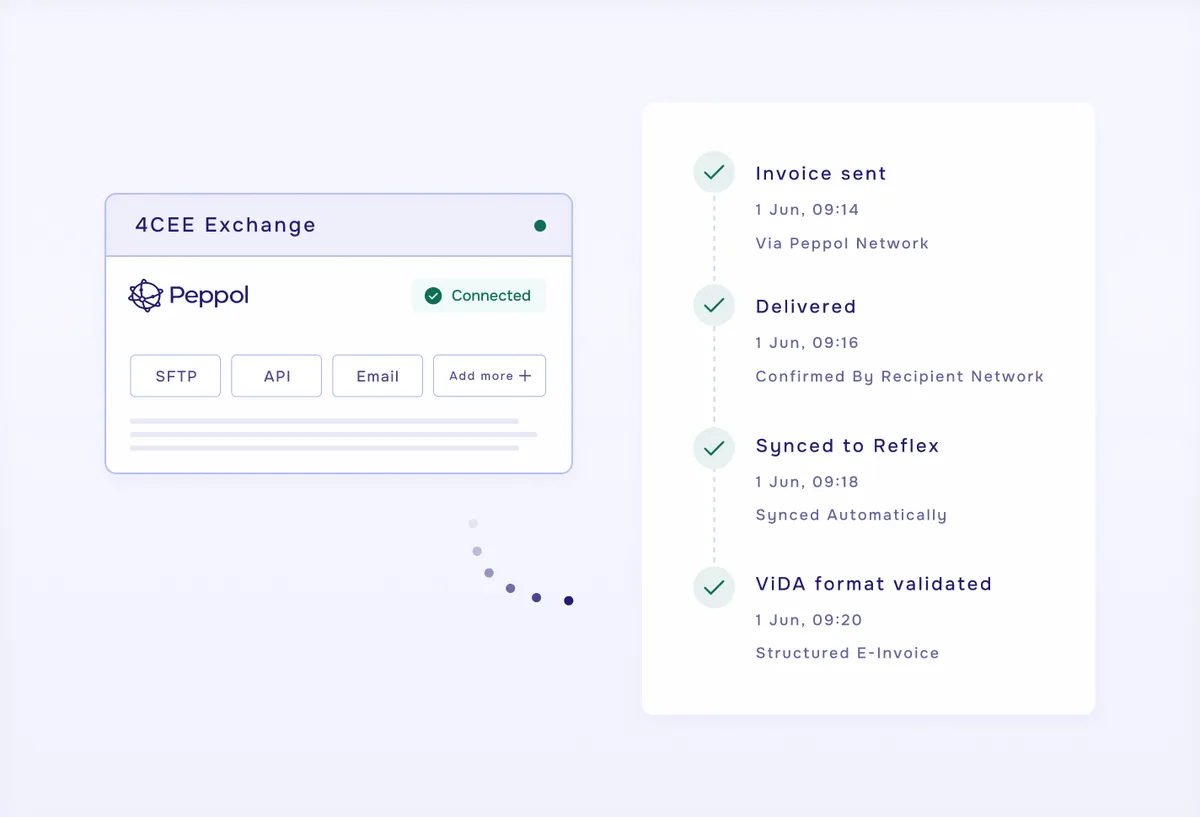
What will a finance team at a Reflex user notice in their daily work once 4CEE Invoice is fully integrated?
The most important difference is that employees spend less time on repetitive tasks. Invoices no longer need to be retyped by hand, routine checks can be automated and the right information becomes available in the process in a structured way.
In practice, this means:
- less manual data entry;
- fewer corrections and less rework;
- a shorter invoice lead time;
- better insight into the status of every invoice;
- more grip on exceptions;
- a process that is easier to audit and demonstrate.
The finance team increasingly moves from entering to reviewing, and from correcting afterwards to checking up front.
Looking ahead
You have said you will work on the integration together over the next six months. What does that process look like, and when do you expect the first customers to go live?
The process consists of several phases. We start by further working out the functional and technical connection between 4CEE Invoice and Reflex, beginning with Reflex Blue. We look closely at the processes that are typical of Reflex users and the food industry.
Then we build and test the integration together with ReflexSystems. We do not want to do this purely from a technical angle, but together with organisations that will use the solution in daily practice. That is why we are looking for pilot customers who want to think along actively, test processes and give feedback.
Based on those experiences, we optimise the integration before it becomes more widely available. The ambition is to connect the first pilot organisations within the announced development period. The moment the first customers go fully live depends partly on the chosen processes, the complexity of the customer environment and the results of the pilot. Care and a good fit with daily practice come first.

Do you see this partnership as a blueprint for similar integrations with other industry ERPs, or is it food-specific custom work?
It is a combination of both. The core of 4CEE Invoice and our integration approach is scalable and can also be applied to other ERP systems and sectors. We strongly believe in standardised integrations, because they speed up implementations and simplify management.
At the same time, the value of this partnership lies precisely in tailoring the integration to the processes of Reflex users and the specific characteristics of the food industry. So it is not a generic connector that happens to work with Reflex. We want to offer an integrated solution that clearly fits the daily practice of its users.
The approach can certainly serve as a blueprint for other industry ERPs, but the strength always lies in combining a scalable platform with the sector-specific knowledge of the ERP partner.
Finally
What is 4CEE’s key message to finance teams in the food industry using Reflex who still process invoices manually?
Do not wait to automate until regulation or staffing pressure forces you to. Manual invoice processing not only costs time, it also limits insight into and control over the process.
Automation also does not have to be a large and risky change programme. By digitising processes step by step, you can quickly start reducing manual work and then automate more and more checks and exceptions.
Our key message is therefore: do not use e-invoicing and AI only as technical tools, but as an opportunity to structurally improve the finance function. That creates a finance organisation that spends less time on administration and has more time for insight, control and supporting the business.
By combining ReflexSystems’ industry knowledge with 4CEE’s financial process automation, we make intelligent invoice processing practical for the food industry.
Dirk Rijnders, Partner Manager, 4CEE
What does this mean for your organisation? A checklist for invoice processing automation food industry businesses
An addition by the Peppol.now editorial team. Whether you use Reflex or another ERP system, the conditions for automatically matching purchase invoices are largely the same.
- Check your source data. Automatic matching only works if purchase orders, goods receipts and weighing lists are recorded completely and on time in the ERP system.
- Set tolerances. Define per supplier or product group which differences in price, quantity, packaging and surcharges are acceptable.
- Map your invoice flows. How many invoices already arrive as structured e-invoices via Peppol, and how many still as PDF or paper?
- Ask suppliers to invoice via Peppol. Start with the suppliers that send the most invoices.
- Set up the exception process. Who reviews deviations, within what timeframe, and who approves?
- Switch on checks. Flag possible duplicate invoices, changed bank account numbers and unusual amounts.
- Start step by step. Begin with one supplier group or site and extend the automatic checks from there.
More on AI in invoice recognition and validation: read our blog on AI invoice automation and Peppol e-invoicing.
For software vendors: Dirk Rijnders sees the approach as a possible blueprint for other industry ERPs: a scalable platform with standardised integrations, combined with the sector knowledge of the ERP partner.
Choosing a Peppol Service Provider
4CEE is a Professional partner of Peppol.now and has a profile page in our comparison tool. There you can compare 4CEE with other Peppol Service Providers and choose the partner that fits your ERP environment and invoice volumes: the next step in invoice processing automation food industry businesses are taking.
Sources
- Peppol.now interview with Dirk Rijnders, 4CEE, September 2026 (text agreed with 4CEE; translated from Dutch).
- Peppol.now, Invoice automation food sector: 4CEE and ReflexSystems begin with Reflex Blue, 3 September 2026.
- Peppol.now, 4CEE and ReflexSystems Partner on Automated Invoice Processing, 29 July 2026.
- 4CEE, Samenwerking 4CEE en ReflexSystems voor automatiseren factuurverwerking (Dutch), 29 July 2026.
- ReflexSystems, ReflexBlue, accessed 21 September 2026.
- 4CEE, 4cee.com, accessed 21 September 2026.