Made possible by SEEBURGER, Partner of Peppol.now

International Einvoicing and ERP Migration: What the STABILO Case Teaches Us

This article is based on the case study published by SEEBURGER about writing instrument manufacturer STABILO International GmbH. We use that case as a starting point for a broader analysis of questions that are relevant to many internationally operating companies: when do you choose Peppol, when do you choose a clearance model, and what does that mean when you are migrating an ERP system at the same time?

The situation: active in multiple countries, each with its own einvoicing requirements

Companies that invoice internationally do not operate within a single einvoicing system. Worldwide, three dominant architectures exist, each with their own countries and logic:

  • Decentralised — invoices are exchanged via certified service providers, without a central government gateway; examples include Peppol in Belgium, Denmark, Norway, Singapore, Australia and the UAE (5-corner model), and DBNAlliance in the United States (Peppol-inspired, not yet mandatory)
  • Clearance — every invoice passes through a government gateway before the recipient may process it; examples include SDI in Italy, KSeF in Poland, CFDI via SAT in Mexico, DIAN e-factura in Colombia, NF-e in Brazil and EFS/MBS in Nigeria
  • Hybrid — decentralised exchange via certified platforms combined with mandatory fiscal reporting to government; examples include Verifactu in Spain and PA (Plateformes Agréées) with PPF in France (mandatory from September 2026)

The common driver behind all these mandates: governments use einvoicing as an instrument to modernise their VAT systems. By making invoice data available in real time or near-real time, tax authorities can reduce VAT fraud, close tax gaps and make collection more efficient. The technical architecture — Peppol, clearance or hybrid — follows from that policy objective.

For a company active in several of these markets, this means concrete operational differences: per country, different technical requirements, different formats, different reporting obligations and different deadlines apply. The question is not whether you will encounter this complexity, but how you manage it.

The SEEBURGER case study describes how STABILO — a manufacturer of writing instruments with production sites in Germany, the Czech Republic and Malaysia, active in more than 180 countries — faced exactly this challenge. The company had country-specific einvoicing solutions running for Italy, Hungary and Spain, each through a separate provider. That worked, but it also meant multiple contracts, multiple integrations, and multiple compliance responsibilities. When Poland (KSeF) and France appeared on the roadmap, it became clear that this model was not scalable. The full case study describes how STABILO fundamentally reassessed that approach in the run-up to its SAP S/4HANA migration.

Peppol or clearance? Three architectures, three logics

The choice of an einvoicing solution is fundamentally a choice about architecture — and that choice depends heavily on the markets you operate in.

The decentralised model operates without a central government gateway in the transaction flow. Invoices are exchanged via certified service providers based on shared standards. Peppol is the most widely adopted example of this model.

The clearance model works differently: every invoice passes through a central government gateway that validates — or in some cases approves — the invoice before the recipient is permitted to process it. Italy’s SDI works this way. So does Poland’s KSeF. Without validation by the government platform, an invoice in these countries has no legal standing.

The hybrid model combines elements of both: invoices are exchanged via certified private platforms, while the government simultaneously receives fiscal reporting data. There is no central validation requirement per invoice, but the government has real-time visibility into transactions. Spain’s Verifactu and the French system with Plateformes Agréées are examples of this approach.

Once a country makes B2B einvoicing mandatory, this has direct compliance consequences for every company invoicing in that country: you must comply with the architecture the relevant government has chosen, not the architecture you find most convenient. For purely nationally operating companies, the choice is therefore relatively straightforward — there is only one applicable system, and the compliance question is primarily an implementation question: which provider helps me set this up properly?

For companies active in multiple countries, the situation is more complex. They operate simultaneously across multiple architectures, with multiple formats and multiple deadlines. What that means in practice is the subject of the next section.

What this means for companies doing business internationally

For a company that invoices internationally, einvoicing is no longer optional. It has become a prerequisite for operating in certain markets at all. The question is not whether you will encounter it, but in which countries, at what point in time — and whether your current solution can handle it.

That is more concrete than it sounds. A company supplying Italian customers has had to deal with mandatory invoicing via the SDI system for years. Anyone doing business in Belgium has had to be fully operational for Peppol invoicing since January 2026. A company with activities in Mexico or Colombia has long been working with centralised clearance systems such as CFDI and DIAN. And companies expanding into Asian markets like Singapore or Australia encounter Peppol-based obligations that are already active there. The common thread: every country has its own system, its own timeline and its own technical requirements.

For companies operating from the Netherlands, an additional dynamic applies. Since 18 April 2019, all contracting authorities have been required to receive and process einvoices, but suppliers are not obliged to send them. The central government and various individual public organisations have used this situation to contractually enforce einvoice submission. The expectation is that the Netherlands will also adopt Peppol for B2B: in March 2026, EY advised the Dutch Ministry of Finance — in its report ‘ViDA e-facturatie en digitale rapportage’ — to recommend Peppol as the standard for mandatory B2B einvoicing in the Netherlands. Peppol.now published an analysis of the EY report. A formal policy decision is still pending, but EY’s recommendation is clear.

The strategic question is therefore not only: am I compliant in the markets where I currently operate? But also: is my solution capable of absorbing the obligations ahead — without every new market requiring a new implementation project?

The ERP migration as a strategic moment for einvoicing

A migration to SAP S/4HANA — or to any modern ERP system — is demanding enough without einvoicing being managed as a separate parallel track. At the same time, such a migration offers a unique opportunity: the moment when existing connections, providers and contracts are already under scrutiny.

What the STABILO case illustrates is that this combination can yield strategic advantage. By reviewing the einvoicing strategy before the ERP migration — rather than after — the migration itself becomes less complex. Fewer providers, fewer integrations, more architectural coherence. That reduces not only the technical complexity during the transition, but also the ongoing management burden afterwards.

Concretely: a provider that handles both ERP integration and international einvoicing compliance removes coordination work that would otherwise need to be managed internally. That is particularly relevant for organisations without large IT departments, or for organisations where the SAP migration is already consuming capacity.

How SEEBURGER addresses this challenge

SEEBURGER addresses the challenge described above — multiple countries, multiple architectures, one ERP — through the SEEBURGER BIS Platform. That platform integrates einvoicing, EDI, API connections and managed file transfer in a single environment, connecting to the customer’s ERP system through one interface.

In practice, this means:

  • Peppol exchange and clearance systems (SDI, KSeF, ChorusPro) are handled through the same platform, without separate contracts per country
  • Compliance updates — new formats, changed country requirements — are applied centrally by SEEBURGER; customers do not need to reserve internal capacity for this
  • The SAP S/4HANA integration is certified and maintained throughout a migration, so invoice processes are not interrupted
  • The solution scales: adding new countries requires no new implementation, only an extension within the existing platform
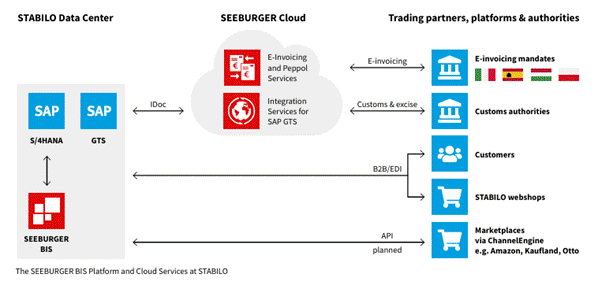
Graphic courtesy of SEEBURGER, used with permission

This is precisely the trade-off STABILO made: not the cheapest option per country, but the most manageable across all countries combined. The case study describes the outcome as fewer suppliers, fewer integrations, and a position ready for future obligations — including KSeF, ViDA and the French mandate.

What this tells us about provider selection

The STABILO case is not a blueprint to be followed without modification — every company’s situation differs. But the trade-offs it makes visible are recognisable for almost any organisation that invoices internationally and is facing an ERP decision or migration.

The core insight: einvoicing is not an IT project you complete. It is an ongoing compliance obligation that scales with your markets and your systems. The provider you choose must not only cover the countries of today, but also understand the architectures of tomorrow — Peppol, clearance, and the hybrid models that ViDA 2030 may further align.

More information

SEEBURGER, Partner of Peppol.now, offers international einvoicing as part of their SEEBURGER Global E-Invoicing Services. Their solution supports both Peppol models and centralised clearance systems in more than 35 countries, and integrates with SAP S/4HANA and other ERP environments.

The full STABILO case study is available as a PDF on the SEEBURGER website.

More on SEEBURGER’s einvoicing and Peppol services, SAP S/4HANA integration capabilities, and sector solutions can be found on their profile on Peppol.now.

Source: SEEBURGER AG (2024). STABILO Selects SEEBURGER To Streamline E-Invoicing Ahead Of Implementing SAP S/4HANA. Case Study. Bretten: SEEBURGER AG. Retrieved from seeburger.com.

Mogelijk gemaakt door SEEBURGER, Partner van Peppol.nu

Internationale e-facturatie en ERP-transitie: wat de STABILO-case ons leert

Dit artikel is gebaseerd op de gepubliceerde case study van SEEBURGER over schrijfwarenontwikkelaar STABILO International GmbH. We gebruiken die case als vertrekpunt voor een bredere analyse van vragen die voor veel internationaal opererende bedrijven relevant zijn: wanneer kies je voor Peppol, wanneer voor een clearance-model, en wat betekent dat als je tegelijkertijd een ERP-systeem migreert?

De situatie: actief in meerdere landen, elk met eigen e-facturatievereisten

Wie internationaal factureert, heeft niet te maken met één e-facturatiesysteem. Wereldwijd zijn er drie dominante architecturen, met elk hun eigen landen en logica:

  • Gedecentraliseerd — facturen worden uitgewisseld via gecertificeerde serviceproviders, zonder centrale overheidspoort; voorbeelden zijn Peppol in België, Denemarken, Noorwegen, Singapore, Australië en de VAE (5-corner model), en DBNAlliance in de Verenigde Staten (Peppol-geïnspireerd, nog niet verplicht)
  • Clearance — elke factuur passeert een overheidspoort vóór verwerking door de ontvanger; voorbeelden zijn SDI in Italië, KSeF in Polen, CFDI via SAT in Mexico, DIAN e-factura in Colombia, NF-e in Brazilië en EFS/MBS in Nigeria
  • Hybride — gedecentraliseerde uitwisseling via gecertificeerde platforms gecombineerd met verplichte fiscale rapportage aan de overheid; voorbeelden zijn Verifactu in Spanje en PA (Plateformes Agréées) en PPF in Frankrijk (verplicht per september 2026)

De gemene deler achter al deze mandaten: overheden zetten e-facturatie in als instrument om hun btw-stelsel te moderniseren. Door factuurdata real-time of near-real-time beschikbaar te maken, kunnen belastingdiensten btw-fraude terugdringen, belastingkloven verkleinen en de inning efficiënter maken. De technische architectuur — Peppol, clearance of hybride — volgt op die beleidsdoelstelling.

Voor een bedrijf dat actief is in meerdere van deze markten, betekent dit concreet: per land gelden andere technische eisen, andere formats, andere rapportageverplichtingen en andere deadlines. De vraag is niet óf je hiermee te maken krijgt, maar hoe je het beheert.

De case study van SEEBURGER beschrijft hoe STABILO — fabrikant van schrijfwaren met productielocaties in Duitsland, Tsjechië en Maleisië, actief in meer dan 180 landen — met precies dit vraagstuk werd geconfronteerd. Het bedrijf had landspecifieke e-facturatieoplossingen lopen voor Italië, Hongarije en Spanje, elk via een aparte provider. Dat werkte, maar het betekende ook: meerdere contracten, meerdere koppelingen, meerdere compliance-verantwoordelijkheden. En zodra Polen (KSeF) en Frankrijk op de agenda kwamen, was duidelijk dat dit model niet schaalbaar was. De volledige case study beschrijft hoe STABILO dat bij de voorbereiding van de SAP S/4HANA-migratie fundamenteel heeft herzien.

Peppol of clearance? Drie architecturen, drie logica’s

De keuze voor een e-facturatieoplossing is in de kern een keuze over architectuur. En die keuze hangt sterk af van de markten waarin je actief bent.

Het gedecentraliseerde model werkt zonder centrale overheidspoort in de transactiestroom. Facturen worden uitgewisseld via gecertificeerde serviceproviders op basis van gedeelde standaarden. Peppol is het meest verspreide voorbeeld van dit model.

Het clearance-model werkt anders: elke factuur passeert een centrale overheidspoort die de factuur valideert — of zelfs goedkeurt — voordat de ontvanger hem mag verwerken. Italië’s SDI werkt zo. Het Poolse KSeF ook. Zonder validatie door het overheidsplatform heeft een factuur in deze landen geen juridische status.

Het hybride model combineert elementen van beide: facturen worden uitgewisseld via gecertificeerde private platforms, maar de overheid ontvangt tegelijkertijd fiscale rapportagedata. Er is geen centrale validatieplicht per factuur, maar de overheid heeft wel real-time zicht op transacties. Spanje’s Verifactu en het Franse systeem met Plateformes Agréées zijn voorbeelden van deze aanpak.

Zodra een land B2B e-facturatie verplicht stelt, heeft dat directe consequenties voor elk bedrijf dat in dat land factureert: je moet voldoen aan de architectuur die de betreffende overheid heeft gekozen, niet aan de architectuur die jij het handigst vindt. Voor puur nationaal opererende bedrijven is de keuze daarmee betrekkelijk eenvoudig — er is maar één systeem van toepassing, en de compliance-vraag is vooral een implementatievraag: welke provider helpt mij dit goed inrichten?

Voor bedrijven die in meerdere landen actief zijn, ligt dat anders. Zij opereren gelijktijdig in meerdere architecturen, met meerdere formats en meerdere deadlines. Wat dat concreet betekent, bekijken we in het volgende hoofdstuk.

Wat dit betekent voor bedrijven die internationaal zaken doen

Voor een bedrijf dat internationaal factureert, is e-facturatie geen keuze meer. Het is een randvoorwaarde geworden om in bepaalde markten überhaupt zaken te kunnen doen. De vraag is niet of je ermee te maken krijgt, maar in welke landen, op welk moment — en of je huidige oplossing dat aankan.

Dat is concreter dan het klinkt. Een bedrijf dat levert aan Italiaanse klanten, heeft al jaren te maken met verplichte facturatie via het SDI-systeem. Wie zakendoet in België, moet per januari 2026 volledig operationeel zijn voor Peppol-facturatie. Een bedrijf met activiteiten in Mexico of Colombia werkt al lang met gecentraliseerde clearance-systemen als CFDI en DIAN. En wie groeit naar Aziatische markten als Singapore of Australië, stuit op Peppol-gebaseerde verplichtingen die daar al actief zijn. De gemeenschappelijke noemer: elk land heeft zijn eigen systeem, zijn eigen tijdlijn en zijn eigen technische eisen.

Voor bedrijven die vanuit Nederland opereren, speelt daar een eigen dynamiek bij. Nederland kent sinds 18 april 2019 een verplichting aan alle aanbestedende diensten om een e-factuur te kunnen ontvangen en verwerken, maar geen verplichting aan de leverancier om die te sturen. De Rijksoverheid en diverse individuele overheidsorganisaties hebben deze situatie aangegrepen om privaatrechtelijk de verplichte aanlevering af te dwingen. De verwachting is dat Nederland ook voor B2B op Peppol in gaat zetten: in maart 2026 adviseerde EY in opdracht van het Ministerie van Financiën in haar rapport ‘ViDA e-facturatie en digitale rapportage’ om Peppol als standaard te gebruiken voor verplichte B2B e-facturatie in Nederland. Peppol.nu schreef een analyse van dat EY-rapport. Een formeel beleidsbesluit ontbreekt nog, maar het advies van EY is helder.

De strategische vraag is daarmee niet alleen: ben ik compliant in de markten waar ik nu actief ben? Maar ook: is mijn oplossing in staat om de verplichtingen die eraan komen te absorberen — zonder dat elke nieuwe markt een nieuw implementatieproject betekent?

De ERP-transitie als strategisch moment voor e-facturatie

Een migratie naar SAP S/4HANA — of naar een ander modern ERP-systeem — is belastend genoeg zonder dat e-facturatie er als los vraagstuk naast wordt beheerd. Tegelijkertijd biedt zo’n transitie een unieke kans: het moment waarop je bestaande koppelingen, providers en contracten toch al kritisch beoordeelt.

Wat de STABILO-case illustreert, is dat die combinatie strategisch voordeel kan opleveren. Door de e-factuurstrategie te herzien vóór de ERP-migratie — en niet erna — wordt de migratie zelf eenvoudiger. Minder providers, minder koppelingen, meer uniformiteit in de architectuur. Dat vermindert niet alleen de technische complexiteit, maar ook de beheerslast daarna.

Concreet: een provider die de ERP-integratie beheerst én de internationale e-facturatiecompliance afdekt, neemt werk uit handen dat anders intern gecoördineerd moet worden. Dat is met name relevant voor organisaties zonder grote IT-afdeling, of voor organisaties waarbij de SAP-migratie al capaciteit vraagt.

Hoe SEEBURGER deze uitdaging aanpakt

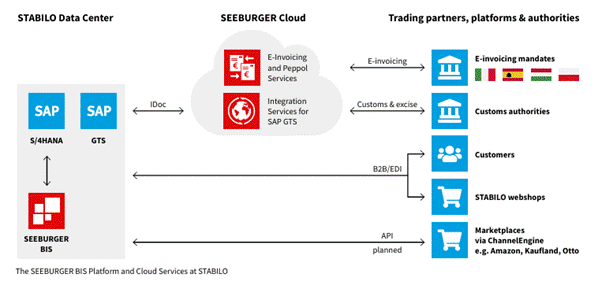
SEEBURGER lost het eerder beschreven probleem — meerdere landen, meerdere architecturen, één ERP — op via het SEEBURGER BIS-Platform. Dat platform integreert e-facturatie, EDI, API-koppelingen en managed file transfer in één omgeving, en verbindt die via één aansluiting met het ERP-systeem van de klant.

Concreet betekent dit voor de e-factuuruitdaging:

  • Peppol-uitwisseling én clearance-systemen (SDI, KSeF, ChorusPro) worden afgehandeld via hetzelfde platform, zonder aparte contracten per land
  • Compliance-updates — nieuwe formats, gewijzigde landvereisten — worden door SEEBURGER centraal doorgevoerd; de klant hoeft daar intern geen capaciteit voor te reserveren
  • De integratie met SAP S/4HANA is gecertificeerd en wordt ook tijdens een migratie gehandhaafd, zodat factuurprocessen niet stilliggen
  • De oplossing schaalbaar: nieuwe landen toevoegen vergt geen nieuwe implementatie, maar een uitbreiding binnen het bestaande platform
Afbeelding beschikbaar gesteld door SEEBURGER, gebruikt met toestemming.

Dat is precies de afweging die STABILO maakte: niet het goedkoopste per land, maar het meest beheersbare over alle landen samen. De case study beschrijft het resultaat als minder leveranciers, minder integraties, en een positie die klaar is voor toekomstige verplichtingen — waaronder KSeF, ViDA en de Franse mandaatverplichting.

Wat dit leert over leveranciersselectie

De STABILO-case is geen blauwdruk die klakkeloos overgenomen kan worden — de situatie van elk bedrijf verschilt. Maar de afwegingen die erin zichtbaar worden, zijn herkenbaar voor vrijwel elke organisatie die internationaal factureert en voor een ERP-keuze of -migratie staat.

De kern: e-facturatie is geen IT-project dat je afrondt. Het is een doorlopende compliance-opgave die meeschaalt met je markten en je systemen. De leverancier die je daarvoor kiest, moet niet alleen de landen van vandaag dekken, maar ook de architecturen van morgen begrijpen — Peppol, clearance, en de hybride modellen die ViDA 2030 mogelijk verder uniformeert.

Meer informatie

SEEBURGER, Partner van Peppol.nu, biedt internationale e-facturatie als onderdeel van hun SEEBURGER Global E-Invoicing Services. Hun oplossing ondersteunt zowel Peppol-modellen als gecentraliseerde clearance-systemen in meer dan 35 landen, en integreert met SAP S/4HANA en andere ERP-omgevingen.

De volledige STABILO case study is beschikbaar als PDF via de website van SEEBURGER.

Meer over SEEBURGER’s e-invoicing en Peppol-diensten, SAP S/4HANA-integraties en sectoroplossingen vind je op hun profiel op Peppol.nu.

Bron: SEEBURGER AG (2024). STABILO Selects SEEBURGER To Streamline E-Invoicing Ahead Of Implementing SAP S/4HANA. Case Study. Bretten: SEEBURGER AG. Geraadpleegd via seeburger.com.

4CEE and Cadran Launch Partnership for E‑Invoicing within Oracle NetSuite

Ede, March 11 – 4CEE and Cadran today announce a strategic partnership to provide NetSuite users with fully integrated e‑invoicing based on 4CEE Exchange. With this collaboration, both organizations combine their expertise to support businesses in automating and future-proofing their financial processes.

4CEE Exchange for NetSuite

Through the integration between NetSuite and 4CEE Exchange, organizations can now securely and compliantly exchange e‑invoices and status messages via Peppol and international e‑transaction networks.

Value for NetSuite Users

Cadran, as a specialized Oracle NetSuite partner, strengthens its portfolio with this integration and offers clients a direct route to e‑invoicing. This enables organizations to:

  • Reduce manual processing and exceptions with end‑to‑end automation
  • Minimize corrections and disputes with validated transaction data
  • Meet Peppol obligations and e‑invoicing mandates
  • Achieve greater control and auditability through status messages and traceable transaction flows

Office of the CFO

The partnership aligns seamlessly with 4CEE’s Office of the CFO portfolio. Organizations face increasing pressure around compliance, cash flow, costs, and automation. By joining forces, 4CEE and Cadran offer a modular, scalable solution for modern Finance teams looking to accelerate their digital finance roadmap.

“With this partnership we bring together the best of both worlds: Cadran’s specialized NetSuite expertise and 4CEE Exchange’s proven e‑transaction technology,” says Jeroen Rozeboom, Head of Strategic Alliances at 4CEE. “NetSuite users can now easily connect to international e‑invoicing standards and future-proof their processes.”

“E‑invoicing ultimately comes down to balancing cost, risk, and return,” says Marcel van Es, Commercial Manager NetSuite at Cadran. “By fully integrating 4CEE into NetSuite, clients can go live faster based on proven best practices, with fewer manual actions and a much more controllable process.”


Availability

The joint solution is available immediately, allowing Oracle NetSuite users to benefit right away from fast, error-free, and fully digital invoice processing.

About Cadran

Cadran helps CFOs and finance teams gain control over costs, compliance, and cash flow with Oracle NetSuite. We structure processes so that organizations gain real-time insight, maintain reliable audit trails, and reduce dependence on manual controls and Excel. Since 1998, we have been implementing, supporting, and hosting ERP solutions for wholesalers, manufacturers, and installation & service companies. We combine ERP expertise with a pragmatic approach: fast go-live, properly secured, with attention to adoption and best practices. www.cadran.nl

About 4CEE

Finance teams need to be able to work in flow. That is why at 4CEE we combine financial expertise, technology, and specialists who understand the world of the modern CFO. We streamline transactional processes with solutions for Purchase to Pay, E‑invoicing, and Order to Cash. We strengthen planning and performance with Financial Planning & Analysis, giving CFOs greater oversight and control. And we accelerate digital transformation with Intelligent Automation, integrating with ERP systems and leading transaction networks.

The result? Greater control, grip on cash flow, costs, and compliance. And Finance teams that regain space and feel the freedom to truly make a difference.

4CEE – YOUR FINANCE IN FLOW.

www.4cee.com


For more information, interviews, or quotes:

PR Contact Cadran
Pieter Jan van Oordt
marketing@cadran.nl
+31 33 247 1599

PR Contact 4CEE

Jan-Cees Polderdijk
jcpolderdijk@4cee.com
+31 6 4644 1004

4CEE en Cadran starten samenwerking voor e invoicing binnen Oracle NetSuite

Ede, 11 maart – 4CEE en Cadran kondigen vandaag een strategische samenwerking aan om NetSuite‑gebruikers te voorzien van volledig geïntegreerde e‑invoicing op basis van 4CEE Exchange. Met deze samenwerking brengen beide organisaties hun expertise samen om bedrijven te ondersteunen bij het automatiseren en toekomstbestendig maken van hun financiële processen.

4CEE Exchange voor NetSuite

Via de koppeling tussen NetSuite en 4CEE Exchange kunnen organisaties voortaan e‑facturen en statusberichten veilig en compliant uitwisselen via Peppol en internationale e‑transactienetwerken.

Waarde voor NetSuite‑gebruikers

Cadran, als gespecialiseerde Oracle NetSuite‑partner, versterkt haar portfolio met deze integratie en biedt klanten een directe route naar e‑invoicing. Hiermee kunnen organisaties onder andere:

  • Handmatige verwerking en uitzonderingen verminderen met end‑to‑end automatisering
  • Correcties en disputen terugdringen met gevalideerde transactiedata
  • Voldoen aan Peppol-verplichtingen en e-invoicing mandaten
  • Meer controle en auditability realiseren door statusberichten en herleidbare transactiestromen

Office of the CFO

De samenwerking sluit naadloos aan op het Office of the CFO‑portfolio van 4CEE. Organisaties staan onder toenemende druk rond compliance, cashflow, kosten en automatisering. Door de krachten te bundelen bieden 4CEE en Cadran een modulaire, schaalbare oplossing voor moderne Finance‑teams die hun digitale finance roadmap willen versnellen.

“Met deze samenwerking brengen we het beste van twee werelden samen: de specialistische NetSuite‑kennis van Cadran en de bewezen e‑transactie‑technologie van 4CEE Exchange,” zegt Jeroen Rozeboom, Head of Strategic Alliances bij 4CEE. “NetSuite‑gebruikers kunnen nu eenvoudig aansluiten op internationale e‑invoicing‑standaarden en hun processen klaarstomen voor de toekomst.”

“Bij e-facturatie gaat het uiteindelijk om de balans tussen kosten, risico en opbrengst,” zegt Marcel van Es, Commercial Manager NetSuite bij Cadran. “Door 4CEE volledig te integreren in NetSuite kunnen klanten sneller live op basis van bewezen best practices, met minder handmatige handelingen en een veel beter controleerbaar proces.”


Beschikbaarheid

De gezamenlijke oplossing is per direct beschikbaar, waardoor Oracle NetSuite‑gebruikers meteen kunnen profiteren van snelle, foutloze en volledig digitale factuurverwerking.

Over Cadran

Cadran helpt CFO’s en finance teams om grip te krijgen op kosten, compliance en cashflow met Oracle NetSuite. We richten processen zo in dat organisaties real-time inzicht krijgen, betrouwbare audit trails hebben en minder afhankelijk zijn van handmatige controles en Excel.
Sinds 1998 implementeren, ondersteunen en hosten wij ERP-oplossingen voor groothandels, productiebedrijven en installatie & service bedrijven. Daarbij combineren we ERP-expertise met een pragmatische aanpak: snel live, goed geborgd en met aandacht voor adoptie en best practices.

www.cadran.nl

Over 4CEE
Finance teams moeten in flow kunnen werken. Daarom combineren we bij 4CEE financiële expertise, technologie en specialisten die de wereld van de moderne CFO begrijpen. We stroomlijnen transactionele processen met oplossingen voor Purchase to Pay, E-invoicing en Order to Cash. We versterken planning en performance met Financial Planning & Analysis, die CFO’s meer overzicht en controle geven. En we versnellen digitale transformatie met Intelligent Automation, integreren met ERP-systemen en toonaangevende transactienetwerken.

Het resultaat? Meer controle, grip op cashflow, kosten en compliance. En Finance teams die weer ruimte krijgen en de vrijheid voelen om écht het verschil te maken.

4CEE – YOUR FINANCE IN FLOW.

www.4cee.com


Voor meer informatie, interviews of citaten:

Contact PR Cadran
Pieter Jan van Oordt
marketing@cadran.nl
+31 33 247 1599

Contact PR 4CEE
Jan-Cees Polderdijk
jcpolderdijk@4cee.com
+31 6 4644 1004

Informer Invoicing joins Peppol.now Partner Network: Free e-invoicing for start-ups, SMEs and accountants

The Hague, 4 maart 2026 – Informer Invoicing joins the partner network of Peppol.now as a Basic partner. The Amsterdam-based platform sets itself apart in the Peppol landscape by significantly reducing the barrier to entry for small businesses and accounting firms: Peppol connectivity is included and available free of charge, with no technical background required.

Turning compliance into an accessible starting point

For many SMEs and freelancers, e-invoicing feels like a mandate that demands what they don’t have: time, technical expertise and budget. Informer Invoicing takes a different approach. The platform combines full Peppol compliance with a free tier available in Belgium until 1 January 2029 — the point at which the next phase of Belgium’s e-invoicing obligation takes effect.

That timing matters. With Belgium’s B2B mandate in force for large companies as of 1 January 2026 and phasing in for SMEs, more businesses are looking for an entry point that works without a lengthy implementation process. Informer Invoicing provides exactly that: get started immediately, remain compliant, and send via the Peppol network.

Peppol connectivity included as standard

Informer Invoicing is a Peppol Service Provider and sends e-invoices automatically via the Peppol network. Users do not need to request a separate Access Point connection or perform any technical configuration. Peppol functionality is built into the standard invoicing flow: create, send, done.

Beyond invoice delivery, the platform also supports quotes, expense scanning, debtor management and integration with accounting software. For accounting firms managing multiple clients through the transition to electronic invoicing, Informer Invoicing offers a multi-user environment suited to that role.

Security and support

All data is stored on servers in Germany, within the European Union, in compliance with GDPR. The platform includes a helpdesk and a built-in AI assistant for users who need guidance without in-house technical support.

Informer Invoicing operates across multiple European countries. Trial periods are available in Germany and Austria; the Belgian free-of-charge offer runs until the end of 2028.

Beyond the web interface, Informer Invoicing offers a mobile app for iOS and Android. Through the app, users can create and send invoices and quotes, scan receipts and purchase invoices with their phone camera, and manage clients, hours and projects. For freelancers and self-employed professionals who work on the go, this means invoicing compliantly without being tied to a computer.

More than 114,000 businesses

Over the past 30 years, Informer has helped more than 114,000 businesses gain greater confidence in their finances. That scale reflects a platform tested in real-world conditions — not just as a technical solution, but as a usable experience for entrepreneurs without accounting expertise.

As a Basic partner of Peppol.now, Informer Invoicing is now listed for businesses looking for an accessible, free entry point into Peppol-based e-invoicing.

Discover Informer Invoicing at: www.peppol.now/supplier/informer-invoicing

Peppol.now — Selection platform for e-invoicing

Peppol.now serves as an independent and transparent selection platform where companies can find an overview of providers connected to the Peppol network and offering e-invoicing services. Organizations can compare providers based on services, specializations, and certifications, enabling them to make a well-informed choice for a suitable supplier.

Interested in becoming a partner of Peppol.now? For more information: www.peppol.nu/en/partnership-packages-and-prices

Informer Invoicing wordt partner van Peppol.nu: Gratis e-facturatie voor start-ups, MKB en accountants

Den Haag, 4 maart 2026 – Informer Invoicing sluit zich aan bij het partnernetwerk van Peppol.nu als Basic partner. Het in Amsterdam gevestigde platform onderscheidt zich in het Peppol-landschap door een aanpak die de drempel voor kleine ondernemers en accountantskantoren aanzienlijk verlaagt: Peppol-connectiviteit is inbegrepen en gratis beschikbaar, zonder dat daarvoor een technische achtergrond vereist is.

Van compliance-uitdaging naar toegankelijk instapmoment

Voor veel MKB-ondernemers en ZZP’ers voelt e-facturatie als een verplichting die iets vraagt wat ze niet hebben: tijd, technische kennis en budget. Informer Invoicing kiest een andere insteek. Het platform combineert volledige Peppol-compliance met een gratis basisversie die in België beschikbaar is tot 1 januari 2029.

Die timing is relevant. Met de Belgische B2B-verplichting die per 1 januari 2026 van kracht is voor grote ondernemingen en stapsgewijs van toepassing wordt op het MKB, zoeken steeds meer ondernemers naar een instap die werkt zonder dat er een implementatietraject aan voorafgaat. Informer Invoicing biedt dat: direct aan de slag, compliant, via het Peppol-netwerk.

Peppol-connectiviteit standaard inbegrepen

Informer Invoicing is een Peppol Serviceprovider en verzendt e-facturen automatisch via het Peppol-netwerk. Gebruikers hoeven geen aparte Accesspoint-verbinding aan te vragen of een technische configuratie uit te voeren. De Peppol-functionaliteit is verweven in de standaard factuurflow: aanmaken, versturen, klaar.

Het platform ondersteunt naast factuurverzending ook offertes, ontvangstbewijzen, debiteurenbeheer en koppeling met boekhoudpakketten. Voor accountantskantoren die meerdere klanten begeleiden bij de overstap naar elektronisch factureren, biedt Informer Invoicing een multi-gebruikersomgeving die daarvoor geschikt is.

Beveiliging en ondersteuning

Alle data wordt opgeslagen op servers in Duitsland, binnen de Europese Unie. Het platform voldoet aan de AVG en biedt ondersteuning via een helpdesk en een ingebouwde AI-assistent. Voor ondernemers die geen technische ondersteuning in huis hebben, is dat een relevant onderdeel van het dienstenpakket.

Informer Invoicing is actief in meerdere Europese landen. In Duitsland en Oostenrijk zijn proefperiodes beschikbaar; het Belgische gratis aanbod loopt tot eind 2028.

Naast de webversie beschikt Informer Invoicing over een mobiele app voor iOS en Android. Via de app kunnen gebruikers facturen en offertes opmaken en versturen, bonnetjes en inkoopfacturen scannen met de telefooncamera, en klanten, uren en projecten beheren. Voor ZZP’ers en freelancers die regelmatig onderweg zijn, betekent dat een ongebonden werkwijze: compliant factureren zonder computer.

Meer dan 114.000 bedrijven

Informer heeft in de afgelopen 30 jaar al meer dan 114.000 ondernemingen geholpen meer zekerheid te krijgen over hun financiën. Die schaal geeft aan dat het platform is getoetst in de praktijk — niet alleen als technische oplossing, maar ook als gebruikservaring voor ondernemers zonder boekhoudkundige voorkennis.

Als Basic partner van Peppol.nu is Informer Invoicing nu vindbaar voor bedrijven die een toegankelijke, gratis instap zoeken voor Peppol-gebaseerde e-facturatie.

Ontdek Informer Invoicing op: www.peppol.nu/supplier/informer-invoicing

Peppol.nu — Vitrine van betrouwbare e-facturatieproviders

Peppol.nu is een onafhankelijk en transparant selectieplatform waarop bedrijven een overzicht vinden van providers die zijn aangesloten op het Peppol-netwerk en e-facturatiediensten aanbieden. Organisaties kunnen providers vergelijken op basis van diensten, specialisaties en certificeringen, zodat zij een weloverwogen keuze kunnen maken voor een geschikte leverancier.

Ook partner worden van Peppol.nu? Meer informatie: www.peppol.nu/partnership-pakketten-en-prijzen

Centric becomes Premium partner of Peppol.now: e-invoicing for government and supply chain

The Hague, 24 February 2026 — Centric becomes partner of Peppol.now. The Dutch IT company, with over 3,100 professionals active in eight European countries, operates as a Peppol Service Provider offering its own Accesspoint on the Peppol network. That connection runs through the Business Data Exchange platform — an infrastructure layer that consolidates EDI transactions, e-invoicing and Peppol exchange within a single controlled environment. This makes Centric a distinctive addition to the Peppol.now ecosystem: not as a standalone e-invoicing provider, but as a partner that embeds Peppol into the broader digital processes of its clients.

The IT Backbone of a Large Part of the Netherlands

The scale at which Centric operates makes the significance of this partnership concrete. Of the Netherlands’ seventeen million inhabitants, the personal records of over eleven million citizens are managed through Key2Burgerzaken — Centric’s back-office system used by municipalities across the country. Anyone applying for a passport, registering a change of address, or getting married in the Netherlands interacts with Centric infrastructure.

That foundation has been built over thirty years. Founded in 1992 and renamed Centric in 2000, the company grew into one of the Netherlands’ largest IT service providers — with a revenue of €425 million in 2023 and active in sectors including government, supply chain, financial services, logistics, retail, construction, housing corporations, and healthcare. More than 200 software solutions are used daily by millions of end users.

Since July 2024, Centric operates under new ownership. A consortium of Dutch IT entrepreneurs led by Imker Capital Partners — including Adriaan Mol (founder of Mollie and Bird) and Ronald Bezuur (founder of Uniserver) — acquired the subsidiaries of Centric Holding. That transition marks a new phase: sharper in focus, with the Dutch market and its digital infrastructure challenges at the centre.

From EDI to Peppol: A Natural Progression

For supply chain organisations, EDI — Electronic Data Interchange — has been the standard for exchanging orders, invoices and logistics messages for decades. Through the Business Data Exchange platform, Centric has delivered EDI services to clients in retail, logistics and distribution for years. Peppol is therefore not a radical departure for Centric, but a controlled expansion of existing infrastructure.

Via BDE, EDI invoices are translated into the Peppol BIS format (UBL/XML, EN 16931) and vice versa. This is directly relevant for clients that trade with both EDI partners and Peppol recipients — a situation that is becoming increasingly common as Peppol mandates are introduced across more countries. With Belgium’s B2B obligation from 1 January 2026 and Poland’s KSeF from April 2026, the practical urgency is growing.

For organisations that must manage both EDI volume and Peppol compliance, the BDE platform offers a compelling alternative to maintaining two separate data streams.

Public Sector and Government: Familiar Ground

Peppol originated as a standard for public procurement — and Centric has long been a central supplier of IT solutions to Dutch municipalities, water authorities and central government. The combination of e-invoicing for B2G transactions and Centric’s established relationships in the public sector makes it a natural partner in this segment.

For government bodies seeking to mandate Peppol invoicing from their suppliers, Centric offers a familiar and trusted partner. The same applies in reverse: for suppliers to government that want to route their invoicing through Centric’s platform.

What This Partnership Means

As a Premium partner of Peppol.now, Centric is discoverable for organisations looking for a reliable e-invoicing solution that integrates seamlessly with existing ERP and administrative systems. Peppol.now serves as an independent showcase of trusted e-invoicing providers — a platform where businesses can compare providers based on services, specialisations and certifications.

For Centric, the partnership offers visibility among medium and large organisations seeking Peppol compliance within a broader IT context: not as a standalone module, but as part of an integrated data exchange infrastructure.

Discover Centric at: https://www.peppol.nu/supplier/centric-2/?lang=en


Peppol.now — Selection platform for e-invoicing

Peppol.now serves as an independent and transparent selection platform where companies can find an overview of providers connected to the Peppol network and offering e-invoicing services. Organisations can compare providers based on services, specialisations, and certifications, enabling them to make a well-informed choice for a suitable supplier.

Interested in becoming a partner of Peppol.now? For more information: www.peppol.nu/partnership-packages-and-prices/?lang=en

Centric wordt Premium Partner van Peppol.nu: IT-backbone van overheid en supply chain versterkt het e-facturatie-ecosysteem

Den Haag, 24 februari 2026 — Centric wordt partner van Peppol.nu. Het Nederlandse IT-bedrijf, met meer dan 3.100 medewerkers actief in acht Europese landen, is al geruime tijd als Peppol Serviceprovider aangesloten op het Peppol-netwerk via een eigen Accesspoint. Die verbinding loopt via het Business Data Exchange-platform — een infrastructuurlaag die EDI-transacties, e-facturatie en Peppol-uitwisseling samenvoegt in één gecontroleerde omgeving. Dat maakt Centric een bijzondere toevoeging aan het Peppol.nu-ecosysteem: niet als standalone e-factuurleverancier, maar als partner die Peppol inbedt in de bredere digitale processen van zijn klanten.

IT-ruggengraat van een groot deel van Nederland

De schaal waarop Centric opereert, maakt de impact van dit partnerschap tastbaar. Van de zeventien miljoen Nederlanders worden de persoonsgegevens van meer dan elf miljoen inwoners beheerd in Key2Burgerzaken — het backofficesysteem van Centric dat gemeenten en overheden in heel Nederland gebruiken. Wie een paspoort aanvraagt, verhuist of trouwt, raakt daarmee aan Centric-infrastructuur.

Dat fundament heeft Centric in 30 jaar opgebouwd. Opgericht in 1992 en hernoemd tot Centric in 2000, groeide het bedrijf uit tot een van de grootste IT-dienstverleners van Nederland — met een omzet van 425 miljoen euro in 2023 en actief in sectoren als de overheid, supply chain, financiële sector, logistiek, detailhandel, bouw, woningcorporaties en zorg. Meer dan 200 softwareoplossingen worden dagelijks gebruikt door miljoenen eindgebruikers.

Sinds juli 2024 staat Centric onder nieuwe eigendomsstructuur. Een consortium van Nederlandse IT-ondernemers onder leiding van Imker Capital Partners — waaronder Adriaan Mol (oprichter van Mollie en Bird) en Ronald Bezuur (oprichter van Uniserver) — nam de dochterondernemingen van Centric Holding over. Die transitie markeert een nieuwe fase: scherper gefocust, met de Nederlandse markt en haar digitale infrastructuurvraagstukken centraal.

Van EDI naar Peppol: de logische doorontwikkeling

Voor organisaties in de supply chain is EDI — Electronic Data Interchange — al decennialang de standaard voor het uitwisselen van orders, facturen en logistieke berichten. Centric biedt via het Business Data Exchange-platform (BDE) al jaren EDI-dienstverlening aan klanten in retail, logistiek en distributie. Peppol is voor Centric daarmee geen radicale sprong, maar een gecontroleerde uitbreiding van bestaande infrastructuur.

Via BDE worden EDI-facturen vertaald naar het Peppol BIS-formaat (UBL/XML, EN 16931) en omgekeerd. Dat is relevant voor klanten die zowel met EDI-partners als Peppol-ontvangers handelen — een situatie die steeds gebruikelijker wordt naarmate Peppol-verplichtingen in meer landen worden ingevoerd. Met de Belgische B2B-verplichting per 1 januari 2026 en Polen KSeF per april 2026 als directe aanleidingen, groeit de praktische urgentie.

Voor organisaties die zowel EDI-volume als Peppol-compliance moeten beheren, biedt het BDE-platform een aantrekkelijk alternatief voor het onderhouden van twee aparte stromen.

Publieke sector en overheid: vertrouwde terrein

Peppol begon als standaard voor overheidsopdrachten — en Centric is al jarenlang een centrale leverancier van IT-oplossingen aan Nederlandse gemeenten, waterschappen en rijksoverheid. De combinatie van e-facturatie voor B2G-transacties (Business-to-Government) en de bestaande relaties met overheidsafnemers maakt Centric tot een logische partner in het publieke segment.

Voor gemeenten en andere overheidsinstellingen die leveranciers willen verplichten tot Peppol-facturatie, biedt Centric een herkenbare, betrouwbare samenwerkingspartner. Omgekeerd geldt hetzelfde voor leveranciers aan de overheid die hun facturatiestroom via Centric willen laten verlopen.

Wat dit partnerschap betekent

Als Premium partner van Peppol.nu is Centric vindbaar voor organisaties die op zoek zijn naar een betrouwbare e-facturatieoplossing die naadloos aansluit bij bestaande ERP- en administratieve systemen. Peppol.nu fungeert als onafhankelijke vitrine van betrouwbare e-facturatieproviders — een platform waar bedrijven op basis van diensten, specialisaties en certificeringen kunnen vergelijken.

Voor Centric biedt het partnerschap zichtbaarheid bij middelgrote en grote organisaties die Peppol-compliance zoeken in een bredere IT-context: niet als losstaande module, maar als onderdeel van een geïntegreerde data-uitwisselingsinfrastructuur.

Ontdek Centric op: www.peppol.nu/supplier/centric

Peppol.nu — Vitrine van betrouwbare e-facturatieproviders


Peppol.nu is een onafhankelijk en transparant selectieplatform waarop bedrijven een overzicht vinden van providers die zijn aangesloten op het Peppol-netwerk en e-facturatiediensten aanbieden. Organisaties kunnen providers vergelijken op basis van diensten, specialisaties en certificeringen, zodat zij een weloverwogen keuze kunnen maken voor een geschikte leverancier.

Ook partner worden van Peppol.nu? Meer informatie: www.peppol.nu/partnership-pakketten-en-prijzen

eFaktura.nl

eFaktura.nl wordt Partner van Peppol.nu: e-Facturatie voor de Internationale Ondernemer in Nederland

Den Haag, 20 februari 2026 – eFaktura.nl sluit zich aan bij het partnernetwerk van Peppol.nu. Het in Voorburg gevestigde platform brengt een aanpak mee die sterk afwijkt van de meeste e-facturatieoplossingen: het is opgezet door en voor ondernemers die in het buitenland een bedrijf runnen. Die focus maakt eFaktura.nl een relevante aanvulling op het Peppol.nu-ecosysteem, juist nu de Belgische Peppol-verplichting voor het eerst ook internationale ZZP’ers en kleine ondernemingen raakt.

Begonnen vanuit eigen ervaring

In 2016 richtte een Poolse ondernemer in Nederland eFaktura.nl op — niet vanuit een strategisch marktplan, maar uit directe behoefte. Het Nederlandse belastingsysteem, de btw-regels, de KvK-structuur: wie als buitenlander een bedrijf start in Nederland stuit op administratieve drempels die voor autochtone ondernemers vanzelfsprekend zijn. De vraag was simpel: kon dat niet makkelijker?

Dat kon. Vanaf 2017 is eFaktura.nl actief als facturatieprogramma dat specifiek rekening houdt met de situatie van ondernemers die in een ander land ondernemen dan waar ze vandaan komen. Vandaag gebruiken meer dan 20.000 ZZP’ers in Nederland, België en Duitsland het platform. Meer dan 150 boekhoudkantoren bevelen eFaktura.nl aan bij hun klanten.

Meertalig waar het telt

Facturatie is pas laagdrempelig als de taal geen obstakel is. eFaktura.nl ondersteunt acht interfacetalen: Nederlands, Engels, Pools, Duits, Roemeens, Hongaars, Russisch en Slowaaks. Documenten kunnen worden opgemaakt in vijf talen: Nederlands, Engels, Frans, Duits en Pools. Dit onderscheidt het platform van de meeste gangbare facturatietools, die primair in het Nederlands of Engels zijn ontworpen.

Voor ondernemers die zakendoen met klanten in meerdere landen — en dus facturen in de taal van de ontvanger willen uitsturen — is dit een concreet voordeel. Automatische koppeling met de KvK-database (Nederland), KBO (België) en VIES (btw-verificatie) zorgt bovendien dat klantgegevens niet handmatig hoeven te worden ingevoerd.

Peppol inbegrepen, zonder extra kosten

Alle betaalde abonnementen van eFaktura.nl bevatten Peppol-connectiviteit zonder meerprijs. Registratie op het Peppol-netwerk verloopt via identiteitsverificatie (KBO/VIES-controle) en activeert automatisch — zonder installatie, contracten of aanvullende providers. Facturen worden verstuurd en ontvangen als gestructureerde XML in het UBL-formaat (EN 16931), de Europese standaard die in zowel Nederland, België als Duitsland wordt gehanteerd.

Naast Peppol ondersteunt eFaktura.nl ook KSeF, het Poolse nationale e-facturatiesysteem. Voor de groeiende groep Poolse ondernemers in Nederland die ook transacties met Polen verwerken, dekt eFaktura.nl daarmee twee verplichtingen in één platform.

Meer dan alleen een factuur versturen

eFaktura.nl positioneert zich als een compleet administratieplatform voor de zelfstandige ondernemer. Naast facturatie biedt het platform:

  • Urenregistratie, met directe omzetting naar factuur met één klik
  • Kilometerregistratie geïntegreerd met Google Maps
  • Offertemodule, inclusief bijlagen en directe conversie naar factuur
  • Kostenregistratie voor belastingaangifte
  • Accountantskoppeling voor directe toegang tot documenten
  • eFakturaAI, een virtuele assistent voor administratieve vragen
  • EPC QR-codes op facturen voor snellere betaalverwerking

Documenten worden opgeslagen op Europese servers conform GDPR, met SSL-beveiliging en een documentretentie van tien jaar. Het platform is beschikbaar als webapplicatie en als mobiele app voor iOS en Android.

Wat dit partnerschap betekent

Als partner van Peppol.nu is eFaktura.nl vindbaar voor de groeiende groep ondernemers die op zoek is naar een toegankelijke en betrouwbare e-facturatieoplossing. Peppol.nu fungeert als onafhankelijke vitrine van betrouwbare e-facturatieproviders — een platform waar bedrijven op basis van diensten, specialisaties en certificeringen kunnen vergelijken. Voor eFaktura.nl betekent de opname in dit netwerk zichtbaarheid bij precies de doelgroep die het bedient: ZZP’ers en kleine ondernemingen met grensoverschrijdende activiteiten in Nederland, België en Duitsland.

Met de Belgische Peppol-verplichting die per 1 januari 2026 van kracht is, neemt de vraag naar toegankelijke Peppol-oplossingen toe. eFaktura.nl biedt een instapdrempel die aansluit bij de realiteit van de kleinere ondernemer: geen extra contracten, geen aparte provider, geen technische configuratie.

Ontdek eFaktura.nl op: www.peppol.nu/supplier/efaktura-nl

Peppol.nu — Vitrine van betrouwbare e-facturatieproviders

Peppol.nu is een onafhankelijk en transparant selectieplatform waarop bedrijven een overzicht vinden van providers die zijn aangesloten op het Peppol-netwerk en e-facturatiediensten aanbieden. Organisaties kunnen providers vergelijken op basis van diensten, specialisaties en certificeringen, zodat zij een weloverwogen keuze kunnen maken voor een geschikte leverancier.

Ook partner worden van Peppol.nu? Meer informatie: www.peppol.nu/partnership-pakketten-en-prijzen

eFaktura.nl joins Peppol.now Partner Network: E-Invoicing Built for International Entrepreneurs

The Hague, 2 February 2026– eFaktura.nl joins the partner network of Peppol.now. The Voorburg-based platform takes a distinct approach compared to most e-invoicing solutions: it was built by and for entrepreneurs running a business abroad. That focus makes eFaktura.nl a relevant addition to the Peppol.now ecosystem, particularly now that Belgium’s Peppol mandate is reaching international freelancers and small businesses for the first time.

Built from Personal Experience

In 2016, a Polish entrepreneur in the Netherlands founded eFaktura.nl — not from a strategic market plan, but out of direct necessity. Dutch tax rules, VAT structures, the KvK registration system: anyone starting a business in the Netherlands from abroad faces administrative complexity that is second nature to local entrepreneurs. The question was simple: could this be easier?

It could. Since 2017, eFaktura.nl has operated as an invoicing platform designed specifically for the situation of entrepreneurs doing business in a country other than their own. Today, more than 20,000 self-employed professionals across the Netherlands, Belgium, and Germany use the platform. More than 150 accounting firms recommend eFaktura.nl to their clients.

Multilingual Where It Matters

Invoicing is only truly accessible when language isn’t a barrier. eFaktura.nl supports eight interface languages: Dutch, English, Polish, German, Romanian, Hungarian, Russian, and Slovak. Documents can be created in five languages: Dutch, English, French, German, and Polish. This sets the platform apart from most standard invoicing tools, which are designed primarily for single-language markets.

For entrepreneurs working with clients across multiple countries — and needing to issue invoices in the recipient’s language — this is a concrete advantage. Automated connections to the KvK database (Netherlands), KBO (Belgium), and VIES (VAT verification) ensure that client data does not need to be entered manually.

Peppol Included, at No Additional Cost

All paid eFaktura.nl subscriptions include Peppol connectivity at no extra charge. Registration on the Peppol network is handled through identity verification (KBO/VIES check) and activates automatically — no installation, separate contracts, or additional providers required. Invoices are sent and received as structured XML in UBL format (EN 16931), the European standard used in the Netherlands, Belgium, and Germany.

In addition to Peppol, eFaktura.nl supports KSeF, Poland’s national e-invoicing system. For the growing community of Polish entrepreneurs in the Netherlands who also handle transactions with Polish counterparts, eFaktura.nl covers both obligations within one platform.

More Than Just Sending an Invoice

eFaktura.nl positions itself as a complete administration platform for the self-employed. Beyond invoicing, the platform includes:

  • Time tracking with one-click conversion to invoice
  • Mileage registration integrated with Google Maps
  • Quote module with attachment support and direct conversion to invoice
  • Expense registration for tax return preparation
  • Accountant portal with direct document access
  • eFakturaAI, a virtual assistant for administrative queries
  • EPC QR codes on invoices for faster payment processing

Documents are stored on European servers in compliance with GDPR, with SSL encryption and ten-year document retention. The platform is available as a web application and as a mobile app for iOS and Android.

What This Partnership Means

As a Peppol.now partner, eFaktura.nl gains visibility among the growing group of entrepreneurs looking for an accessible and reliable e-invoicing solution. Peppol.now serves as an independent showcase of trusted e-invoicing providers — a platform where businesses can compare providers based on services, specialisations, and certifications. For eFaktura.nl, inclusion in this network means targeted visibility among exactly the audience it serves: freelancers and small businesses with cross-border activity across the Netherlands, Belgium, and Germany.

With Belgium’s Peppol mandate in effect from 1 January 2026, demand for accessible Peppol solutions is growing. eFaktura.nl offers an entry threshold suited to the reality of smaller businesses: no additional contracts, no separate provider, no technical configuration.

Discover eFaktura.nl at: www.peppol.nu/supplier/efaktura-nl

Peppol.now — Selection platform for e-invoicing

Peppol.now serves as an independent and transparent selection platform where companies can find an overview of providers connected to the Peppol network and offering e-invoicing services. Organizations can compare providers based on services, specializations, and certifications, enabling them to make a well-informed choice for a suitable supplier.

Interested in becoming a partner of Peppol.now? For more information: www.peppol.nu/partnership-packages-and-prices/?lang=en